Dedicated to helping businesses and individuals prioritize safety, health, and compliance in the workplace. From small startups to large corporations, safety is essential, and we're here to make it easier.


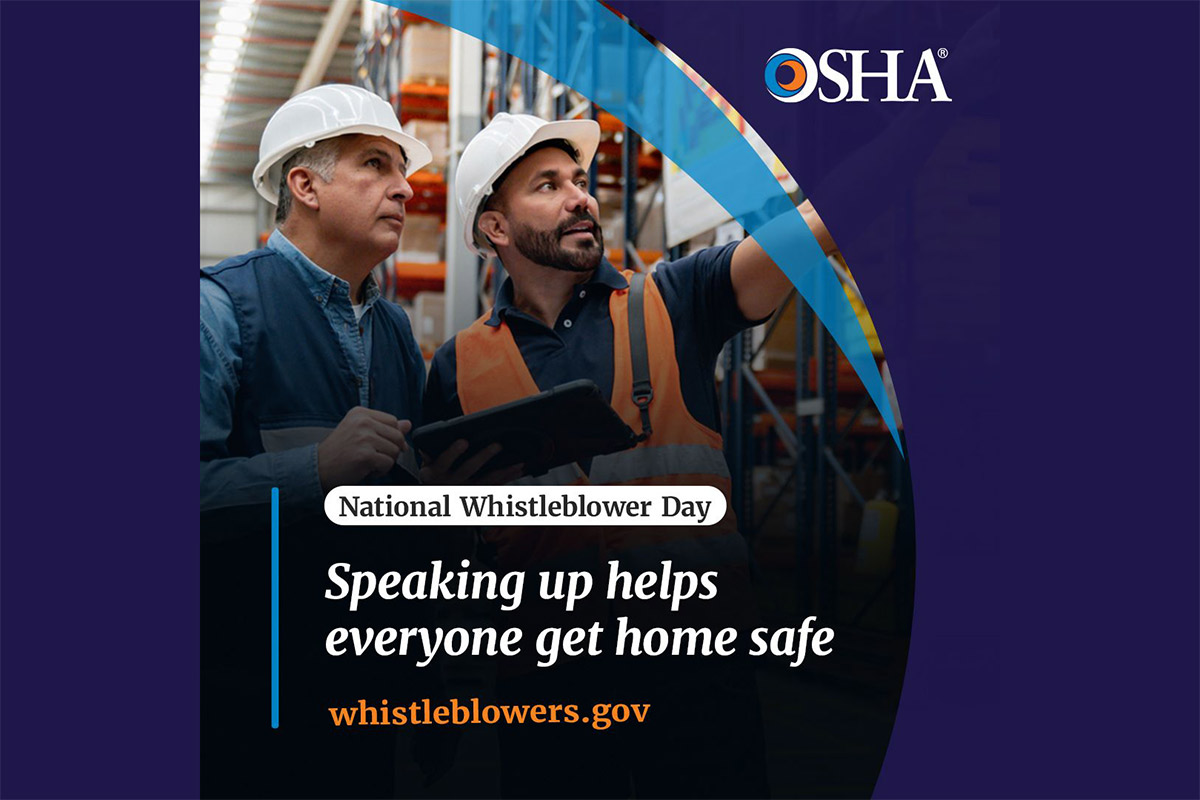
OSHA is marking National Whistleblower Day by recognizing workers who report safety concerns and reminding employees that federal protections allow them to advocate for safer workplaces.
OSHA posted on LinkedIn July 28:
"July 30 is #NationalWhistleblowerDay. OSHA recognizes the courageous workers who help create safer workplaces. It’s also a reminder that workplace safety includes ensuring every worker’s right to advocate for a safer workplace. Speaking up about safety concerns can help prevent injuries before they happen."
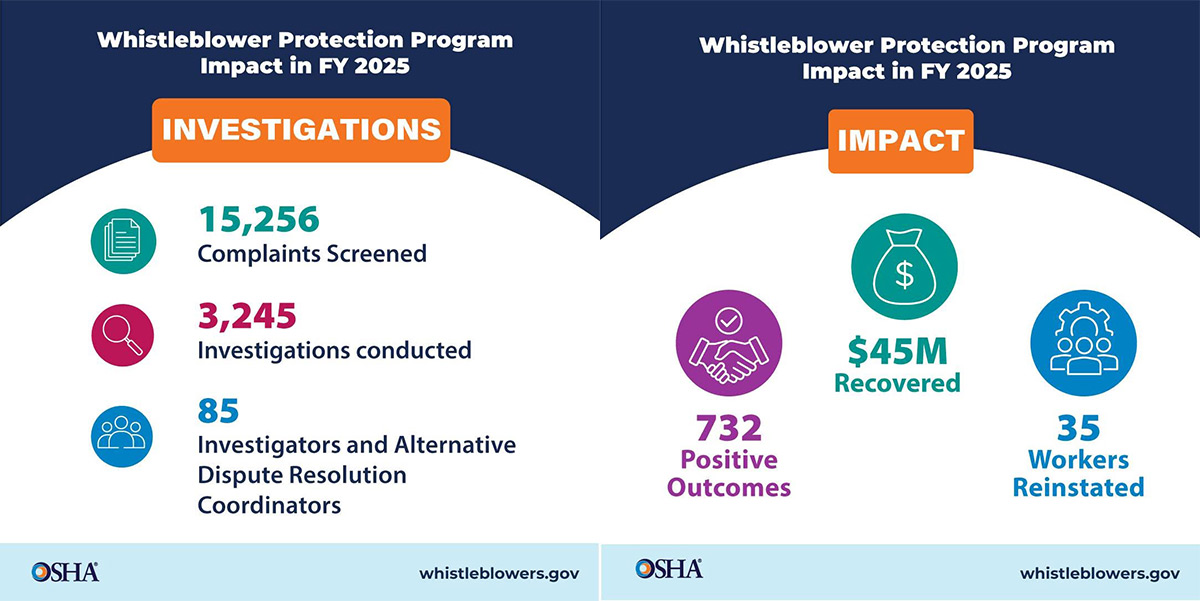
Through its Whistleblower Protection Program, OSHA investigates complaints from employees who believe they have faced retaliation after reporting concerns or exercising protected rights.
OSHA’s Whistleblower Protection Program enforces the whistleblower provisions of more than 20 federal laws. These laws protect workers who report workplace safety and health hazards, participate in OSHA inspections, provide information during investigations, or engage in other protected activities.
Workers may also be protected when they report issues involving other workplace violations covered by federal whistleblower laws, including certain environmental, financial, transportation, and consumer protection concerns.
Retaliation can include more than termination. Employers are also prohibited from demoting whistleblowers, reducing pay or hours, denying benefits or promotions, intimidation, threats, reassignment to undesirable duties, or other actions that could discourage workers from raising concerns.
OSHA said protecting employees who speak up is an important part of identifying hazards and preventing injuries before they occur.
Employees who believe they have experienced retaliation can submit a whistleblower complaint through OSHA. Complaints may be filed online, by mail, by fax, by telephone, or by contacting a local OSHA office.
Filing deadlines vary depending on the whistleblower law involved. Some complaints must be filed within 30 days of the alleged retaliation, while others may have longer deadlines, making it important for workers to understand the requirements that apply to their situation.
The agency provides information about workers’ rights, examples of retaliation, and complaint procedures through Whistleblowers.gov. Additional workplace rights resources are available through Worker.gov, which provides information on workplace safety, wages, discrimination, and other employee protections.
Editor’s note: ChatGPT contributed to this article.


Join our Safety Briefing newsletter and get safety news across logistics, warehousing, manufacturing, construction, and other high-risk environments. Get the latest regulatory updates, alerts, safety products, equipment and training, and analysis.
Don't miss a single news story, product review or safety resource. Subscribe to our newsletter for the latest safety news, updates, and exclusive offers.