Dedicated to helping businesses and individuals prioritize safety, health, and compliance in the workplace. From small startups to large corporations, safety is essential, and we're here to make it easier.


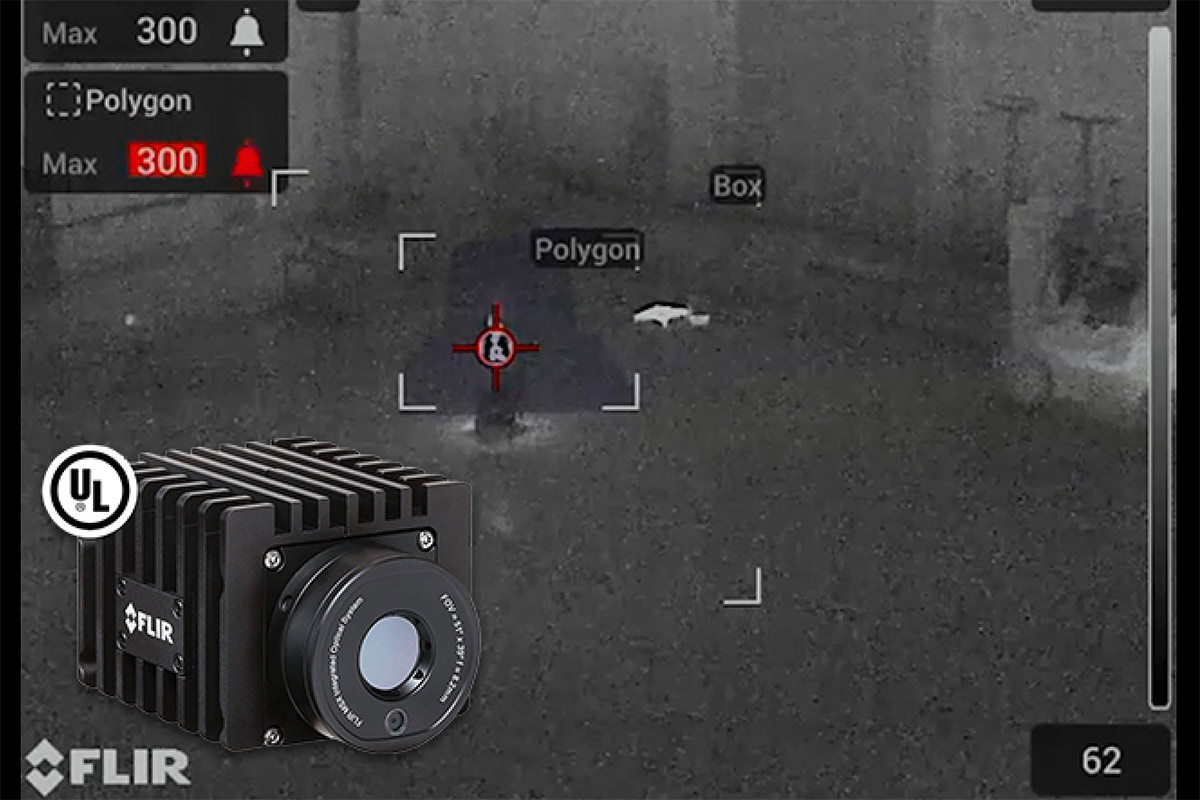
Teledyne FLIR's A40 and A70 thermal imaging cameras have achieved UL 2684 certification. They are listed as thermal image fire detectors under ANSI/CAN/UL 2684, the Standard for Video and Thermal Image Detectors for Fire Alarm Systems.
The 2025 edition of NFPA 72, the National Fire Alarm and Signaling Code, created a dedicated category for thermal image fire detection (Sec. 17.12), which requires thermal image fire detection systems to be listed for the purpose of fire detection.
“Fire engineers work from evidence, and the strongest evidence is a published benchmark with an accredited laboratory behind it,” said Matthew Hasty, Global Vertical Director for Science, Automation, and Early Fire Detection at Teledyne FLIR.
Teledyne FLIR said a consultant, a risk engineer, or a fire protection professional can now put forward a detector whose fire performance has been tested against a published benchmark by an accredited laboratory and show the reviewer where that benchmark came from.
That benchmark is concrete: flaming wood, flammable liquid, and polyurethane fires with defined response criteria, plus the environmental, electrical, and durability program around them, which Teledyne FLIR said can be a considerably stronger position than manufacturer test data.
The listing tests fire performance. The everyday value sits in the instrumentation. A radiometric thermal camera is a calibrated measuring instrument, not a camera that renders heat in color. Every pixel in the scene reports a temperature, many times a second.
Teledyne FLIR’s Early Fire Detection solutions monitor defined regions of interest and report minimum, average, and maximum values for each, with alarms set on absolute thresholds, on the difference between regions, and on rate of rise.
The system responds to how heat is behaving rather than only to how hot something is, and it leaves a record: a measured value, a location in the scene, a history behind it. That record is what an approving authority or an underwriter can actually review.
Teledyne FLIR said demand is coming from operators:
In each case, thermal imaging can provide continuous temperature-based monitoring that can identify developing heat conditions before smoke, flame, or conventional heat thresholds are reached.
Thermal imaging is line-of-sight, so the FLIR camera protects what is in its field of view. In practice that means specific high-value assets: a switchboard, a battery enclosure, a conveyor run. It works alongside conventional detection rather than in place of it.
The cameras are also multispectral: detection is thermal, while an integrated visible camera supplies the picture, so an alarm arrives with video of what caused it. An operator can see what they are dealing with before stopping a line, and a stoppage that turns out to have been unnecessary is money the site never gets back.

Teledyne FLIR designs, develops, manufactures, markets, and distributes technologies that enhance perception and awareness. We bring innovative sensing solutions into daily life through our thermal imaging, visible-light imaging, video analytics,…

Join our Safety Briefing newsletter and get safety news across logistics, warehousing, manufacturing, construction, and other high-risk environments. Get the latest regulatory updates, alerts, safety products, equipment and training, and analysis.

Don't miss a single news story, product review or safety resource. Subscribe to our newsletter for the latest safety news, updates, and exclusive offers.