Dedicated to helping businesses and individuals prioritize safety, health, and compliance in the workplace. From small startups to large corporations, safety is essential, and we're here to make it easier.


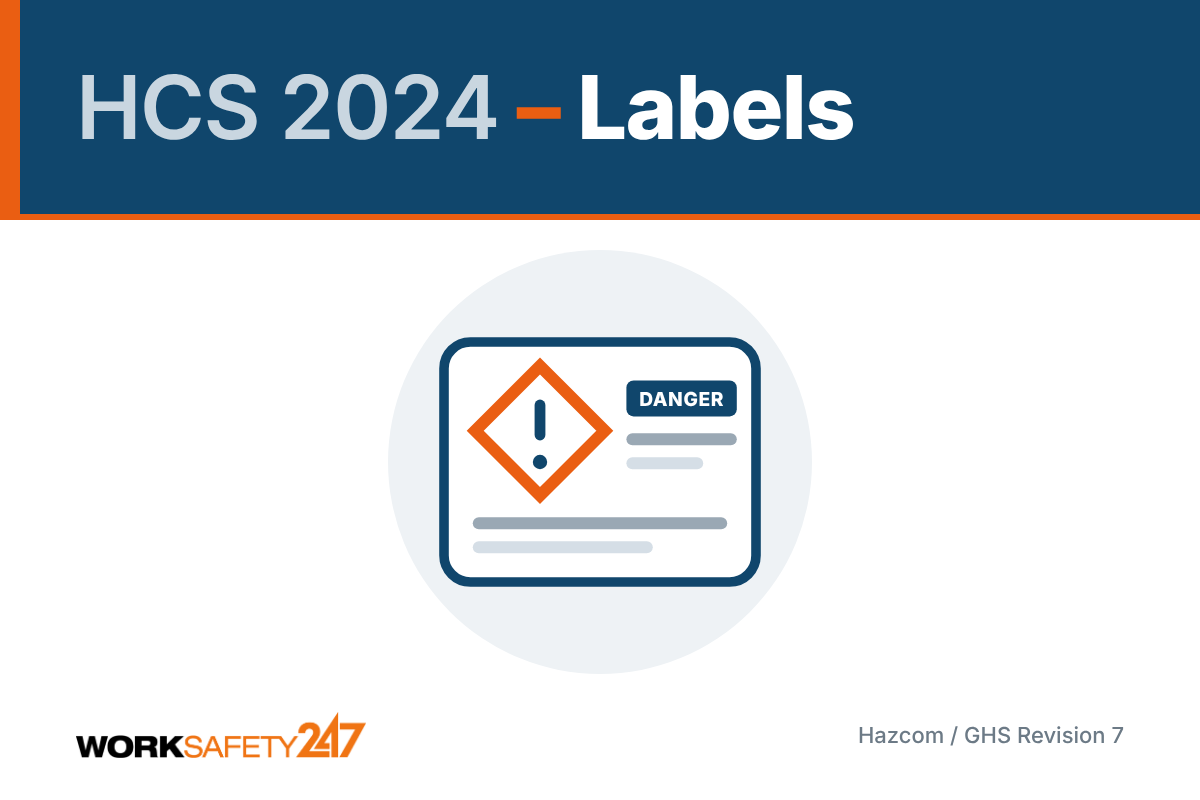
OSHA’s 2024 Hazard Communication Standard (HCS 2024) touches two different kinds of labels: the ones manufacturers, importers, and distributors put on shipped containers, and the workplace labels employers use inside their own facilities.
This explainer covers who is responsible for which type of label, what changed on those labels, and when actions need to be taken to remain compliant.
According to OSHA Inspection Directive CPL 02-02-079, changes will be enforced in two phases, with separate deadlines for substances and mixtures.
Organizations may follow either HCS 2012 or HCS 2024 until each specified compliance date.
Phase One applies to manufacturers and importers, distributors passing chemical shipments through their systems, and any employer that classifies chemicals itself.
These groups evaluate chemicals for new hazards, then must ensure their labels comply with HCS 2024, where necessary. That covers labels on shipped containers, including outer packaging and bulk shipments.
Phase Two applies to all employers, including manufacturers, importers, and distributors in their own facilities, as well as downstream organizations using chemicals in their operations.
Employers must update workplace labels (also called secondary or in-house labels) when there are classification changes from the manufacturer, importer, or distributor.
Operations where workers only handle sealed containers, such as warehousing, marine cargo handling, and retail, have a limited requirement: don’t remove or deface incoming labels.
Disclaimer: Please consult OSHA’s HCS for the most up-to-date information, as changes may have been issued since publication that are not yet reflected in this article.
Editor’s note: Claude AI was used to distill information from OSHA’s documentation in the preparation of this article.


Donald Halsing is the Founding Editorial Director of Work Safety 24/7. He was formerly the Associate Editor of Robotics 24/7.
Don's experience spans the supply chain, logistics, and construction industries, having worked in both warehouse operations and land surveying. He is also a professional wedding photographer with his fiancée Ashley.

Join our Safety Briefing newsletter and get safety news across logistics, warehousing, manufacturing, construction, and other high-risk environments. Get the latest regulatory updates, alerts, safety products, equipment and training, and analysis.

Don't miss a single news story, product review or safety resource. Subscribe to our newsletter for the latest safety news, updates, and exclusive offers.