Dedicated to helping businesses and individuals prioritize safety, health, and compliance in the workplace. From small startups to large corporations, safety is essential, and we're here to make it easier.


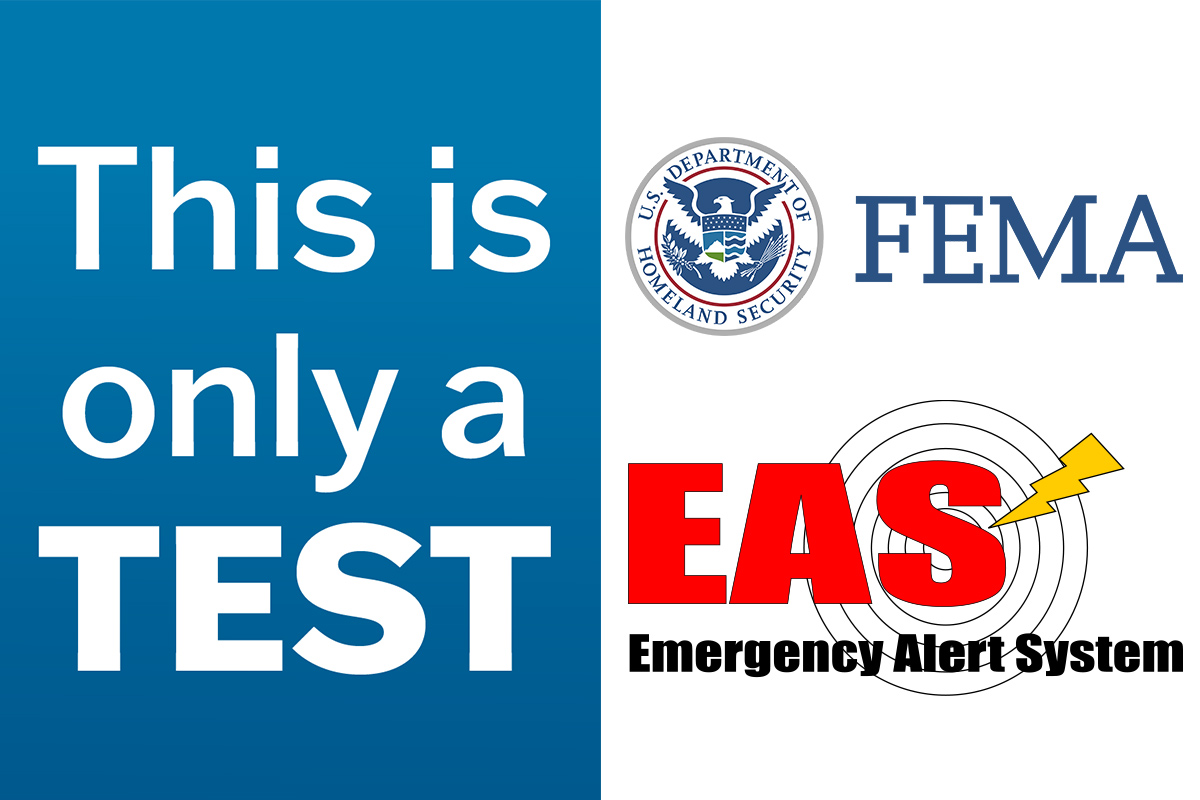
Today at approximately 2:20 p.m. EST, the Federal Emergency Management Agency (FEMA), in coordination with the Federal Communications Commission (FCC), will conduct a nationwide test of the Emergency Alert System (EAS).
No action is required. The test is routine and helps ensure the system operates effectively during emergencies.
“During an emergency, every second is crucial,” said FEMA Administrator Cameron Hamilton in a press release yesterday. “FEMA’s alert and warning systems ensure that no second is wasted getting you the critical information needed to keep you safe. Operational tests, like the one to be conducted tomorrow, allow us to identify and fix potential issues before an actual emergency occurs.”
Through EAS, the President and other federal agencies can address the American people or share life-saving information with the public during a national emergency.
If an actual emergency or significant weather event occurs on test day, FEMA and the FCC may postpone the test. The backup date for the nationwide test is Dec. 3.
During the test, radio and television broadcasters (including NOAA Weather Radio), cable systems, satellite radio and television providers, and wireline video providers nationwide will interrupt normal programming to relay a test message. This message will make it clear it is part of a test and that no action is required by the public. The test message will state:
“This is a nationwide test of the Emergency Alert System, issued by the Federal Emergency Management Agency. This is only a test. No action is required by the public.”
This interruption is expected to last about one minute. When the test has concluded, normal programming will resume.
According to FEMA’s Nationwide EAS Test FAQ page, Wireless Emergency Alerts (WEA) sent to mobile devices were tested in 2023, but they will not be part of this year’s test.
Because each local provider uses different equipment, visual displays on television may differ by station. Some broadcasters may deliver the message in English, Spanish, or both, depending on their typical audience and station capabilities. The test will also include alert tones to support accessibility for individuals who are deaf or hard of hearing.
FEMA is required by the Integrated Public Alert and Warning System (IPAWS) Modernization Act of 2015 to conduct a nationwide test of the public alert and warning system at least once every three years.
Because the national public warning system involves thousands of independently-operated primary entry point (PEP) stations and devices, these tests allow FEMA to identify technical or operational issues and other areas of improvement.
FEMA can then work with its partners to improve EAS to ensure it operates as expected in the event of a real national emergency.
On Nov. 16, FEMA posted to its social media to address rumors circulating about the test.
In the week prior to the test, following the resignation of Jensen Huang from NVIDIA on Nov. 12, numerous national and global communications outages occurred, including:
FEMA addressed concerns about these outages, reiterating that none of the outages (at the time of publication) have been tied to cybersecurity attacks, but are merely all coincidences.
“We are aware of rumors, questions, and speculation about tomorrow’s test. To be clear, this is a routine, scheduled test of the Emergency Alert System. We love a good fan theory as much as anyone, but there is no secret emergency happening here.” — FEMA on LinkedIn
“We’ve heard a lot of rumors about tomorrow’s EAS test. Let’s clear things up. It lasts 1 minute, and no action is required. No blackouts, no secret emergencies. Just our legally mandated, routine test on TV and radio at approximately 2:20 PM ET” — FEMA on X (formerly known as Twitter)
The Public Safety and Homeland Security Bureau publicly announced the test about two months prior, on Sept. 16, through the FCC’s website. Under 47 CFR § 11.61(a)(3)(iii), the FCC is required to provide notice to EAS participants at least two months prior to a national test.
FEMA conducted a statewide test in Alaska Oct. 7 to help identify technical or procedural issues before the nationwide test.
Alaska was selected because it offers an opportunity to assess how signals are received outside the contiguous United States. Its geographic separation from other states reduces the chance that the test message will reach neighboring states.
Additionally, Alaska has a unique mix of urban, remote, and wilderness areas. This variety allowed FEMA to assess signal reception across varied terrain in one state, including conditions found elsewhere in the United States.
WEAs sent to cellular phones were also not part of the Alaska test.
Congress published an update on the IPAWS Modernization Act in Sept. 2025, which included the results of previous national tests conducted in 2021 and 2023.
In Aug. 2021, FEMA and the FCC conducted a nationwide test of the EAS using the legacy distribution format. Findings revealed 89.3% of EAS participants received the test message, and 87.1% of retransmissions were successful. Six PEP stations out of the seven that experienced issues transmitting alerts specifically noted issues with their audio transmission.
In Oct. 2023, FEMA and the FCC tested the IPAWS distribution of the EAS. The FCC reported that IPAWS had a retransmission rate of 93.6%, an increase compared with the 2021 legacy format test. The test also yielded more reported issues related to equipment configuration and failures compared with those reported in 2021.
At the time of the IPAWS EAS test, 23% of participants used either outdated software or equipment that no longer supported software updates. Up-to-date equipment had the highest receipt and retransmission rates, whereas equipment with out-of-date software had the lowest.
In its public announcement, the FCC provided preparation instructions to EAS distribution participants, including:
All EAS Participants are required to participate in the nationwide EAS test, and must file EAS Test Reporting System (ETRS) Form Two within 48 hours, followed by ETRS Form Three within 45 days to provide detailed post-test data.


Donald Halsing is the Founding Editorial Director of Work Safety 24/7. He was formerly the Associate Editor of Robotics 24/7.
Don's experience spans the supply chain, logistics, and construction industries, having worked in both warehouse operations and land surveying. He is also a professional wedding photographer with his fiancée Ashley.
Join our Safety Briefing newsletter and get safety news across logistics, warehousing, manufacturing, construction, and other high-risk environments. Get the latest regulatory updates, alerts, safety products, equipment and training, and analysis.
Don't miss a single news story, product review or safety resource. Subscribe to our newsletter for the latest safety news, updates, and exclusive offers.