Dedicated to helping businesses and individuals prioritize safety, health, and compliance in the workplace. From small startups to large corporations, safety is essential, and we're here to make it easier.


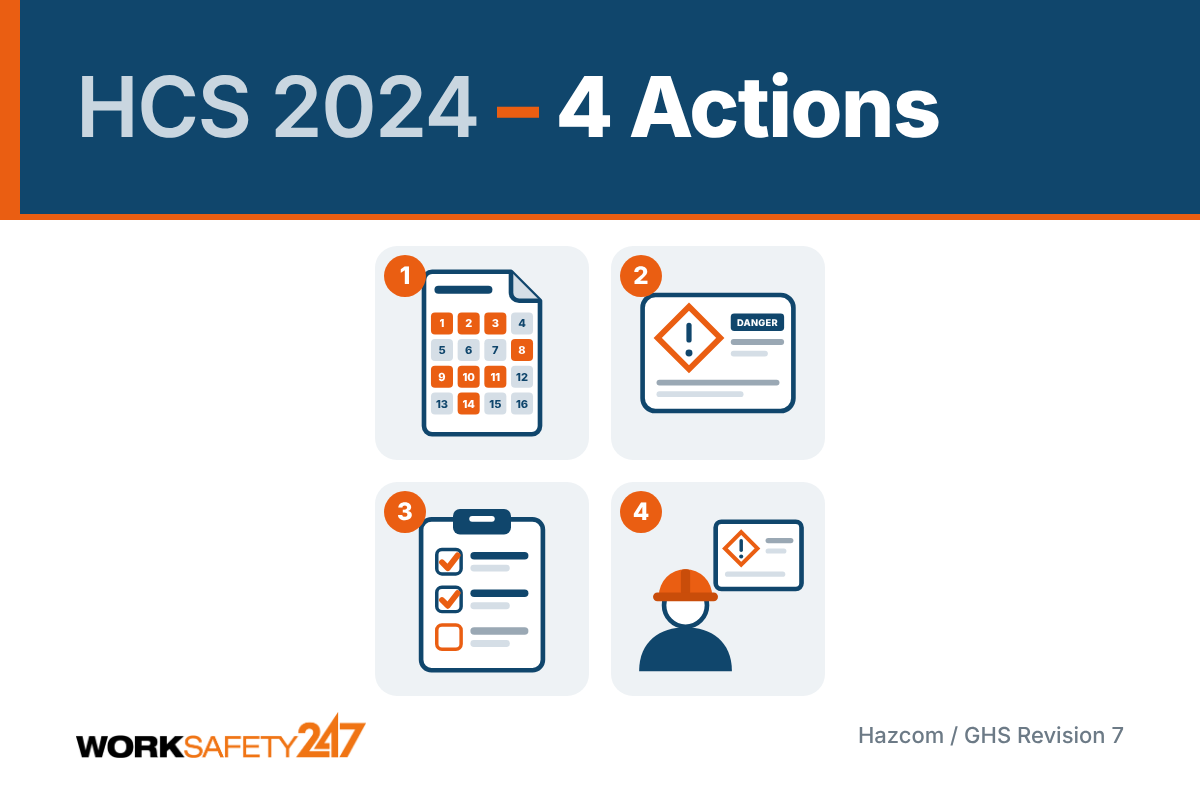
OSHA’s 2024 Hazard Communication Standard (HCS 2024) introduced a list of significant changes from the 2012 edition.
Many of those changes, including updated definitions and classifications, bring OSHA’s standard into alignment with the Globally Harmonized System of Classification and Labelling of Chemicals (GHS).
Other updates resolved issues discovered during rollout of the 2012 HCS - specifically reactive hazard evaluation and labeling - and improved coordination with the Department of Transportation (DOT) and the Environmental Protection Agency (EPA).
Because of these changes, chemical manufacturers, importers, distributors, and end users must evaluate their current hazard communication documents and programs, making changes where appropriate to comply with the updated standard. That work falls into four areas: safety data sheets (SDSs), labels, written Hazcom programs, and employee training.
According to OSHA Inspection Directive CPL 02-02-079, changes will be enforced in two phases, with separate deadlines for substances and mixtures.
Organizations may follow either HCS 2012 or HCS 2024 until each specified compliance date.
| Action | Phase One (upstream and evaluators) | Phase Two (all employers) |
|---|---|---|
| SDSs | Update by May 19, 2026 (substances) or Nov. 19, 2027 (mixtures) | No calendar deadline. Replace outdated SDSs when updated ones are received |
| Labels | Update shipped-container labels by May 19, 2026 (substances) or Nov. 19, 2027 (mixtures) | Update workplace labels, as necessary, by Nov. 20, 2026 (substances) or May 19, 2028 (mixtures) |
| Written programs | No Phase One deadline | Update as necessary by Nov. 20, 2026 (substances) or May 19, 2028 (mixtures) |
| Training | No Phase One deadline | Provide additional training as necessary by Nov. 20, 2026 (substances) or May 19, 2028 (mixtures) |
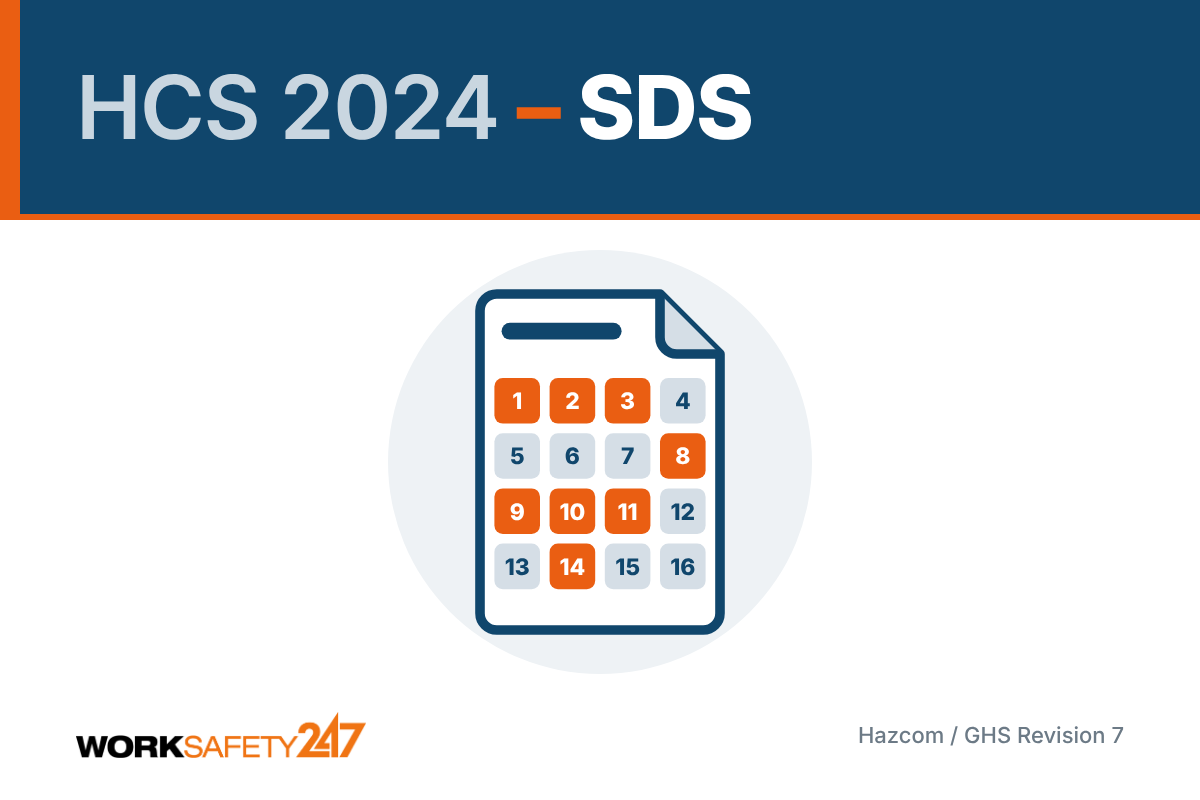
Safety data sheets are where the new hazard information lives, so they come first in the process. Manufacturers, importers, and others who prepare SDSs must reflect the revised Appendix D instructions (eight of the 16 sections changed), new classification criteria, and new trade-secret concentration rules. Downstream employers must then replace outdated sheets as updated ones arrive and keep the most recent version for every hazardous chemical.
HCS 2024 affects two kinds of labels. Upstream organizations must update shipped-container labels, including bulk shipments, small containers, and packages awaiting shipment. Employers must then update any labels in their workplace to match classification changes from their suppliers.
All elements of your written program must stay consistent with the new SDSs and labels, including inventory product identifiers, labeling procedures, SDS procedures, and how training is delivered. Enforcement of written programs generally isn’t affected by the deadlines, except where changes result from updated information received from upstream.
Retraining isn’t automatically required. It’s triggered when employees face hazards they haven’t been trained on, or when your labeling system changes. Training is based on the hazard, not the individual chemical, and it must be free, understandable, and interactive.
Disclaimer: Please consult OSHA’s HCS for the most up-to-date information, as changes may have been issued since publication that are not yet reflected in this article.
Editor’s note: Claude AI was used to distill information from OSHA’s documentation in the preparation of this article.


Donald Halsing is the Founding Editorial Director of Work Safety 24/7. He was formerly the Associate Editor of Robotics 24/7.
Don's experience spans the supply chain, logistics, and construction industries, having worked in both warehouse operations and land surveying. He is also a professional wedding photographer with his fiancée Ashley.
Join our Safety Briefing newsletter and get safety news across logistics, warehousing, manufacturing, construction, and other high-risk environments. Get the latest regulatory updates, alerts, safety products, equipment and training, and analysis.
Don't miss a single news story, product review or safety resource. Subscribe to our newsletter for the latest safety news, updates, and exclusive offers.