Dedicated to helping businesses and individuals prioritize safety, health, and compliance in the workplace. From small startups to large corporations, safety is essential, and we're here to make it easier.


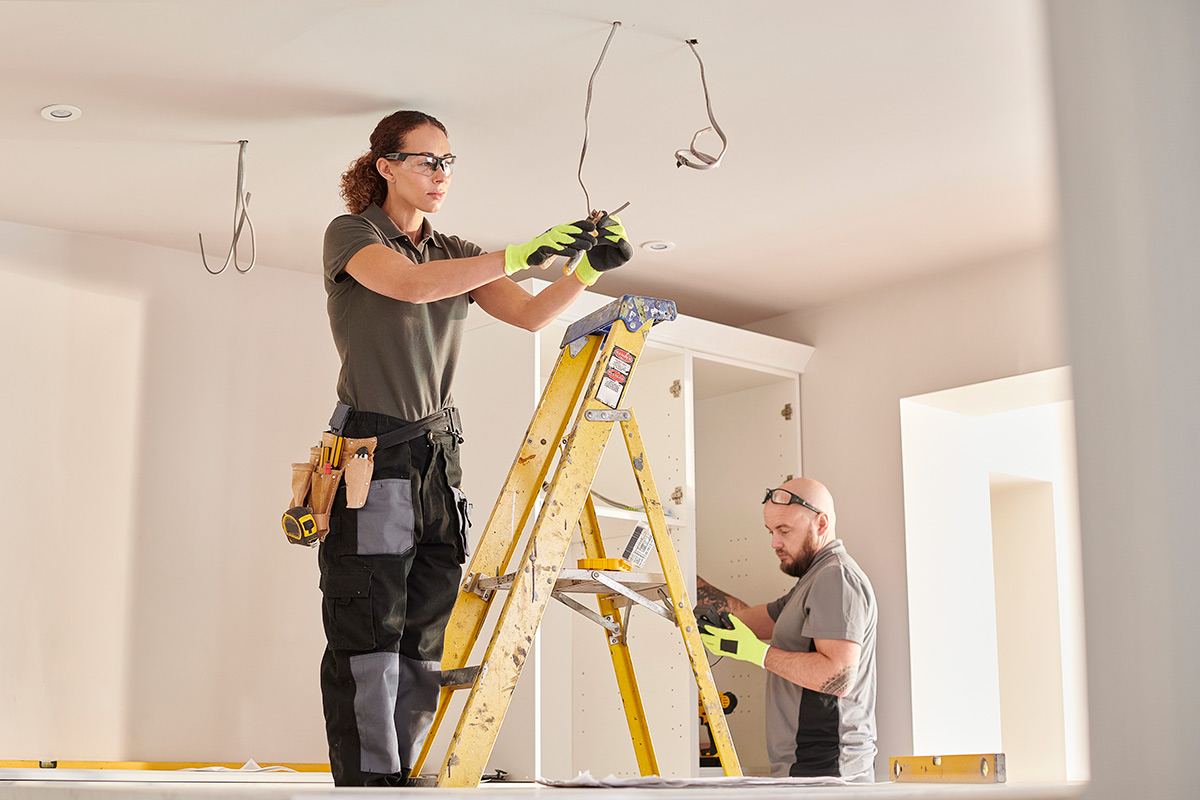
According to a new article from ASSP, ladder safety programs built around a single “default” worker may overlook differences in workers’ physical characteristics and capabilities.
In the article, author Ronilla Ernest, founder and principal consultant of Safety Leader Institute, LLC explains how these hazards can potentially increase fall and injury risks when equipment and task demands are not appropriately matched.
The article, “Ladder Safety for Women Workers: Integrating Evidence Into Safety Management Systems,” explores how employers can reduce ladder-related risks by building ergonomic ladder selection, capability-based training, and properly fitted PPE into their existing safety management systems.
Falls remain a leading cause of serious injuries and fatalities (SIFs). In 2020, the United States recorded 22,710 workplace ladder injuries and 161 fatalities, according to NIOSH. At the same time, women’s representation in the U.S. construction workforce increased from 9.2% in 2011 to 10.9% in 2022.
“I wanted to examine ladder safety through an ergonomic lens with the straightforward principle of ‘fit the work to the worker,’” Ernest said. “While meeting safety standards and providing training are essential, they are only part of the picture. Safety leaders need to consider whether the equipment, task and work environment are a good fit for the workers who are actually performing the job.”
The article reviews ergonomic and biomechanical research showing that factors such as grip strength, reach, balance recovery, upper-body strength, and PPE fit affect a worker's margin for error on a ladder. It also provides the following recommendations for safety professionals:
While the article focuses on women workers, Ernest notes the same principles protect any worker outside traditional design assumptions, including workers of smaller stature, older workers, and those with reduced grip strength or prior injuries.

The American Society of Safety Professionals is a global association committed to advancing occupational safety and health professionals' careers and the safety profession as a whole.
Join our Safety Briefing newsletter and get safety news across logistics, warehousing, manufacturing, construction, and other high-risk environments. Get the latest regulatory updates, alerts, safety products, equipment and training, and analysis.
Don't miss a single news story, product review or safety resource. Subscribe to our newsletter for the latest safety news, updates, and exclusive offers.