Dedicated to helping businesses and individuals prioritize safety, health, and compliance in the workplace. From small startups to large corporations, safety is essential, and we're here to make it easier.


The CSB today released an update on its ongoing investigation into explosions at Accurate Energetic Systems, LLC’s explosives manufacturing facility in McEwen, Tennessee.
On Oct. 10, 2025, multiple catastrophic explosions occurred inside Building 602 at the AES site. On the day of the incident, AES was manufacturing commercial explosive products called cast boosters in the building.
The massive explosions killed 16 employees who were working in Building 602 and injured seven others who were near the building.
“This is one of the deadliest industrial incidents in our country in years,” said Steve Owens, CSB chairperson. “The CSB’s focus is to determine how and why this horrific event occurred and identify ways to help prevent a terrible tragedy like this from happening again.”
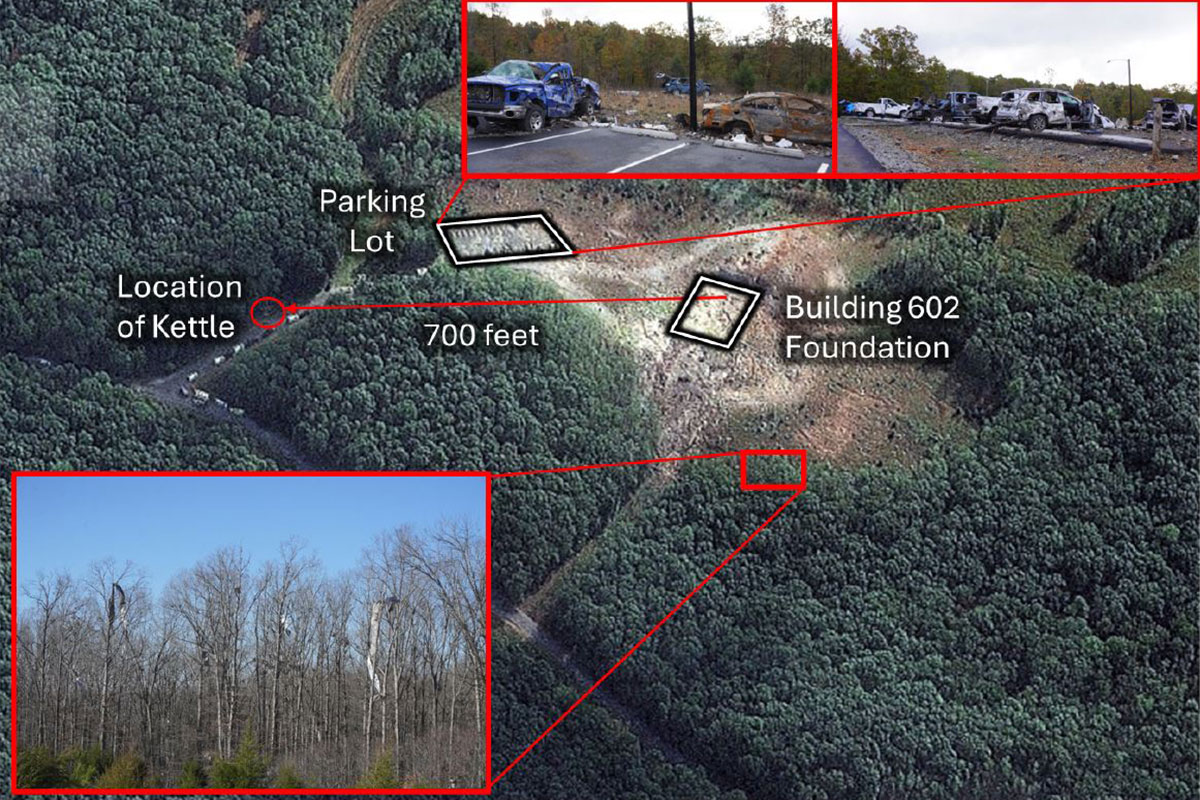
The explosions destroyed Building 602, propelling debris more than 700 feet from the structure and producing a blast that was reportedly felt over 20 miles away. According to the U.S. Geological Survey, the event registered as a 1.6-magnitude seismic event.
“The first detonation created a pressure wave that set off additional explosives throughout the building,” said Cruz Redman, CSB investigator-in-charge. “The series of explosions resulted in fatal injuries to sixteen AES employees, injuries to several others, the destruction of Building 602, and damage to multiple surrounding structures.”
At the time of the incident, approximately 24,600 pounds of explosive material were present in the building. The CSB estimates that about 23,000 pounds detonated, deflagrated, or burned during the event.
Another 1,000 pounds of unexploded energetic material that had been launched from the building were recovered on-site and subsequently disposed of by burning.
AES manufactures a variety of explosive products used in military, aerospace, mining, avalanche control, and commercial demolition applications. The cast boosters being produced in Building 602 were explosive charges intended to be used to initiate larger detonations in industrial blasting applications.
Building 602 consisted of a warehouse storing inert materials and an explosive product manufacturing area, separated by support facilities including the supervisor offices, printing room, break room, bathrooms, and a room housing the boiler and other mechanical equipment.
The explosive manufacturing area was two stories tall, with six kettles on the upper floor (mezzanine level), and three kettles on the ground level. Building 602 was not equipped with a sprinkler or deluge fire protection system.
Production of the cast booster involved a “melt-pour” process in which AES workers melted explosive materials in steam-jacketed kettles on the mezzanine level and mixed the materials with agitators.
The molten explosive mixture was then transferred to ground level kettles, where AES workers removed the explosive mixture and poured it by hand into cardboard or plastic tubes, where the mixture cooled and solidified into cast booster charges.
After the molten material solidified, AES packed the cast boosters into boxes - again by hand - and prepared them for shipment.
Large amounts of explosive materials were present throughout Building 602 on the day of the incident. In addition to the explosive material that was being actively processed, significant quantities of other explosive components and finished cast boosters were being cooled in fixtures, staged, or stored in various areas of the building at the time of the incident.
All of these materials are classified as “high explosives,” meaning that they can detonate when exposed to sufficient heat, friction, impact, or shock.
On the morning of the incident, several AES operators were pouring highly explosive mixtures into 14-ounce and 11-pound cast boosters, while other employees were managing kettles, preparing tubes, removing solidified boosters, packaging finished products, and handling materials.
The CSB’s investigation is ongoing as investigators continue to gather facts and analyze several key areas related to the fatal Oct.10 incident, including:


The U.S. Chemical Safety Board (CSB) is an independent, nonregulatory federal agency that investigates the root causes of major chemical incidents. The Board does not issue citations or fines, but makes safety recommendations to companies,…
Join our Safety Briefing newsletter and get safety news across logistics, warehousing, manufacturing, construction, and other high-risk environments. Get the latest regulatory updates, alerts, safety products, equipment and training, and analysis.
Don't miss a single news story, product review or safety resource. Subscribe to our newsletter for the latest safety news, updates, and exclusive offers.