Dedicated to helping businesses and individuals prioritize safety, health, and compliance in the workplace. From small startups to large corporations, safety is essential, and we're here to make it easier.


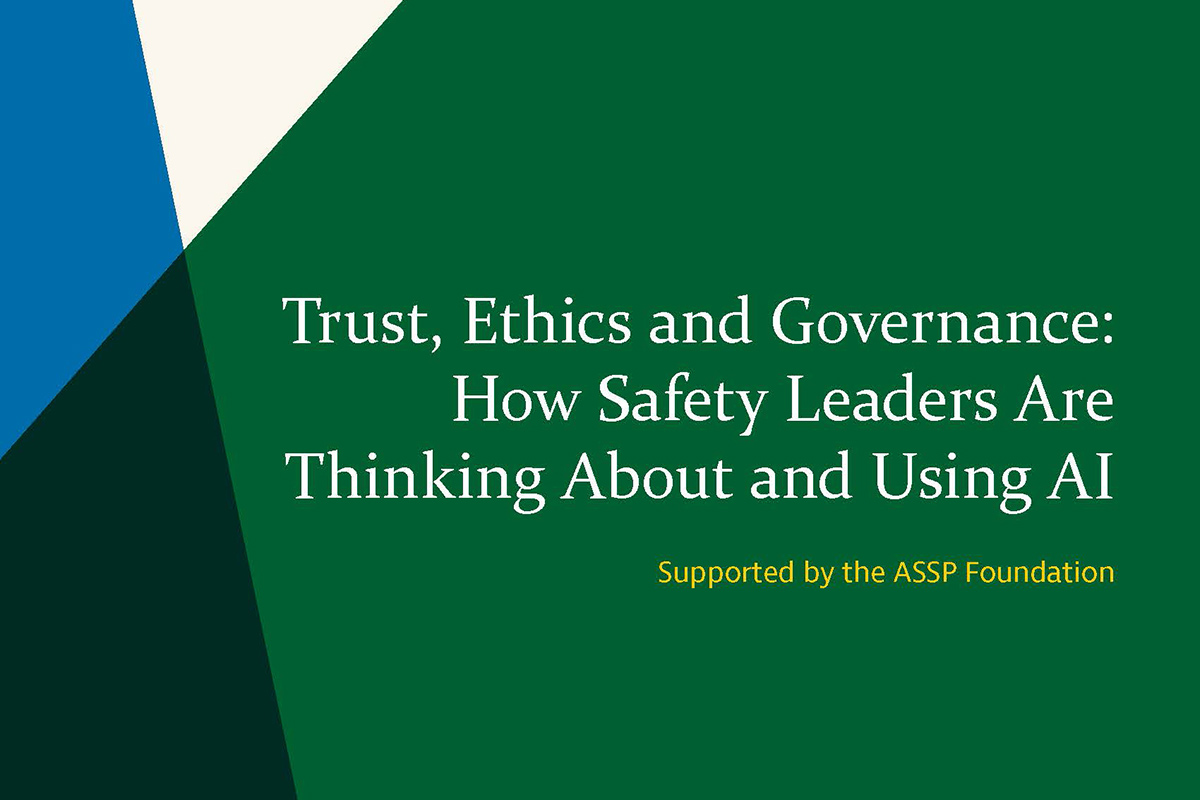
The American Society of Safety Professionals (ASSP) recently released a new research report examining how organizations are adopting and integrating AI into EHS.
The “Trust, Ethics, and Governance: How Safety Leaders Are Thinking About and Using AI,” report is based on a survey conducted by ASSP among 992 safety professionals between July 6 and August 2.
The survey found that most organizations are already exploring or implementing an AI-EHS strategy: 86% of respondents are in the exploratory (discovering and piloting AI) or transformative (scaling and integrating AI) phase, and 66% of those began their AI-EHS journey within just the past two years.
ASSP said organizations that have not already started their AI journey will quickly fall behind the rest of the industry in adopting AI into their EHS operations.
Survey respondents also reported how they are currently using AI in their work. Identified applications included report development, tailored education and training, incident analysis and pattern recognition, resource optimization, predictive analytics and resource management, automated compliance, and real-time monitoring and alerts.
Additionally, the survey identified practical barriers to AI adoption at every stage of the AI-EHS journey. More than half to three quarters of respondents identified experiencing the following barriers:
Other key findings included that culture or perceptions of AI’s importance to EHS, reduced ethical concerns, and data quality are strong predictors of AI adoption; data quality remains a challenge throughout the AI-EHS journey; and training is associated with stronger AI-EHS knowledge and confidence.
“While many safety professionals are using AI to support better decision making and address real-world EHS challenges, human oversight remains essential,” says Monique Parker, CSP, ASSP President. “AI does not change our fundamental responsibility to protect people, property and the environment through EHS practices. This is why ASSP is meeting safety professionals where they are on their AI journey with several resources and programs to help address barriers to implementation, including the Applied AI for EHS Certificate with the University of Alabama at Birmingham and the AI in EHS: A Practical Framework for Responsible Adoption course.”
The survey findings will help inform ASSP’s complimentary Standards-Based User Group (SBUG) on AI in Safety as the group identifies additional implementation barriers and tests practical solutions.
The survey was funded through support from the ASSP Foundation. Kalorama Research was a partner on the project.

The American Society of Safety Professionals is a global association committed to advancing occupational safety and health professionals' careers and the safety profession as a whole.
Join our Safety Briefing newsletter and get safety news across logistics, warehousing, manufacturing, construction, and other high-risk environments. Get the latest regulatory updates, alerts, safety products, equipment and training, and analysis.
Don't miss a single news story, product review or safety resource. Subscribe to our newsletter for the latest safety news, updates, and exclusive offers.