Dedicated to helping businesses and individuals prioritize safety, health, and compliance in the workplace. From small startups to large corporations, safety is essential, and we're here to make it easier.


Summary:
According to a new report recently published by Verified Market Research (VMR), the global workplace safety market was valued at $16.12 billion in 2024.
The market is expected to reach $44.39 million by 2031, growing at a projected CAGR of 13.50%.
VMR said the workplace safety market is experiencing strong growth as organizations worldwide prioritize occupational health, risk management, and compliance.
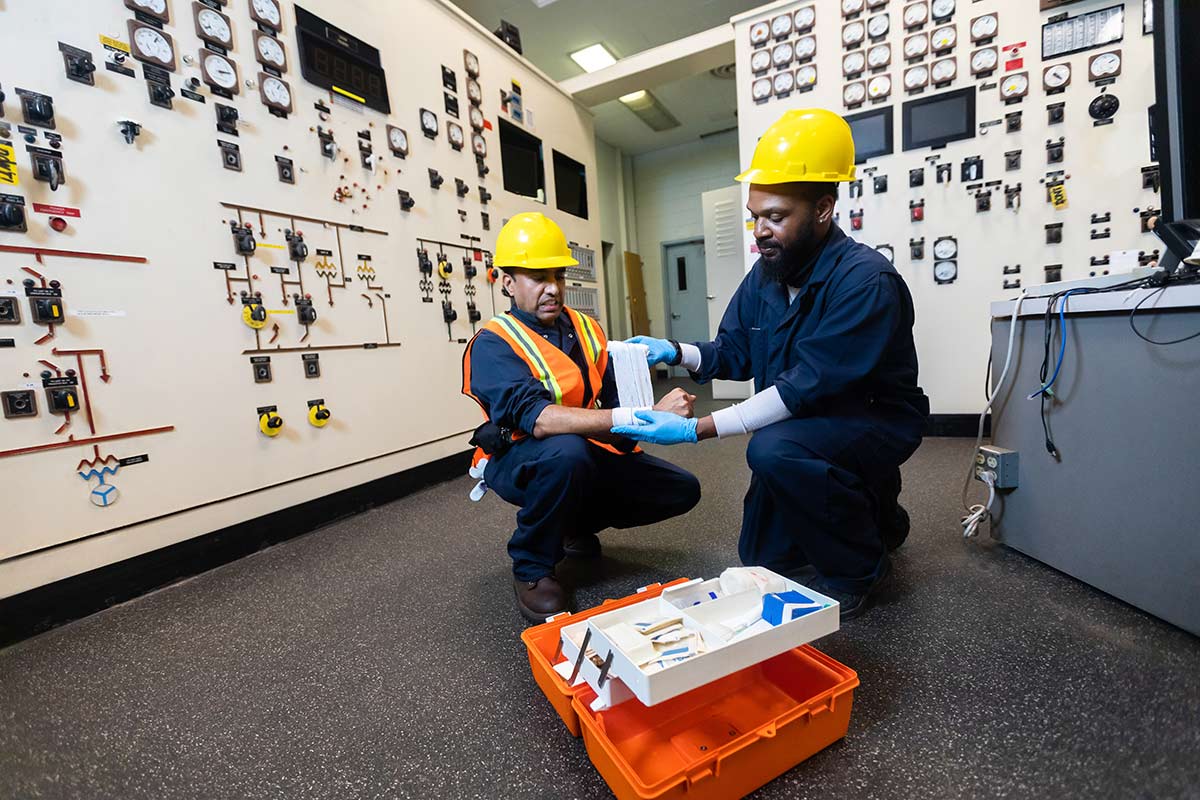
From construction and manufacturing to healthcare and mining, industries are adopting smart technologies like IoT-enabled wearables, AI technology for monitoring, and advanced hazard detection systems.
As workplace accidents continue to affect productivity and regulatory pressure increases, VMR said businesses are investing in comprehensive safety systems to safeguard employees and enhance operational efficiency.
VMR said global workplace safety regulations are becoming increasingly strict, compelling organizations to adopt advanced safety measures.
Governments and international standards groups such as OSHA, the International Organization for Standardization (ISO), and International Labor Organization (ILO) enforce rigorous rules. These mandates push businesses to comply with safety protocols, implement monitoring technologies, and maintain safer work environments.
This compliance-driven demand helps ensure continuous growth in the workplace safety market, particularly across industries like oil & gas, mining, and construction.
VMR said the integration of IoT devices, wearables, and AI-powered monitoring tools is transforming workplace safety management.
Smart helmets, sensor-enabled vests, and AI-powered analytics platforms provide real-time monitoring of worker health, exposure to hazardous conditions, and equipment performance. These technologies enable predictive maintenance, early hazard detection, and incident prevention, significantly reducing workplace accidents.
With Industry 4.0 adoption accelerating, WMR expects technology-driven safety systems will remain one of the strongest market growth catalysts.
Organizations are recognizing workplace safety not only as a compliance requirement but also as a productivity and employee-retention strategy. Businesses across sectors are prioritizing employee health and wellness by investing in ergonomic systems, mental health programs, and safety management systems.
The rising focus on environmental, social, and governance (ESG) initiatives has further accelerated investments in workplace safety systems. This growing awareness is pushing both large enterprises and mid-sized companies to embrace safety technologies and programs that improve employee trust and operational efficiency.
While workplace safety technologies offer long-term benefits, their upfront costs pose a significant challenge for small and medium-sized enterprises (SMEs).
Deploying IoT-enabled devices, AI-powered monitoring systems, and integrated software platforms requires considerable investment in hardware, training, and maintenance. For cost-sensitive businesses, especially in developing economies, these expenses limit adoption.
VMR said this financial barrier remains one of the most critical restraints hampering widespread growth of the workplace safety market.
Although large enterprises actively adopt workplace safety systems, VMR said small and unorganized sectors often lack awareness about the benefits of structured safety programs.
Many SMEs still rely on traditional safety practices without leveraging digital monitoring tools. Limited knowledge, coupled with insufficient training programs, creates gaps in safety implementation.
VMR said this uneven adoption rate continues to hinder the overall market’s growth potential, especially in emerging economies.
Many industries operate on outdated IT and safety infrastructures, making it difficult to integrate advanced workplace safety systems.
Compatibility issues between modern IoT-enabled platforms and legacy systems often lead to implementation delays, higher costs, and reduced efficiency. Companies hesitant to overhaul their entire IT ecosystem face challenges in deploying safety technologies effectively.
VMR said this lack of seamless integration remains a bottleneck for full-scale market adoption.
North America dominates the workplace safety market, driven by strict regulatory frameworks, a well-established industrial base, and early adoption of advanced safety technologies.
The U.S. has been a pioneer in implementing OSHA guidelines, pushing enterprises across manufacturing, oil & gas, and construction sectors to adopt smart safety systems.
Europe follows closely, fueled by strong worker protection laws and increasing demand for sustainable safety initiatives.
Meanwhile, the Asia-Pacific region is emerging as the fastest-growing market due to rapid industrialization in China, India, and Southeast Asia, along with rising government focus on improving workplace safety standards.
Based on its research, VMR has segmented the global market:
By deployment mode:
By application:
By end-user industry:
VMR’s report also profiles what it identified as key companies, their strategic initiatives, and innovation-driven growth approaches, including IBM, Honeywell, 3M, Hexagon AB, Cority, Wolters Kluwer, Bosch, Microsoft, and Appian.


Donald Halsing is the Founding Editorial Director of Work Safety 24/7. He was formerly the Associate Editor of Robotics 24/7.
Don's experience spans the supply chain, logistics, and construction industries, having worked in both warehouse operations and land surveying. He is also a professional wedding photographer with his fiancée Ashley.
Join our Safety Briefing newsletter and get safety news across logistics, warehousing, manufacturing, construction, and other high-risk environments. Get the latest regulatory updates, alerts, safety products, equipment and training, and analysis.
Don't miss a single news story, product review or safety resource. Subscribe to our newsletter for the latest safety news, updates, and exclusive offers.