Dedicated to helping businesses and individuals prioritize safety, health, and compliance in the workplace. From small startups to large corporations, safety is essential, and we're here to make it easier.


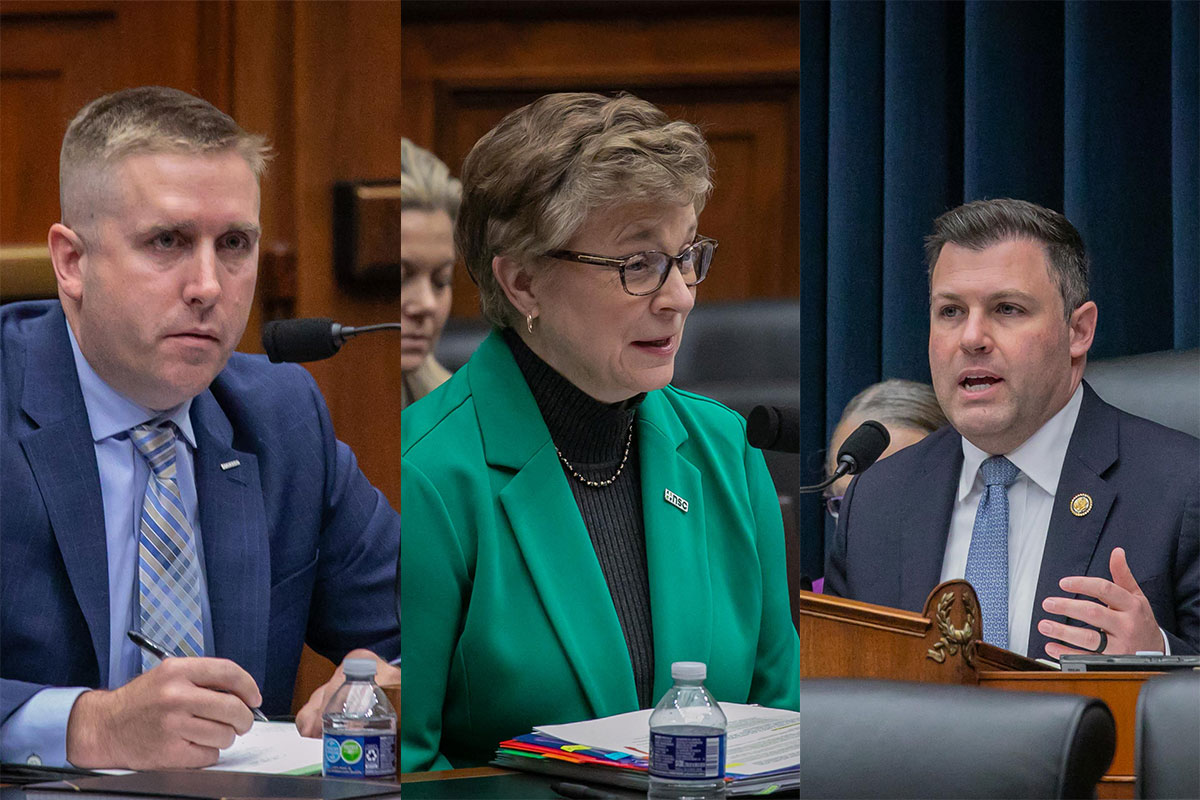
Safety professionals emphasized using leading safety indicators, in contrast to OSHA’s current lagging indicators, during a May 13 U.S. House of Representatives Workforce Protections Subcommittee hearing.
Titled “Building a Safer Future: Private-Sector Strategies for Emerging Safety Issues,” Subcommittee Chairman Ryan Mackenzie (R-PA) emphasized a need for “collaborative, practical policymaking” to prevent serious injuries and fatalities (SIFs) in today’s workplaces at the meeting.
“While the nature of work constantly changes, the regulatory framework governing workplace safety has often struggled to keep pace,” Mackenzie said. “To achieve further improvements, we must look to frontline workers, business owners, researchers, and safety experts who are developing innovative approaches to workplace safety”
Pat Sughrue, Cianbro Corp senior corporate director of health, safety, and environmental, presented how the general contractor’s “proactive, measurable safety systems” successfully keep workers safe.
Sughrue said OSHA’s total recordable incident rate (TRIR) “is a lagging, no-fault outcome measure - it reflects injuries that have already occurred rather than the conditions and behaviors that create risk.
“In contrast, leading indicators measure the inputs and processes that prevent injuries before they occur and directly assess how well a safety system is functioning in real time,” Sughrue said. “These indicators are actionable: They tell leaders what to improve, where risk exists, and who needs support - long before someone is hurt.”
Examples of Cianbro’s leading indicators include:
Sughrue also cautioned the highly-visible TRIR is often perceived as a “scorecard” despite OSHA treating injury recording as a no-fault process, which can encourage underreporting and shift focus to blaming.
“Leading indicators, by contrast, reinforce a learning-based safety culture by rewarding problem identification, transparency, and corrective action,” he added.
Lorraine Martin, National Safety Council CEO, said leading indicators can provide early awareness of potential SIFs, shifting the attention of safety professionals as well as employees from reaction to “hazard hunting.”
Martin said NSC advocates for employers to implement their own SIF prevention practices, but also for OSHA to establish a National Emphasis Program (NEP) on SIF prevention in specific industries.
“An NEP would accelerate the shift from reactive compliance to proactive risk management by explicitly encouraging employers to advance in their safety maturity,” she said. “An NEP focused on SIF prevention would also signal that preventing serious injuries and fatalities requires a higher level of organizational maturity than traditional lagging indicator compliance.”
Martin said NSC outlined SIF prevention practices in its SIF Prevention Model, using ANSI/ASTM E2920-26, a “Standard Guide” for recording occupational injuries, illnesses, and SIFs, as a framework.


Donald Halsing is the Founding Editorial Director of Work Safety 24/7. He was formerly the Associate Editor of Robotics 24/7.
Don's experience spans the supply chain, logistics, and construction industries, having worked in both warehouse operations and land surveying. He is also a professional wedding photographer with his fiancée Ashley.
Join our Safety Briefing newsletter and get safety news across logistics, warehousing, manufacturing, construction, and other high-risk environments. Get the latest regulatory updates, alerts, safety products, equipment and training, and analysis.
Don't miss a single news story, product review or safety resource. Subscribe to our newsletter for the latest safety news, updates, and exclusive offers.