Work Safety 24/7

Dedicated to helping businesses and individuals prioritize safety, health, and compliance in the workplace. From small startups to large corporations, safety is essential, and we're here to make it easier.

NTSB issues safety alert on unsecured railroad equipment

Guidelines for employees, railroads provided after five fatality and injury investigations

NTSB issues safety alert on unsecured railroad equipment
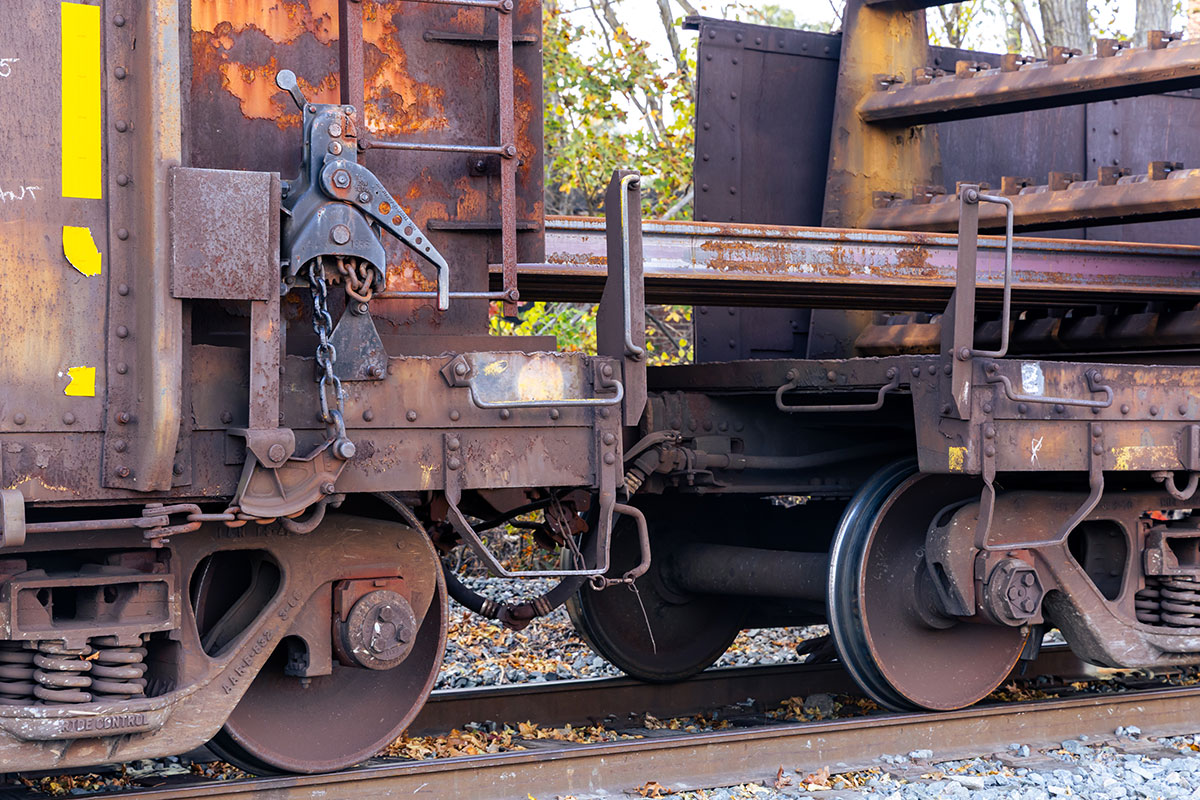
Source: Donald Halsing | Industrial Stock Photography
After five accident investigations, including one fatality, the NTSB issued a safety alert on unexpected movement of unsecured railroad equipment, including a list of best practices.
By Donald Halsing 
December 2, 2025

The National Transportation Safety Board (NTSB) recently issued a safety alert on unexpected movement of unsecured railroad equipment.

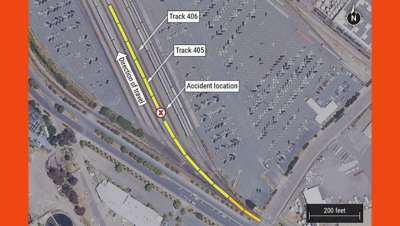
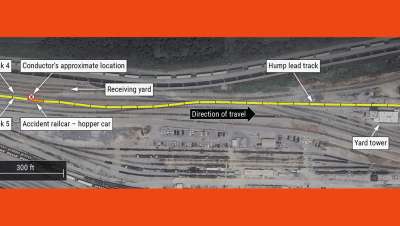
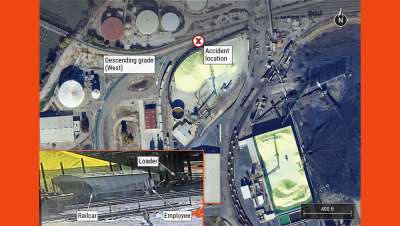
The alert was issued following the agency’s investigation of five accidents between July 2024 and July 2025 in which railroad employees were seriously injured or killed when they fouled the track and were then struck by unsecured equipment.

A track is fouled when an individual or equipment is in the gauge of the track (between the rails) or within 4 feet of the nearest rail and can be struck by a moving train or on-track equipment.

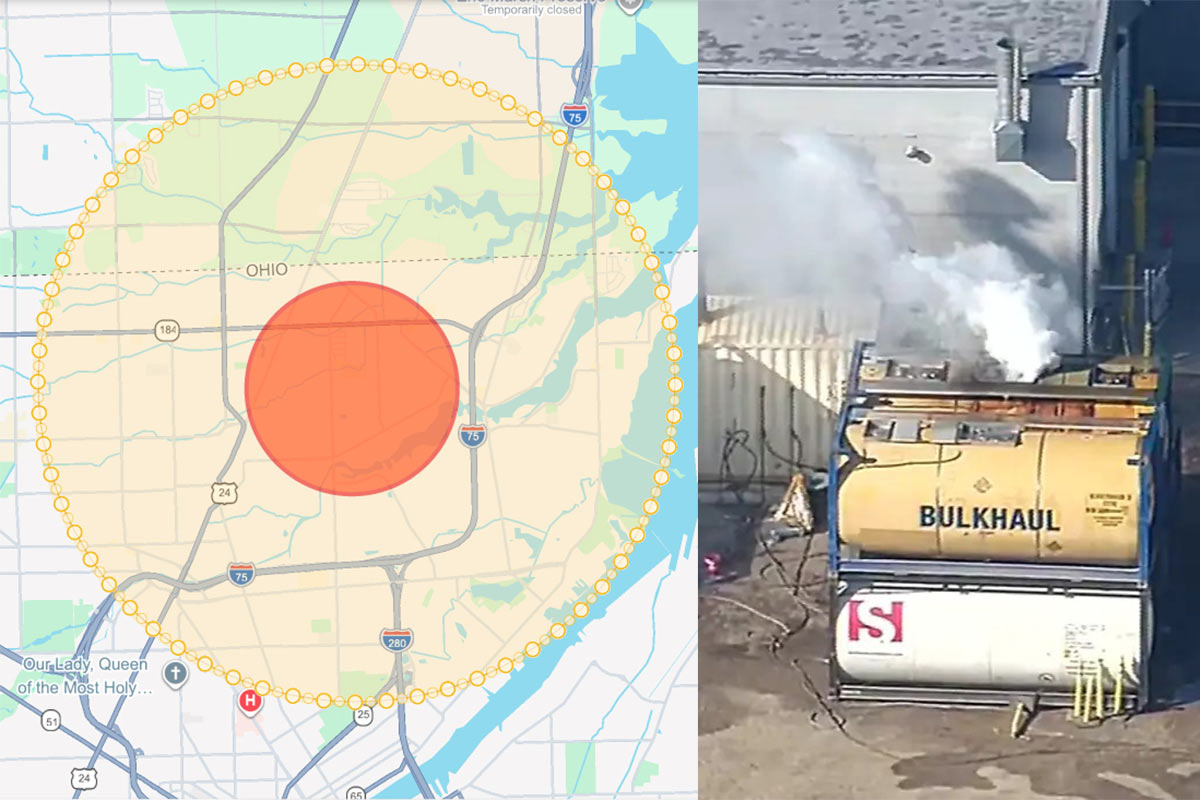
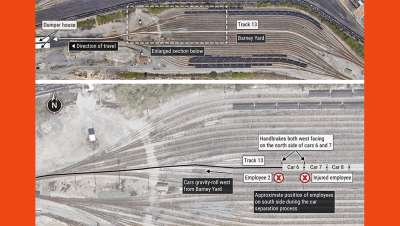
These five investigations (see slideshow) highlight the danger posed by fouling the track near unsecured or inadequately-secured equipment.

Dangers of fouling the gauge when equipment is not secured

Railroad employees face significant risk of serious injury or death when they enter the gauge of the track without first ensuring that all equipment on the track is stationary and properly secured against movement.

  • Operational causes: Unsecured equipment on the track can appear stationary, but may start to roll unexpectedly when the brakes are released accidentally or applied incorrectly, or when an inadequate number of hand brakes are applied. Railcars coupled with locomotives may start to roll when the locomotive controls are not properly secured or an engineer accidentally manipulates the throttle, reverser, or brakes.
  • Load shifting: Freight railcars, including tank cars, may experience unexpected movement when the material in the railcars move, or the liquid in the tank cars slosh, and create a shift in load.
  • Slack action can lead to sudden and unexpected movement of railcars. Slack action is the amount of free movement between connected railcars before one railcar transmits its motion to the next. This movement is a result of the couplers and draft systems used in freight trains, which are designed to connect railcars securely, manage forces during train operations, and allow limited motion between railcars to absorb shocks and reduce stress on railcar components.

Moving equipment may strike or otherwise come in contact with stationary equipment positioned on the track and set the stationary equipment in motion.

When unsecured equipment moves on uneven or sloped track, the movement can be unexpected or intensified if the track slopes downhill.
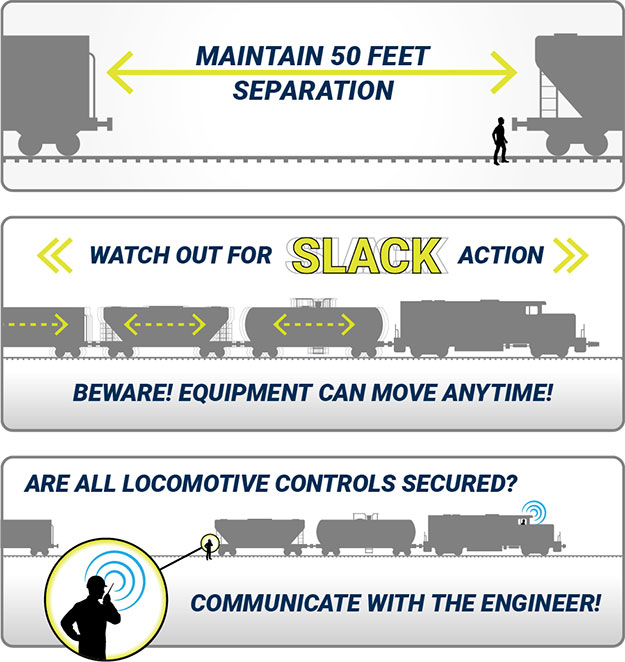
Safe operation when entering the gauge includes maintaining at least 50 feet (one car length) separation, remaining vigilant for slack action, and communicating three-step protection. Source: National Transportation Safety Board

Best practices for railroad employees

  • Stay vigilant and expect equipment to move on any track, at any time, from any direction.
  • Foul the track only when necessary and after confirming that it is safe to do so.
  • Follow the railroad operating rules when you foul the track.
  • Inspect railcars that are not attached to locomotives to ensure that they are fully stopped and properly secured.
  • Use ladders or end platforms on railcars when applying hand brakes to avoid entering the gauge of the track before the equipment is secured.
  • Use brake sticks that can be fully extended from a position outside the gauge of the track. Do not use brake sticks over couplers or draft gear to avoid inadvertently fouling the track.
  • Before fouling a track to perform work, ensure that any other cut of railcars on the same track is separated by no less than 50 feet (one car length).
  • Confirm that locomotives connected to railcars have completely stopped and that the engineer has secured all locomotive controls (three-step protection) before fouling the track or going between railcars.
  • Establish and maintain clear communication with the crew during switching operations, especially if you need to foul the track.
  • Conduct a job briefing before you start work, when working conditions change, or when communication between the crew becomes unclear.
  • Stop work if conditions are unsafe or communication is unclear.
  • Participate in safety briefings and follow all securement procedures.
  • Be aware of railcar design and slack action behavior, such as end-of-railcar cushioning devices that expand or contract slowly, or sloshing fluids in tank cars that cause delayed and unexpected movement.
  • Be aware that uneven or sloped track may cause railcars to move unexpectedly and watch for movement after releasing handbrakes.
  • Mentor less-experienced employees to reinforce safe practices.

Best practices for railroad companies

  • Review and revise operating rules related to locomotive and railcar securement to ensure that these instructions are easy to understand.
  • Direct front-line managers to routinely check proper securement of equipment and provide corrections to crew when proper securement procedures are not followed.
  • Revisit safety procedures whenever a close call or incident happens to identify any gaps in procedures.
  • Train employees to foul the track only when necessary and emphasize that employees need to ensure a spacing of 50 feet or more between themselves and unsecured equipment on the track.
  • Require front-line supervisors to confirm that employees are properly briefed on and following safe procedures when they are required to do work within the foul of a track.
  • Direct front-line managers to routinely observe switching crews to ensure that employees are only fouling track and equipment safely, and only when the work requires them to do so.
  • Reinforce that employees are empowered to take a safe course of action when working around railcars, including stopping work if necessary.
 

More about NTSB

The NTSB is an independent federal agency which determines the probable causes of civil aviation, railroad, transit, highway, marine, pipeline, and commercial space accidents.

Latest in NTSB

About Donald Halsing

Donald Halsing

Donald Halsing is the Founding Editorial Director of Work Safety 24/7. He was formerly the Associate Editor of Robotics 24/7.

Don's experience spans the supply chain, logistics, and construction industries, having worked in both warehouse operations and land surveying. He is also a professional wedding photographer with his fiancée Ashley.
Follow Work Safety 24/7
on Facebook
on Linkedin

Related Topics

Regulatory   Education   News   Safety Alerts   Incidents   Investigations   Press Release   Amputation   BNSF   Fatalities   Injuries   Norfolk Southern   NTSB   Safety Culture   SIF   All topics
 

Subscribe

Subscribe to our FREE magazine, FREE email newsletters or both!

Join our Safety Matters newsletter and get safety news across logistics, warehousing, manufacturing, con­struc­tion, and other high-risk environments. Get the latest regulatory updates, alerts, safety products, equipment and training, and analysis.
Subscribe today


Editors’ Picks

U.S. Appeals Court denies claim against OSHA citation of affiliated entity
The U.S. Court of Appeals denied UHS of Delaware’s petition against the OSHRC because it shared a common worksite and integrated safety operations under the same…
NHTSA recalls over 5,000 new USPS trucks for missing brake pin
After a USPS Next Generation Delivery Vehicle lost brake function, NHTSA and Oshkosh recalled all NGDVs produced because the brake pedal mounting pin and retaining…
MSHA issues alerts for ammonia & autotransformers
The Mine Safety and Health Administration encourages operators to examine all equipment with autotransformers currently in service and review safe handling of and…
Dangerous wildfires, sub-zero windchill, and winter weather across U.S. and…
The U.S. National Weather Service (NWS) and Environment Canada have issued warnings for high winds, wildfires, dust storms, heavy snowfall, freezing rain, and…