Work Safety 24/7

Dedicated to helping businesses and individuals prioritize safety, health, and compliance in the workplace. From small startups to large corporations, safety is essential, and we're here to make it easier.

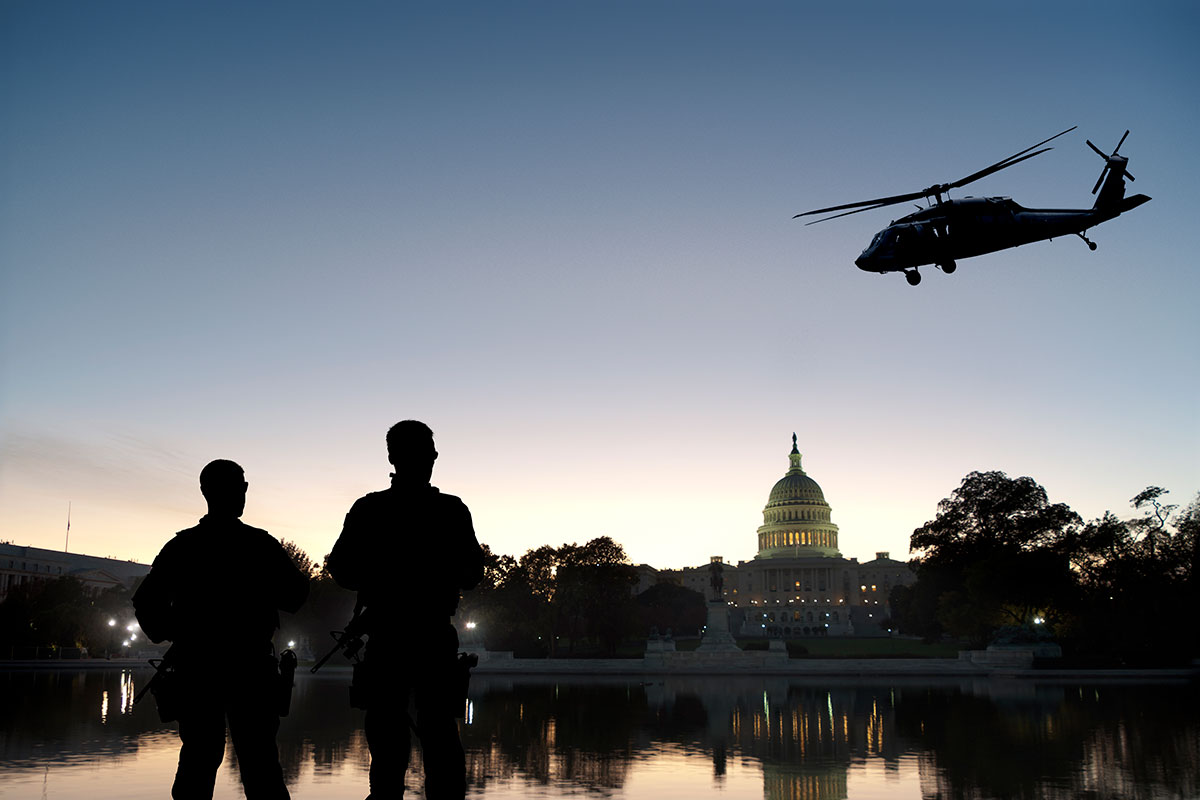
FAA mandates ATC use radar for helicopter separation when crossing flight paths near airports

Data analysis reveals visual separation not safe enough for high-traffic areas

FAA mandates radar separation for helicopters and planes after deadly DC midair collision

 
By Work Safety 24/7 Staff 
March 24, 2026

The Federal Aviation Administration (FAA) last week mandated air traffic controllers use radar to actively manage helicopters crossing flight paths at airports.

General notice (GENOT) JO 7110.801 - Interim Helicopter Separation Procedures - suspends the use of visual separation between airplanes and helicopters in Class B and Class C airspace, as well as Terminal Radar Service Areas (TRSA).

The GENOT mandates ATC use radar to actively manage helicopters and powered-lift aircraft to keep them separated at specific lateral or vertical distances when crossing arrival and departure paths, especially near busy airports.

AI data analysis response to 2025 Washington mid-air collision

Following the Jan. 29, 2025 mid-air collision near Ronald Reagan Washington National Airport (DCA), the FAA began using innovative AI tools to evaluate airports nationwide with high volumes of mixed helicopter and airplane traffic and is implementing appropriate safety mitigations.

“The tragedy over the Potomac one year ago revealed a startling truth: years of warning signs were missed, and the FAA needed dire reform. Since then, we’ve implemented numerous changes to protect the skies over our capital,” said Sean P. Duffy, U.S. transportation secretary. “But the job isn’t done. Using innovative data analysis, the safety team at the FAA has identified the need for enhanced protocols at all airports across the National Airspace System.”

The upgraded safety protocol is based on a year-long review by the FAA’s safety team that used those innovative tools to review cross-traffic data and incident reports.

‘See and avoid’ operations continue to generate close calls

Visual separation occurs when air traffic controllers advise pilots about nearby aircraft and allow them to remain visually clear of the other aircraft, in lieu of standard separation.

The FAA’s data analysis revealed for high-traffic areas, visual separation was not enough of a safety mitigation tool.

“Following the mid-air collision near Ronald Reagan Washington National Airport, we looked at similar operations across the national airspace,” said Bryan Bedford, FAA administrator. “We identified an overreliance on pilot ‘see and avoid’ operations that contribute to safety events involving helicopters and airplanes.”

Recent examples from within the past month include:

  • On Feb. 27, American Airlines Flight 1657 was cleared to land at San Antonio International Airport in Texas when a police helicopter was flying through the airport’s final approach path. The helicopter and aircraft were on converging courses when the helicopter made a left-hand turn to avoid the American Airlines flight.
  • On March 2, a Beechcraft 99 was cleared to land at Hollywood Burbank Airport in Southern California and conflicted with a helicopter that was flying through the final approach path. The aircraft were on converging courses when the helicopter made a right-hand turn to avoid the Beechcraft.

Except for medical & police, helicopter pilots should expect delays

Many helicopter operators who are used to obtaining immediate approval to transit through certain areas may have to adjust their flight routes or be delayed while controllers ensure they maintain safe distance from other aircraft.

When helicopter pilots conducting urgent medical or law enforcement operations (LEO) missions request to fly through these heavy-traffic areas, airline operations to those airports may be disrupted in order to allow these missions priority clearance.

GENOT JO 7110.801 is effective through Dec, 24, 2026.

Timeline of actions taken by the FAA at DCA

  • January 2025: Restricted helicopter traffic in the area over the Potomac River around DCA and stretching to Wilson Bridge 
  • February 2025: Began reviewing other airports with high volumes of mixed helicopter and airplane traffic 
  • February 2025: Temporarily eliminated the use of visual separation between helicopters and fixed wing aircraft by DCA. 
  • March 2025: NTSB Issued two Safety Recommendations to the FAA 
  • March 2025: Established procedures to eliminate helicopter and fixed-wing mixed traffic near the airport 
  • March 2025: Amended local air traffic procedures to eliminate the use of visual separation between helicopters and fixed wing aircraft within five miles of the airport. 
  • March 2025: Permanently closed Route 4 between Hains Point and the Wilson Bridge 
  • March 2025: Revised agreements with the military to require ADS-B Out broadcasting 
  • April 2025: Increased support, oversight and staffing for the DCA air traffic control team 
  • May 2025: Discontinued operations from the Pentagon (JPN) until the FAA and DOD updated procedures and fixed technical issues at the Pentagon Heliport 
  • June 2025: Secretary Duffy announced support for an independent audit by the Department of Transportation Office of Inspector General (DOT OIG) 
  • June 2025: Published modifications to helicopter zones and routes moving them farther away from flight paths at the airport. 
  • June 2025: Conducted Safety Risk Management (SRM) panel on changes to DCA Standard Operating Procedures (SOP) 7110.2L (SRM document approved July 2025). 
  • October 2025: Updated Helicopter routes and zones at DCA, IAD and BWI.  
  • October 2025: Use Time Based Flow Management (TBFM) departure scheduling at Washington Center and the supporting facilities using the DCA Extended Departure Scheduling System.  
  • January 2026: Published an Interim Final Rule that permanently restricts helicopters and powered-lift aircraft from operating in certain areas near DCA, unless it is for essential operations.

FAA mandates radar separation for helicopters and planes after deadly DC midair collision

FAA GENOT JO 7110.801 - Interim Helicopter Separation Procedures
 

More about FAA

Related Topics

Software & Technology   Artificial Intelligence   Data & Analytics   News   Safety Alerts   Investigations   Collision Avoidance   Department of Defense   DOT   FAA   NTSB   Risk Management   All topics
 

Subscribe

Subscribe to our FREE magazine, FREE email newsletters or both!

Join our Safety Matters newsletter and get safety news across logistics, warehousing, manufacturing, con­struc­tion, and other high-risk environments. Get the latest regulatory updates, alerts, safety products, equipment and training, and analysis.

Subscribe today


Editors’ Picks

NIOSH announces 2026 free Black Lung screening schedule
NIOSH’s mobile health unit will visit coal miners in West Virginia, Virginia, Alabama, Kentucky, Ohio, Illinois, and Indiana to screen for Black Lung. See the…
U.S. Appeals Court denies claim against OSHA citation of affiliated entity
The U.S. Court of Appeals denied UHS of Delaware’s petition against the OSHRC because it shared a common worksite and integrated safety operations under the same…
NHTSA recalls over 5,000 new USPS trucks for missing brake pin
After a USPS Next Generation Delivery Vehicle lost brake function, NHTSA and Oshkosh recalled all NGDVs produced because the brake pedal mounting pin and retaining…
MSHA issues alerts for ammonia & autotransformers
The Mine Safety and Health Administration encourages operators to examine all equipment with autotransformers currently in service and review safe handling of and…