Dedicated to helping businesses and individuals prioritize safety, health, and compliance in the workplace. From small startups to large corporations, safety is essential, and we're here to make it easier.


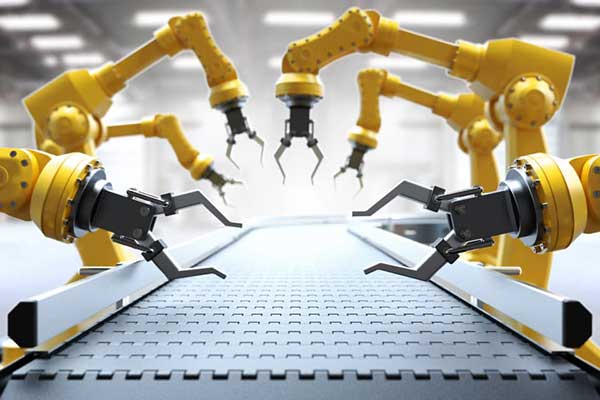
The ARM Institute (Advanced Robotics for Manufacturing Institute) recently announced its 25-01 Core-Funded Technology Project Call is now publicly available.
This project call, like all ARM Institute project calls, seeks to support both the U.S. Department of Defense (DoD) and the U.S. manufacturing ecosystem at large. The ARM Institute expects to award approximately $3M to fund multiple projects under the 25-01 Project Call.
The ARM Institute is seeking projects to make focused investments in the Special Topic Areas (STA) described below. These Special Topic Areas have been derived from the institute’s prior research, with guidance from the Institute’s Technology Advisory Committee (TAC) and partners.
While the project call is publicly available, organizations must become an ARM Institute Member to submit a proposal. Those who would like to learn more about membership can email [email protected].
The ARM Institute will host a publicly-available webinar further exploring its 25-01 Technology Project Call on March 13 at 1:00 p.m. EDT. During this webinar, it will review the project call content, process for submitting, answer questions, and more. Those who cannot attend the webinar live can register to receive the recording.
Further details about each STA are available in the ARM Institute's full 25-01 Project Call document.
Robots are gaining exceptional perception capabilities through recent advancements in AI. While deep learning methods in robotics have predominantly relied on RGB image data in the past, there is no reason to restrict their use only to vision data.
Multimodal sensing involves the use of various sensors that capture diverse data types such as visual, auditory, tactile, and proprioceptive, to help robots perceive and interpret their surroundings. Implementing multimodal sensing in robotics can significantly enhance their ability to make decisions and control various tasks.
In manufacturing applications, where a vast range of sensor data such as force, pressure, temperature, hyperspectral imaging, and acoustic are used, multimodal sensing can prove especially beneficial. Manufacturing automation applications are increasingly recognizing the importance of multimodal sensing in improving the precision, efficiency, and safety of different processes.
Advances in automation have provided for sustained productivity increases and manufacturing growth over the past decade. Sustaining this growth will require automation to become more agile and flexible, enabling the automation of tasks that require a high degree of human dexterity and the ability to react to unforeseen circumstances.
The traditional robot program-by-teaching model takes considerable time, requires extensive expertise, and does not lend itself to tasks that require adaptability. This has limited robots to high-volume, repetitive operations and precluded them from low-volume, time critical, and flexible projects.
Offline programming of robots is possible, like the computer-aided manufacturing (CAM) method widely used for machine tools. However, the poor accuracy of robots compared with machine tools limits them to jobs with low tolerance requirements, or requires additional methods such as calibration, modeling, and external sensing to improve their accuracy.
These methods increase the upfront cost of a robotic system. However, advances and cost reduction in sensing technologies (especially laser scanning) have brought robot systems into the price range of even small-to-medium enterprises (SMEs).
Future manufacturing environments will have multiple cobots and humans working in close-proximity and collaborating on specific tasks.
Robots are currently unable to reliably detect human presence in environments with high uncertainty and contextually understand human activity. Similarly, limited systems currently exist for dynamic, distributed sensing for safety.
ARM has identified the development of real-time coordination and orchestration between multiple robots and multiple humans to perform advanced manufacturing processes as a key area of interest.
Adaptive real-time path planning and motion control is increasingly essential in manufacturing environments, particularly as industries adopt advanced automation and robotics.
This technology optimizes the movement of machines, robots, and material handling systems, enhancing efficiency, productivity, and safety on the factory floor.
A successful system conveys a technical approach or methodology that enables advanced manufacturing robotic systems to adjust a path or trajectory to variations that may occur in the system or process.


Join our Safety Briefing newsletter and get safety news across logistics, warehousing, manufacturing, construction, and other high-risk environments. Get the latest regulatory updates, alerts, safety products, equipment and training, and analysis.

Don't miss a single news story, product review or safety resource. Subscribe to our newsletter for the latest safety news, updates, and exclusive offers.