Dedicated to helping businesses and individuals prioritize safety, health, and compliance in the workplace. From small startups to large corporations, safety is essential, and we're here to make it easier.


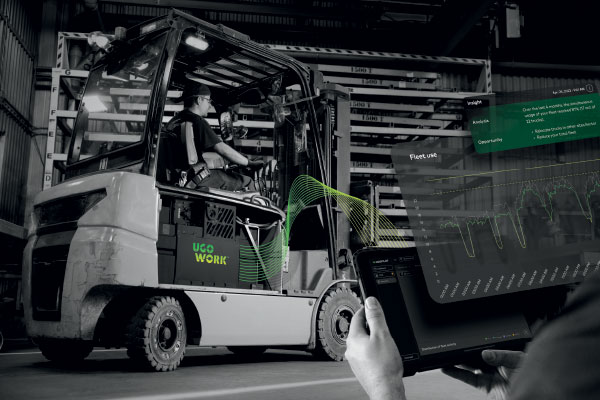
When a lift truck goes down right in the middle of a shift, the ripple effect can slow or even stop the picking, packing and loading process. Tight delivery windows are strained, schedules fall behind and labor hours are wasted as operators wait for replacements or repairs.
It’s a scenario that warehouse operators know all too well, and it’s pushing companies to rethink their battery performance and management strategies.
The need for continuous operation is also driving advancements in how warehouses power their fleets. Companies want more robust, intelligent and proactive battery solutions that minimize downtime and maximize productivity—all with an underlying focus on maintaining a safe operation around the clock.
Put simply, warehouse and DC operators aren’t just looking for a power source; they’re seeking a competitive advantage through smarter energy management.
Here are eight battery and battery management trends currently reshaping how these operators power and manage their fleets in the fast-paced fulfillment environment:
1) The case closes on the lithium-ion vs. lead acid debate. There’s long been a debate over whether or not lithium-ion should replace lead acid for warehouse lift truck fleets, but Robin Schneider, director of marketing at Green Cubes Technology, says the “case seems to be closed” and that lithium-ion has emerged as the clear winner. She cites safety, efficiency, longer lifespans and lower total cost of ownership as the key factors working in lithium-ion’s favor.
“Lead acid management requires a lot of maintenance, battery-swapping and watering,” says Schneider. “Opportunity charging is difficult, and you need a battery room plus the related safety equipment.” As lithium-ion matured, Schneider says its popularity in warehousing and fulfillment has grown exponentially.
T.J. Shelters, senior vice president of Motive at Concentric Power Services, says that as companies “try to run away from traditional lead acid” batteries, the shift isn’t as easy as it sounds.
“Everybody’s looking at new technologies, manufacturers and products, and there are a lot of them out there,” says Shelters. “The appetite’s definitely there—along with a heightened urgency around electrification and power management in general—but actually switching technologies and infrastructures can be challenging.”
2) Safety and certification concerns are real. Safety is another key concern in the battery world, where there’s a big difference between “cheap batteries” and those built with safety in mind.
Philippe Beauchamp, CEO at UgoWork, says battery management systems (BMS) come into play here, and that he’s seeing advancements with batteries connected to the cloud and using smart programs to guarantee safety over time.
“Safety is the talk of the town right now; companies want to know that their batteries will last for years in the harsh materials handling environment,” says Beauchamp, who has also seen more customers asking for insurance and proof that “everything is safe.”
Simply having basic certifications like UL 2580 (the UL safety standard for evaluating the safety of lithium-ion batteries used in electric vehicles) is no longer reassuring enough for all companies.
Looking ahead, Beauchamp expects to see an increasing demand for more “connected safety” battery management products that offer advanced diagnostics and user-friendly dashboards.
3) Good energy management helps maximize square footage. There’s a correlation between good energy management and the use of vertical space in the warehouse, where companies are looking upward and finding new ways to maximize that empty space.
“As you go up, you’re using more instantaneous energy, which means the consumptions may change (depending on the equipment and technology in question),” says Kevin McCusker, manager of advanced solutions at Stryten Energy, which continually reviews new battery chemistries, charger capabilities and energy storage systems that can support fast charging in elevated environments.
“Operations are changing so much that everyone’s looking at different factors on how to get the most out of those operations, and what solutions they need to get there,” says McCusker.
The right battery energy storage system (BESS), for example, can help an organization maximize its existing footprint while also adding sustainability gains and other advantages. “It’s about getting the most out of every square foot of the warehouse,” says McCusker.
4) Companies want to charge on the go. Interest in a portable and integrated battery charging solution is high right now as organizations pivot away from traditional, fixed charging infrastructures.
Those with rental fleets and smaller storefronts are especially interested in being able to “charge on the go,” according to Schneider, who says Green Cubes is responding by offering options like integrated chargers built directly into lithium-ion batteries.
The solution is appealing to customers that may not have a dedicated charging room (or the infrastructure to support one). Portable charging also simplifies logistics, making it easier to deploy and manage lift trucks in pop-up distribution points or in facilities that have limited space availability.
5) Connectivity is big business, but it’s not quite there yet. There’s also been a lot of buzz lately around “connected batteries,” but not all solutions offer the kind of connectivity that companies are looking for.
“There are a lot of portals being introduced; everyone is talking about it,” says Beauchamp. Some of those platforms aren’t exactly ready for prime time, however, with the critical piece being the translation of the data into meaningful insights that companies can actually use.
“Everybody talks about connected batteries, but no one is effectively transforming this information into something that’s actionable for customers,” says Beauchamp, who expects the technology to continue improving and advancing to the point where companies will be able to use a simple interface to manage their batteries.
“The future will be transforming scientific information that’s not useful for customers into essential information that they can take action on,” he says.
6) Power systems are productivity accelerators. Another notable shift Shelters is observing right now is the growing recognition of power as a productivity accelerator, rather than an operational expense.
Historically, power systems in warehouses were viewed simply as a cost center. They were something to buy, maintain and pay for that didn’t directly contribute to output or safety. Shelters says this mindset is shifting as facilities face rising energy costs, infrastructure constraints and the constant pressure to increase throughput.
The new power management solutions on the market are stepping in to help. For example, Shelters says Concentric’s Power Hive automates battery exchange and optimizes charging, effectively reducing peak demand charges and operational headaches.
“Nobody’s ever viewed power as a productivity accelerator before,” Shelters says, highlighting that these advancements allow companies to “move more product faster.”
This can turn smart power management into a strategic advantage that positively impacts operational efficiency and a company’s bottom line.
7) Smart charging requires even smarter scheduling. Right now, companies like Stryten are focused on making it easier for warehouse operators to understand and optimize their power solutions. For example, the company’s inCOMMAND brings data to the forefront and gives customers deeper insights into their operations and how to maximize efficiency.
McCusker says companies adopting this technology are “really surprised” at how the data helps them detect operational areas where small adjustments can produce significant efficiency and productivity gains.
This move toward data-driven decisions is fundamentally changing how facilities approach battery management. That’s because advanced systems go beyond just reporting data; they are designed to actively help operators. For example, intelligent chargers and alerts built directly into batteries help minimize abuse and practices that could lead to higher costs.
“As the technology and the products themselves become smarter,” he adds, “the industry is focused on making things easier for customers.”
8) Before you buy: Evaluate the options and confirm vendor stability. Warehouse operators tend to stick with familiar channels when seeking new battery and power management solutions, but Shelters encourages them to “explore past those normal channels.”
Lift truck dealers and OEMs may be reliable equipment providers, for instance, but they may not always present the full spectrum of available power options. Specialized companies may be able to offer more effective solutions to common challenges like peak power demand or downtime from single-battery systems.
When shopping around at those sources, be sure to check the supplier’s track record, background and references before buying.
“There have been a lot of lithium-ion battery suppliers that kind of come and go, so look for one that’s stable and has some longevity in the industry,” Schneider recommends. “This is a sector where there’s always a new ‘flavor of the day’ popping up, and where just a handful of companies have stood the test of time.”
Maximizing uptime and optimizing infrastructure
The warehouse power management landscape continues to shift and morph right along with the industries that these facilities support. In many cases, the changes are driven by the need to maximize uptime, operate safely and optimize existing infrastructure.
The lead-acid vs. lithium-ion battery debate is largely settled—with lithium-ion now being favored for its performance and lower total costs—but this shift has also created new safety concerns and the need for connected battery management systems that provide actionable data.


Bridget McCrea is an Editor at Large for Modern Materials Handling and a Contributing Editor for Logistics Management based in Clearwater, Fla. She has covered the transportation and supply chain space since 1996 and has covered all aspects of the industry for Modern Materials Handling, Logistics Management and Supply Chain Management Review. She can be reached at [email protected] , or on Twitter @BridgetMcCrea

Join our Safety Briefing newsletter and get safety news across logistics, warehousing, manufacturing, construction, and other high-risk environments. Get the latest regulatory updates, alerts, safety products, equipment and training, and analysis.

Don't miss a single news story, product review or safety resource. Subscribe to our newsletter for the latest safety news, updates, and exclusive offers.