Dedicated to helping businesses and individuals prioritize safety, health, and compliance in the workplace. From small startups to large corporations, safety is essential, and we're here to make it easier.


In this article (click links to jump to section):
National Miners Day - observed annually on Dec. 6 - recognizes the essential and dangerous work of mine workers.
Mine operations in the U.S. today require regular inspections by government agencies enforcing stringent regulations, supported by ever-advancing safety products, PPE, and technology.
But it took decades of change and thousands of injuries, long-term health issues, and deaths to develop and codify mine safety practices.
It’s no accident that we honor the accomplishments and sacrifices of miners on Dec. 6. It’s the date of the deadliest mine accident in U.S. history.
Mine safety and health regulations in the U.S. developed incrementally over the past century and a half. The first federal legislation to establish minimum ventilation requirements in underground coal mines and prohibit operators from hiring children under age 12 was passed in 1891.
The U.S. Bureau of Mines was established in 1910, following a decade during which coal mine fatalities exceeded 2,000 annually. According to U.S. Bureau of Labor Statistics (BLS) data, 1909-1911 saw the greatest number of mine disasters that killed five or more people:
One key event that contributed to the Bureau’s creation was the Monongah disaster - the deadliest mine disaster in American history.
On the morning of Dec. 6, 1907, the day shift entered mines 6 and 8 of Fairmont Coal Company’s Monongah Mine in West Virginia, on opposite sides of the West Fork of the Monongahela river. How many miners entered is unclear.
Officially the shift included somewhere between 380 and 480 miners. But that figure excluded at least 100 “trappers, mule drivers, pumpers, and boys,” as miners often took their children and other relatives into the mine to help. Over 500 people normally worked the day shift, complimented by another 500 on the night shift.
Around 10:28 a.m., the mines exploded. Hundreds were killed instantly, while survivors were trapped underground. Damage to ventilation systems, tangles of electrical wire, and piles of mangled equipment and rock made rescue attempts difficult and dangerous. Mines 6 and 8 were normally ventilated separately, but a connecting tunnel allowed each to be ventilated from the other’s shaft if required.
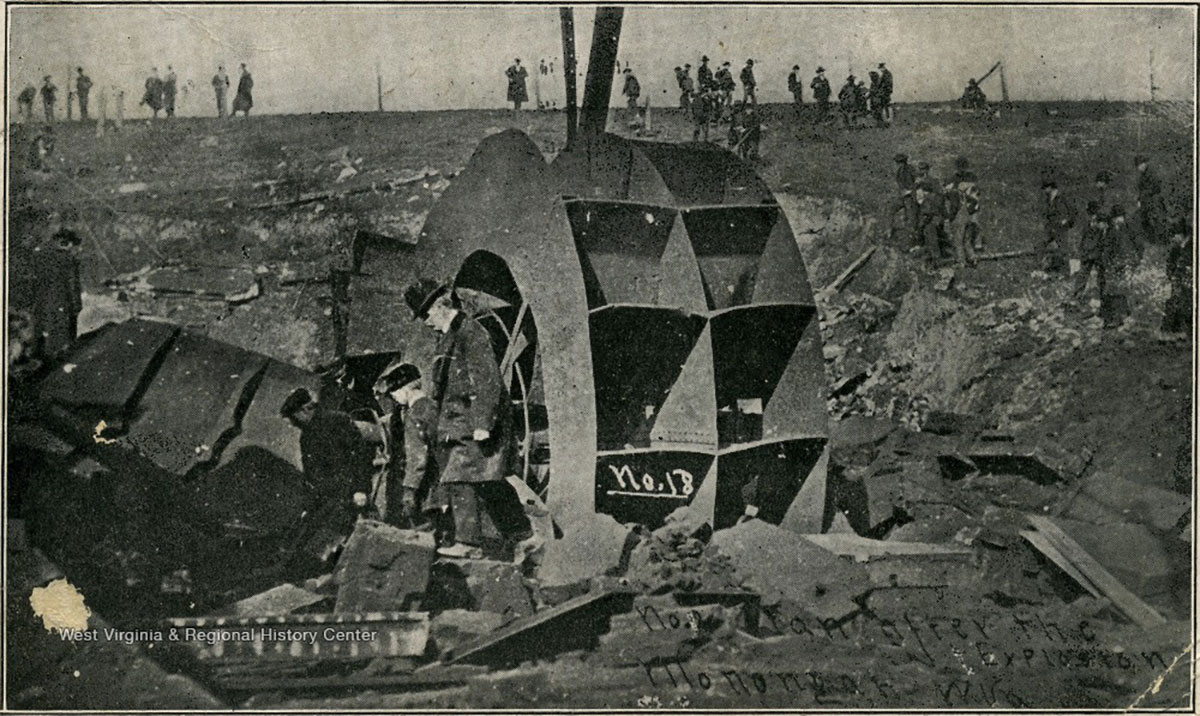
The explosion launched a 1,000 pound piece of concrete across the river. The blast destroyed the tipple and bridge connecting the two mines across the river, the buildings at the entrance to No. 8 mine, and more critically its opening.
There were survivors, including four miners who had not ventured deep inside No. 6 mine and escaped before a cave-in a few hundred feet beyond the opening. They later died from their injuries.
In total, 362 miners were confirmed dead.
Initially, newspapers speculated a miner igniting a black powder charge inadvertently lit a pocket of methane gas, which in turn ignited combustible coal dust throughout the mine.
But the mines were also wired with electricity to run cutting machines, and miners wore open-flame lights for illumination.
A report in the Bureau of Mines’ files noted at the time of the explosion, a “trip” of loaded cars was being hauled up the shaft when the cable broke and the cars rapidly fell back to the bottom of the slope. The resulting combustible coal dust cloud could have been ignited by arcing electrical wires torn down in the wreck or by lights of miners in the area.
An official cause of the explosion was never determined.
The Bureau of Mines’ safety and health role was limited to research and investigation, without inspection authority. That limitation would change in 1941, when federal inspectors were granted right of entry into coal mines to make inspections. However, no safety or health regulations were mandated.
Safety standards for coal mines were not created until 1947, when a provision was included for federal inspectors to notify mine operators and state mine agencies of violations. But once again, no enforcement provisions were included and the standards expired after one year.
Permanent legislation arrived in 1952 with the Federal Coal Mine Safety Act, which required annual inspections, mandatory safety standards, and gave the Bureau limited authority to issue violation notices, imminent danger withdrawal orders, and civil penalties against mine operators for noncompliance at underground mines with at least 15 employees. In 1966 it was extended to include all underground coal mines and introduced education and training programs.
The Bureau conducted a study in 1961 of causes and prevention of injuries and health hazards in mines outside the coal industry, including both metal and nonmetal mines. Just like the Coal Mine Safety Act, The Federal Metal and Nonmetallic Mine Safety Act passed in 1966 created safety and health standards, required annual underground mine inspections, and began education and training programs.
Beyond safety, health concerns were also addressed. Following the 1968 Farmington Mine Disaster, congress passed the 1969 Federal Coal Mine Health and Safety Act. Later amendments including the Black Lung Benefits Act mandating more benefits for miners who suffered from occupational health issues and illnesses.
Enforcement functions were transferred to the Mining Enforcement and Safety Administration (MESA) in 1973, and the Bureau was dissolved in 1996 - but not before a new agency was created to manage and enforce mine safety regulations with even greater authority.
The Mine Safety & Health Administration (MSHA), a part of the Department of Labor (DOL), was created through the Federal Mine Safety and Health Act of 1977, commonly known as the Mine Act.
The Mine Act transferred enforcement responsibilities from the Bureau of Mines (which was part of the Department of the Interior) to the DOL. It also established the independent Federal Mine Safety and Health Review Commission (FMSHRC) to provide independent review of most of MSHA's enforcement actions.
The Act consolidated all federal health and safety regulations of the mining industry - including coal, metal, and nonmetal - under a single statutory scheme, including:
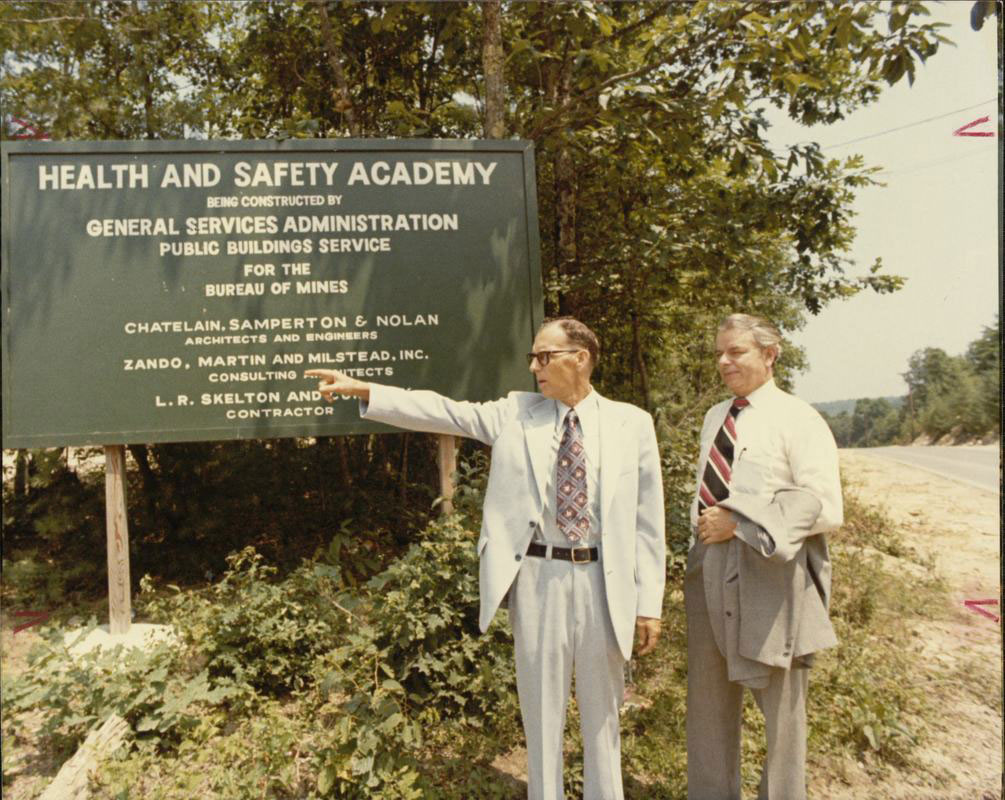
The Mine Act also created the Federal Mine Health and Safety Academy in Beckley, West Virginia to further Bureau of Mines research capabilities.
In 2009, Congress created National Miners Day, observed annually on Dec. 6.
This week, U.S. Senators Jim Justice (R-WV), Ruben Gallego (D-AZ), and others introduced the 2025 National Miners Day Resolution. It’s a necessary step to confirm this day of appreciation, honor, and remembrance of the accomplishments and sacrifices of the miners in our nation and local communities.
“Our miners have always been the backbone of this nation,” Justice said. “In West Virginia, our coal miners are the men and women who do the gritty, demanding work every single day, and we couldn’t be prouder. They power our homes, fuel our industries, and keep America moving forward. Their tenacity, sacrifice, and dedication are the true embodiment of West Virginia and our nation - they deserve recognition for their work.”
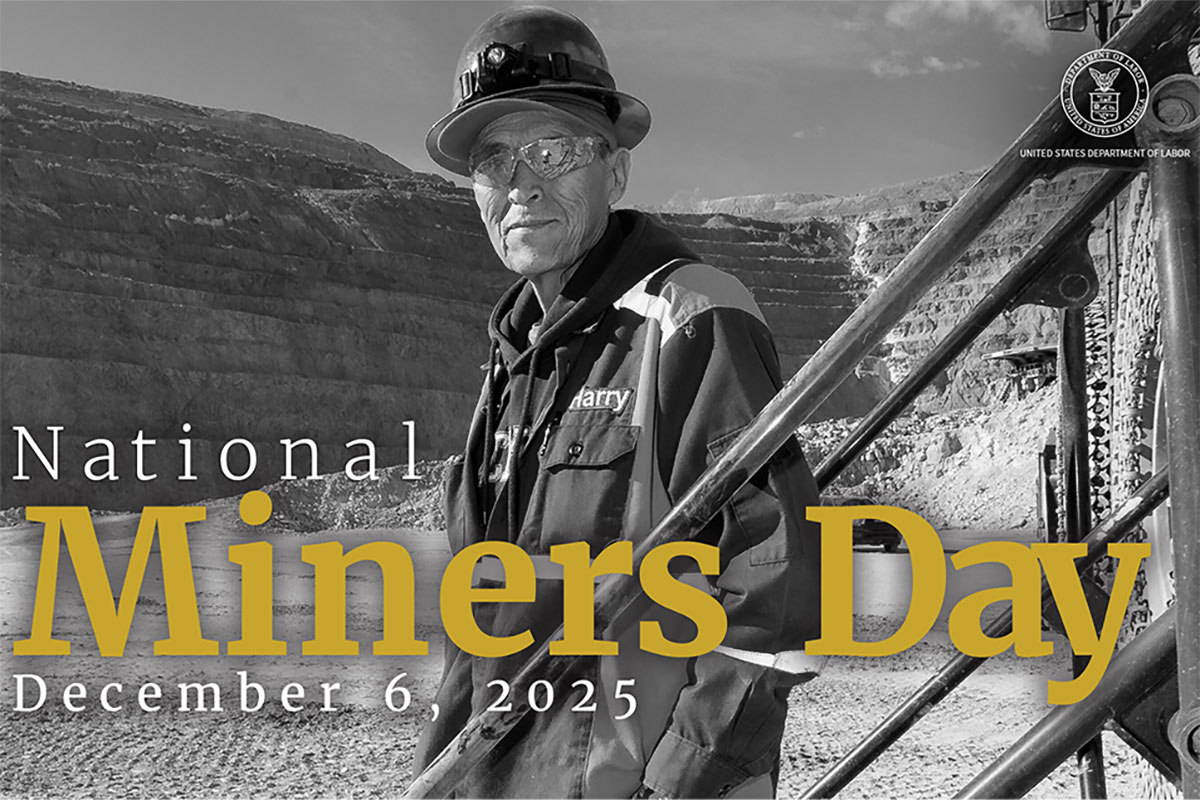
The resolution also encourages people to participate in local and national activities celebrating the contributions of miners.
“Every December 6th, we celebrate National Miners Day to recognize our nation’s hardworking miners,” Gallego said. “Arizona is home to more than 58,900 miners who help supply 71% of America’s copper, which in turn supports our energy grid, national defense, manufacturing, and infrastructure. I’m proud to help lead today’s resolution to honor these miners and to reaffirm our commitment to keeping miners safe and healthy.”
MSHA will once again observe National Miners Day tomorrow. The agency’s website describes the importance of this annual day of recognition:
“We celebrate National Miners Day to recognize and applaud the skill, dedication, and hard work miners put into providing many of the products essential to fulfilling America's most vital needs.
“America's miners are an invaluable part of our nation's workforce, supplying the minerals and raw materials for many critical needs like energy, national defense, manufacturing, and infrastructure. Each day, thousands of miners supply the iron ore and coal necessary to produce steel, the gravel and cement needed to build our roads and bridges, and the copper essential to electricity transmission lines.
“We honor current, retired, and former miners, including those we've lost in fatal mining accidents and to occupational illnesses such as black lung disease and silicosis. In doing so, we recommit to ensuring that miners' safety and health must always be the first priority and concern in mining.
“The Mine Safety and Health Administration honors miners through our commitment to their well-being, both during and after their service. MSHA continues to advance our mission every day, working to ensure that miners' health, safety, and rights are protected, and their work is acknowledged and celebrated.”
National Miner Day is a reminder of the opportunities we can take to acknowledge and learn about the vital work performed by thousands of Americans every day.
Consider attending a mining memorial ceremony or historical talk near you. You can also visit mining memorials and museums anytime.
If you’d like to learn more about the history of mine safety and health regulations in the U.S., check out these information sources used in this article:


Donald Halsing is the Founding Editorial Director of Work Safety 24/7. He was formerly the Associate Editor of Robotics 24/7.
Don's experience spans the supply chain, logistics, and construction industries, having worked in both warehouse operations and land surveying. He is also a professional wedding photographer with his fiancée Ashley.
Join our Safety Briefing newsletter and get safety news across logistics, warehousing, manufacturing, construction, and other high-risk environments. Get the latest regulatory updates, alerts, safety products, equipment and training, and analysis.
Don't miss a single news story, product review or safety resource. Subscribe to our newsletter for the latest safety news, updates, and exclusive offers.