Dedicated to helping businesses and individuals prioritize safety, health, and compliance in the workplace. From small startups to large corporations, safety is essential, and we're here to make it easier.


Sponsored
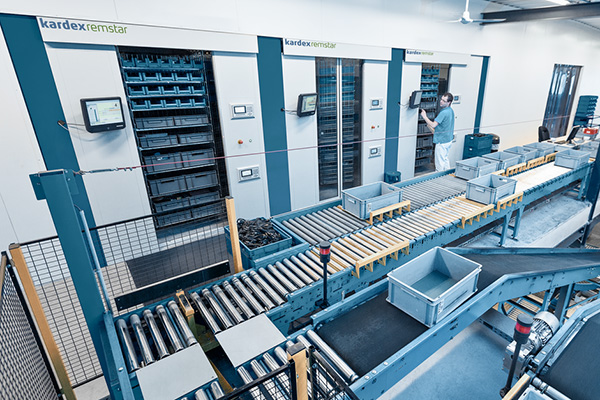
It’s a tough time to run a warehouse in America. Space is tight. Labor is expensive. Expectations are through the roof. There’s enormous pressure on your operations to be faster, smarter, and more efficient.
Every square foot counts.
Every second matters.
That’s why so many warehouses are turning to automated shelving systems.
Why? Because these systems don't just store your inventory. They transform how you manage space, pick orders, and move products. And the best part? They scale with your business.
In this article, the automated storage experts at Kardex Remstar break down what automated shelving is, the types and applications, what to store in them, and how to make the right selection for your operation.
Let’s get started with the basics.
An automated shelving system is a type of Automated Storage and Retrieval System (ASRS) designed to handle goods in a compact, vertical footprint.
No walking. No wasted time. No hunting down SKUs.
Automated shelving systems are built for speed, accuracy, and space optimization. Instead of employees traveling up and down aisles, the system does the heavy lifting (literally).
You can think of automated shelving systems as a massive vending machine that brings items directly to your operator with the push of a button. In other words, the system is what moves, so that your people don’t have to.
Most automated shelving systems are designed to integrate with Inventory Management Software to track item locations, manage orders, and improve traceability in real-time.
The best automated shelving system for your application will vary depending on what you want to store and how you want it to integrate with your larger warehouse workflow.
So how do you make the right choice for your operation?
Let’s take a look at some of the most popular kinds of automated shelves.

Vertical Lift Modules (VLM) are probably the most well-known type of automated shelving. That’s because VLMs are designed for maximum efficiency and ROI.
Picture a giant vertical cabinet with trays stacked from top to bottom, front and back. Between these stacked trays is a central extractor that acts like a robotic elevator. That extractor is the heart of the operation.
Here’s how a VLM works:
Most VLMs come with built-in safety features, such as light curtains, user authentication, and lockable access, to ensure secure and compliant operations, particularly in industries like healthcare and electronics.
And when paired with Inventory Management Software, your team can track every transaction, monitor stock levels, and even automate reordering based on real-time usage.
Vertical Lift Modules are best for:
Vertical Carousel Modules (VCMs) are like the Ferris wheels of automated shelving. A VCM consists of a series of carriers (think: shelves with bins or drawers) attached to a chain drive that rotates vertically inside a closed housing. When an item is requested, the system spins the carriers up or down to bring the correct shelf to the operator.
The key here is the rotation, which makes this automated shelf fast, precise, and reliable.
Here’s how a VCM works:
Their simplicity is what makes VCMs so impactful. Fewer moving parts mean less maintenance, fast uptime, and long-term durability. They’re ideal for SKUs that are a similar size and are required at a similar frequency. That’s why so many warehouses use them to store spare parts. They’re also ideal for hospitals, offices, military bases, automotive dealerships, and more.
VCMs are ideal for:
Think of a Horizontal Carousel like a racetrack. But instead of cars, it’s the bins and shelf units that rotate along an oval-shaped path.
Each carousel is a motor-driven loop of carriers (think: a rack of shelving filled with bins) that move horizontally around a track. When you request an item, the carousel spins to bring the right bin directly to the picking station. It’s fast, accurate, and made for high-throughput environments.
Here’s how a Horizonal Carousel works:
Horizontal carousels are often used in pods, where groups of two or more units work together with one or more operators. While one carousel is rotating, another is presenting the following item, creating a smooth, non-stop picking process. This method is called "batch picking" and it seriously boosts throughput.
Horizontal Carousels are the best option for:
Horizontal Carousels may be bulky. But they work lightning fast when paired with pick-to-light systems and batching software. With the right setup, one operator can pick hundreds of lines per hour, with near-perfect accuracy.
And like VLMs and VCMs, Horizontal Carousels are built with ergonomics in mind. Every item comes to you. That means fewer repetitive strain injuries, less fatigue, and a much more efficient picking process.
The best part about automated storage and retrieval systems is that there is no one-size-fits-all approach. In fact, many warehouses benefit from multiple types of automated shelving units working together.
Automated shelves are not limited to specialized applications. Standard systems are incredible solutions for offices, spare parts storage, e-commerce, and more.
However, the biggest benefit of automated shelving systems is that they excel in highly specific, high-stakes environments. Like cleanrooms, controlled substances and pharmaceuticals, military and DOD, and regulated and high-value inventory, like jewelry or electronics. Basically, any environment where traditional shelves pose a potential access risk.
Let’s take a look at how you can utilize automated shelves in various specialized environments and applications.
When you’re handling pharmaceuticals, medical devices, semiconductors, or lab samples, contamination isn’t just a risk for your bottom line; it could be a legal issue. Manual storage systems invite human contact, dust, and inefficiency. Automated shelving offers a clean, enclosed, and climate-controlled solution. Whether you need temperature, humidity, fire protection, or controlled access, automated shelving systems have you covered.
Need to lock it down? Automated shelving systems can be outfitted with access controls, audit trails, and key code protection. That makes them ideal for storing prescription drugs, controlled substances, high-ticket electronics, expensive jewelry, or even critical tools.
Security features include:
Secured automate shelving is ideal for:
With the right setup, your system can flag unauthorized access attempts and alert supervisors in real time.
Don’t let the word ‘shelving’ fool you. Automated systems can handle serious weight. Heavy automotive parts, aerospace components, tooling dies, and even maintenance equipment can all be stored in VLMs designed for heavy loads.
There are so many benefits to automated shelving for heavy-duty items, including:
If your industry is subject to strict regulations (like FDA, ISO, OSHA, you name it), then documentation and traceability are absolutely critical to your operations. Automated shelving makes compliance simple by recording every movement and keeping everything visible and trackable.
Operations love using automated shelving for:
The warehouse automation experts at Kardex Remstar understand that choosing to invest in automation is a decision that businesses take seriously. That’s why we offer a free, no-obligation, on-site visit. We’ll tour your facility, review your goals, and help you determine the best-fit solution for your unique workflow.

Join our Safety Briefing newsletter and get safety news across logistics, warehousing, manufacturing, construction, and other high-risk environments. Get the latest regulatory updates, alerts, safety products, equipment and training, and analysis.
Don't miss a single news story, product review or safety resource. Subscribe to our newsletter for the latest safety news, updates, and exclusive offers.