Dedicated to helping businesses and individuals prioritize safety, health, and compliance in the workplace. From small startups to large corporations, safety is essential, and we're here to make it easier.


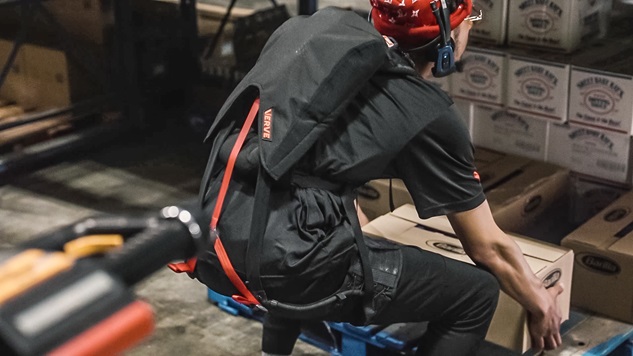
Verve Motion, a provider of exosuits or what it calls "wearable robotics," has released the results of a multi-year study on wearable robotics in the workplace. The research quantifies critical metrics related to back and hip injuries and demonstrates benefits for industrial workers using soft exosuit devices, including a significant reduction in workplace injuries and enhanced worker well-being, according to the company.
The four-year study, which Verve Motion said is the first of its kind, tracked ergonomics, safety, and injury metrics across more than 65 million lifts at over 40 sites in five industries: construction, food & beverage, logistics, manufacturing, and retail. The findings offer insights into the impact of soft exosuits on physically demanding jobs where workers engage in rigorous, repetitive tasks, such as case picking, manufacturing, order picking, and shipping and receiving, routinely lifting between 10,000 and 60,000 pounds per day, the company added.
In selecting the variables to capture in the safety study, Verve Motion modeled its metrics on Marras et al., a 1995 landmark study in ergonomics and occupational health, where the team analyzed over 400 industrial lifting jobs and identified several variables (e.g., lifting frequency, the degree of forward bending, and twisting velocity) correlated with the risk of occupational-related lower back disorders.
“In conducting this data analysis, Verve Motion collaborated with customers across a number of sectors with the focus on metrics that matter most to them, particularly injury reduction, productivity improvement, employee well-being, and retention,” said Ignacio Galiana, CEO and co-founder of Verve Motion. "We then analyzed how incorporating a soft exosuit ergonomically performed in environments that involved repetitive lifting, lowering, and bending—tasks performed hundreds or thousands of times daily.”
The study identified the food & beverage, logistics, and retail sectors as having the most intense and least safe lifting activities, with employees averaging approximately 200 lifts per hour. Case picking was noted as the occupation with the highest lift rate, averaging 196 lifts per hour, with some sites exceeding 300 lifts per hour. More than 50% of these lifts involved deep lifts, with trunk flexion exceeding 40 degrees, and the heaviest loads exceeding 30,000 pounds per day on average.
Dangerous movements leading to lower back and hip injuries were also highlighted. Bending at the waist accounted for 55-65% of all lifts, twisting for 20-25%, side bending for 10-12%, and excessive forward bending for 15-20%, all of which are well-known risk factors for injuries. Key findings that Verve Motion noted include:
Emphasizing Safety Culture
The study findings also underscored the critical importance of a strong safety culture and committed collaboration at the deployment site for the successful adoption of exosuits, Verve Motion added. The research revealed that without these foundational elements, even the most sophisticated technology cannot reach its full potential in enhancing workplace safety.
"The data from this multi-year study confirms the transformative impact wearable robotics can have on reducing workplace injuries in high-risk industries," said Galiana. "This emphasizes the exosuit's role not just as personal protective equipment, but as a catalyst for industry-wide change and sets a new benchmark for workplace safety and innovation."
Developed at Harvard's Biodesign Lab, the SafeLift exosuit, offers adaptive assistance by combining real-time motion sensing with robotic support. It functions like a lightweight backpack, reducing back strain by about 40 percent during a typical workday and includes a cloud platform with sensors that detect risky movements, enhancing injury prevention and workplace ergonomics through coaching, the company noted.
Since its inception in 2020, Verve Motion has raised more than $40 million in financing from a diverse group of investors.

Join our Safety Briefing newsletter and get safety news across logistics, warehousing, manufacturing, construction, and other high-risk environments. Get the latest regulatory updates, alerts, safety products, equipment and training, and analysis.
Don't miss a single news story, product review or safety resource. Subscribe to our newsletter for the latest safety news, updates, and exclusive offers.