Dedicated to helping businesses and individuals prioritize safety, health, and compliance in the workplace. From small startups to large corporations, safety is essential, and we're here to make it easier.


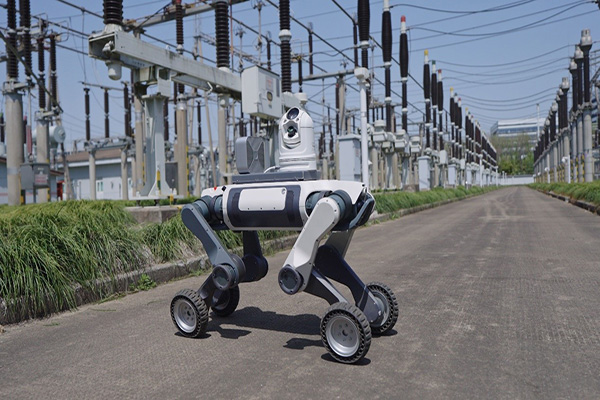
DEEP Robotics, a China-based embodied AI and robotics company, recently launched the medium-sized wheel-legged robot LYNX M20. Combining both wheeled and legged mobility capabilities, the company said it is designed for demanding operational scenarios, driving intelligent upgrades across various applications, including industrial inspection and emergency rescue operations.
The company, whose portfolio includes the LYNX all-terrain, off-road robot, Dr.01 humanoid and others, said that because manual inspection in the energy sector faces multiple challenges, users can benefit from LYNX M20’s capabilities.
LYNX M20 is a wheel-legged robot capable of autonomous intelligent inspection, combining the all-terrain obstacle-crossing capability of traditional legged robots with the mobility of wheeled systems, featuring an effective payload of 15kg and a maximum payload of 50kg to meet the requirements for carrying various detection equipment during power inspections.
DEEP Robotics said LYNX M20 achieves 2.5 hours of runtime with a maximum sustained operating speed of 2 m/s and a maximum range of 15 km. Additionally, LYNX M20's unique 'front-elbow-rear-knee' symmetrical joint structure (which is directionally agnostic, allowing forward and reverse movement and turning without body rotation) and night fill lights enable it to freely navigate 50cm narrow passages without difficulty in confined spaces like substation equipment rooms and utility tunnels under low-light conditions. Simultaneously, it possesses autonomous charging, environmental perception and fault diagnosis functions, enabling comprehensive, high-frequency substation inspections.
LYNX M20 can also be equipped with a variety of advanced sensors. The dual-spectrum pan/tilt it can carry combines visible light imaging and infrared thermal imaging technology. Through visual identification, it can not only visually present the physical damage of the equipment, but also detect the internal heat abnormality of the equipment with the help of infrared radiation imaging differences, such as local overheating of the transformer winding or poor contact of the cable connector, to help the operation and maintenance personnel quickly locate the fault and judge the cause.
Additionally, the robot dog can be equipped with a voiceprint and gas sensor, which can identify subtle defects such as abnormal sound and partial discharge of cooler, and monitor the concentration of harmful gas in the air in real-time to ensure production safety. LYNX M20 is also equipped with an inspection system that can analyze the images and data information monitored by sensors, and automatically generate inspection reports to further improve inspection efficiency.
The robot has an IP66 rating, which indicates that it is protected against foreign object intrusion and dust ingress, and when subjected to powerful water jets or heavy seas, the amount of water entering the equipment shall not reach harmful levels.
The industrial-grade IP66 protection emphasizes reliability under dynamic operating conditions, with its technical certification comprising two dimensions: the first digit represents a dustproof level, requiring high-density dust protection with zero penetration after 8-hour dust chamber testing; the second digit represents a waterproof level, demanding dynamic water resistance capable of withstanding 12.5L/min high-pressure spraying (equivalent to continuous impact from three fire hoses).
Harsh environments are common in industrial inspection processes, with high temperatures, sand and dust requiring extremely stringent protection requirements for robots. DEEP Robotics said LYNX M20 is waterproof, dustproof and has impact-resistant capabilities. In adverse conditions such as rainy or dusty weather, it can still operate normally without equipment damage or failure caused by environmental factors.
Its operating temperature range extends from -20°C to 55°C, enabling LYNX M20 to work stably in extreme temperature environments and significantly expanding its applicable regions and seasonal limitations.
Simultaneous Localization and Mapping (SLAM) is the core technology for autonomous robotic navigation. Sensors like lidar and cameras allow the robot to localize and map its spot in an environment in real-time, while simultaneously calculating its position. It is also able to plan optimal paths based on map and localization data, with real-time obstacle avoidance and posture adjustment.
LYNX M20 collects and processes environmental data hundreds of thousands of times per second, just like "digital consciousness" with spatial cognition. Even in complex scenes such as tunnels and ruins, it can calculate its posture in real-time and reconstruct a three-dimensional environmental model with centimeter-level accuracy.
For unstructured terrain such as mountains and steep slopes, the robot has a 96-line laser radar and a large visual field of 360° x 90°, which can intelligently perceive the terrain and adjust its motion posture independently according to the terrain with AI motion control algorithms.
It can also achieve omnidirectional obstacle avoidance independently, cope with extreme environments such as rough mountain roads, muddy wetlands and other obstacles.


Join our Safety Briefing newsletter and get safety news across logistics, warehousing, manufacturing, construction, and other high-risk environments. Get the latest regulatory updates, alerts, safety products, equipment and training, and analysis.

Don't miss a single news story, product review or safety resource. Subscribe to our newsletter for the latest safety news, updates, and exclusive offers.