Dedicated to helping businesses and individuals prioritize safety, health, and compliance in the workplace. From small startups to large corporations, safety is essential, and we're here to make it easier.


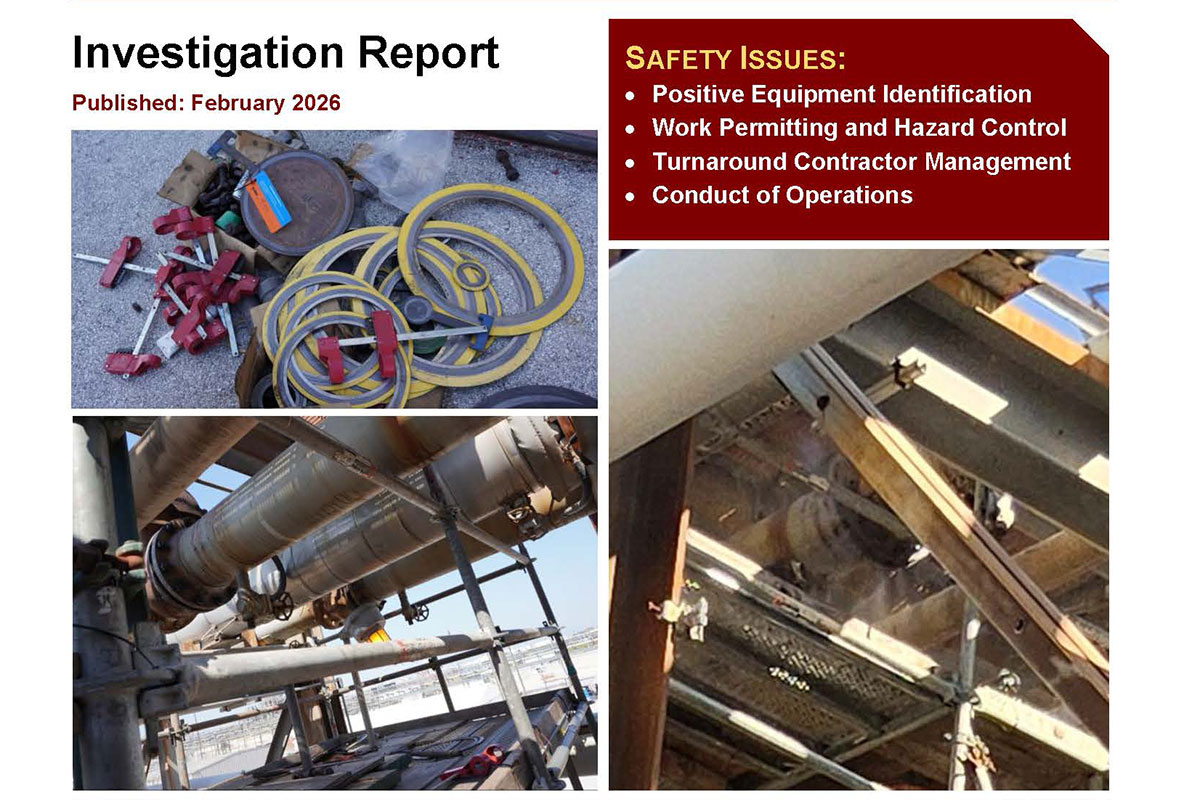
The CSB today released its final investigation report into the fatal Oct. 10, 2024 release of toxic hydrogen sulfide at the PEMEX Deer Park Refinery in Deer Park, Texas.
Two contract workers died as a result of exposure to the toxic gas, 13 others were transported to local medical facilities, and dozens more were treated at the scene.
Over 27,000 pounds of toxic hydrogen sulfide gas were released during the incident, and a shelter-in-place order was issued for two neighboring cities.
The CSB concluded the incident resulted from a contractor’s failure to correctly identify process equipment, the refinery’s failure to assess hazards, along with deviations from established policies and procedures.
“Two people died and the surrounding community was put at risk because of a completely preventable mistake,” said Steve Owens, CSB chairperson. “Companies must ensure that hazards are clearly identified and that effective procedures are in place to protect workers in facilities like this and the people who live and work nearby.”
The release occurred during maintenance activities in the refinery’s Amine Unit when contract workers from Repcon, Inc. mistakenly opened a flange on piping that contained pressurized hydrogen sulfide. The workers were supposed to open a different flange on piping that was located approximately five feet away.
One Repcon worker was fatally injured when the gas was released. The hydrogen sulfide vapor subsequently traveled downwind into an adjacent unit, where a worker employed by another contractor (ISC) inhaled the toxic gas and was also fatally injured.
The release continued for nearly one hour until refinery emergency responders reassembled the leaking flange and stopped the discharge. Because of the release, local officials in the neighboring cities of Deer Park and Pasadena, Texas, issued shelter-in-place orders that remained in effect for several hours.
Although the refinery did not sustain physical structural damage, the company reported approximately $12.3 million in property damage related to loss of use of the Amine Unit and downstream processes.
The CSB’s final report concluded the incident resulted from the failure to positively identify the correct process equipment before mistakenly opening the piping that contained hydrogen sulfide instead of the piping that had been clear of the toxic gas.
Contributing to the severity of the incident was the refinery’s failure to adequately assess the hazards of conducting pipe-opening activities in an active unit next to an area where numerous other workers were present. The investigation also found that deviations from established policies and procedures contributed to the event.
The CSB’s final report further defined these key safety issues:
“Opening hazardous process piping is a common maintenance activity that can be performed safely with effective equipment identification and work permitting practices,” said Tyler Nelson, CSB investigator-in-charge. “This tragic incident underscores the critical importance of equipment identification methods that are clear, consistent, and verified by both facility operators and contract workers before equipment is opened. Strong equipment marking practices, effective work controls, and disciplined operations are essential to preventing deadly releases like this one.”
The CSB’s report issues several safety recommendations to PEMEX Deer Park Refinery and the American Society of Mechanical Engineers (ASME).
The CSB recommended PEMEX Deer Park
Separately, the CSB recommended ASME develop written guidelines establishing a standard practice for marking equipment prior to opening, including clear identifiers and requirements for removing markings after work is complete.


The U.S. Chemical Safety Board (CSB) is an independent, nonregulatory federal agency that investigates the root causes of major chemical incidents. The Board does not issue citations or fines, but makes safety recommendations to companies,…
Join our Safety Briefing newsletter and get safety news across logistics, warehousing, manufacturing, construction, and other high-risk environments. Get the latest regulatory updates, alerts, safety products, equipment and training, and analysis.
Don't miss a single news story, product review or safety resource. Subscribe to our newsletter for the latest safety news, updates, and exclusive offers.