Dedicated to helping businesses and individuals prioritize safety, health, and compliance in the workplace. From small startups to large corporations, safety is essential, and we're here to make it easier.


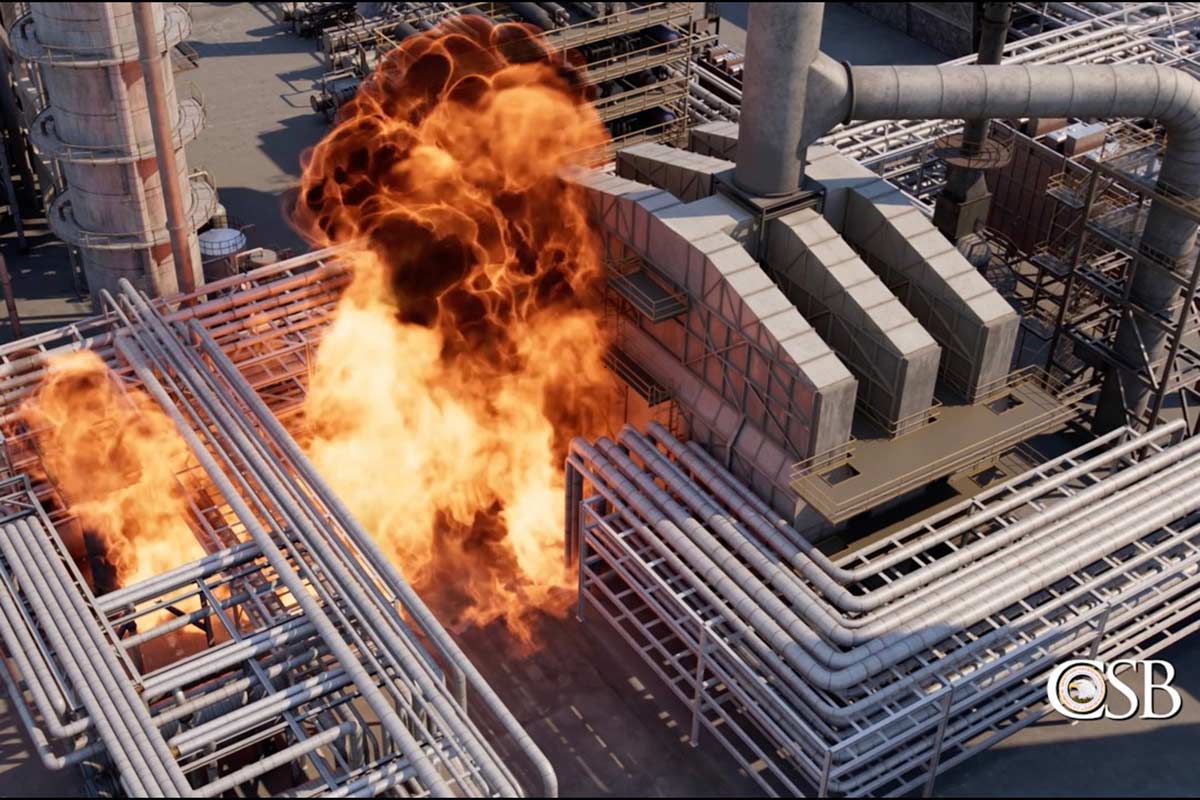
The CSB today released a new safety video on its investigation into the fatal fire that occurred on Sept. 20, 2022, at the BP-Husky refinery in Oregon, Ohio.
The fire occurred after highly-flammable liquid naphtha was released directly to the ground from a pressurized vessel during an emergency situation at the refinery.
The liquid naphtha vaporized and formed a flammable vapor cloud that quickly ignited. The resulting massive flash fire killed two refinery employees - brothers Ben and Max Morrissey.
The CSB's new safety video, “Alarming Mistakes, Deadly Decisions: Fatal Fire at BP-Husky,” includes an animation of the events leading to the incident, and commentary from CSB Board Member Sylvia Johnson, Investigator-In-Charge Bill Steiner, and Investigator Melinda Hartz.
The video describes the series of cascading and worsening events that unfolded at the BP-Husky refinery on the day of the incident.
At approximately 3:20 a.m., a process upset in the refinery’s naphtha hydrotreater unit resulted in a loss of containment at the refinery. This led to other refinery units being shut down, and eventually to decisions being made by BP personnel that led to liquid naphtha flowing into, and filling up the fuel gas mix drum, a pressurized vessel which normally contained only fuel gas vapor.
As the fuel gas mix drum filled with liquid naphtha, the mix drum overflowed into vapor piping that led to downstream furnaces and boilers, which created the potential for furnace fires or explosions. Because of the increasingly-abnormal state of the fuel gas mix drum, a board operator in the control room directed several employees to drain the liquid in the mix drum “as fast as you guys can.”
Shortly thereafter, the two Morrissey brothers released the liquid to the ground by directly opening several valves on the mix drum. The CSB’s investigation report concluded that employees may have believed that the liquid was an amine-water solution, not flammable naphtha.
As the flammable naphtha was released it vaporized and formed a large flammable vapor cloud. At 6:46 p.m., the flammable cloud reached a furnace in the Crude Unit 1 and ignited, resulting in an enormous flash fire that engulfed the two brothers.
The video notes that there was an “alarm flood” during the 12 hours preceding the flash fire. Between 6:50 a.m. and 6:49 p.m. on the day of the incident, board operators at the refinery were overwhelmed by 3,712 alarms, causing delays and errors in responding to critical alarms and communications among BP employees.
Additionally, in mid-afternoon on the date of the incident, refinery leadership and process engineering personnel met to discuss the situation and plans for oncoming night shift support.
During the meeting, these personnel discussed shutting down Crude 1 operations or putting Crude 1 in “circulation” in an effort to stabilize Crude 1 Tower operations with the naphtha hydrotreater unit down and the Coker Gas Plant bypassed. Ultimately, the group decided that neither shutdown nor circulation would be done at that time, which allowed the crude oil feed to continue.
Moreover, although one of the participants in the meeting summarized the meeting’s outcome in an email, the email was never sent, and there is no evidence that the actions agreed upon in the meeting were ever otherwise conveyed to the night shift refinery coordinator or board operators, either verbally or in writing.
In the video, CSB Board Member Sylvia Johnson said, “This tragic incident unfolded over a period of 24 hours and during that time there were more than 3,700 alarms that sounded. There were many missed opportunities to prevent the fatal flash fire. Our investigation found that operators did not recognize the serious danger unfolding around them or have the tools and safeguards to effectively manage the highly stressful abnormal situation indicated by the alarm flood.”
As in the CSB’s final report on the incident, the safety video covers four key safety issues that contributed to the incident:
The video also highlights safety recommendations made by the CSB to the American Petroleum Institute (API) and the current owners of the refinery, the Ohio Refining Company, LLC.
Johnson concluded the video by stating, “The tragic loss of life underscores the importance of putting in place tools that employees need to perform tasks safely, such as stop work authority, and having adequate policies, procedures, and safeguards in place to effectively manage highly stressful abnormal situations. Doing so will help prevent a future needless tragedy.”


The U.S. Chemical Safety Board (CSB) is an independent, nonregulatory federal agency that investigates the root causes of major chemical incidents. The Board does not issue citations or fines, but makes safety recommendations to companies,…
Join our Safety Briefing newsletter and get safety news across logistics, warehousing, manufacturing, construction, and other high-risk environments. Get the latest regulatory updates, alerts, safety products, equipment and training, and analysis.
Don't miss a single news story, product review or safety resource. Subscribe to our newsletter for the latest safety news, updates, and exclusive offers.