Dedicated to helping businesses and individuals prioritize safety, health, and compliance in the workplace. From small startups to large corporations, safety is essential, and we're here to make it easier.


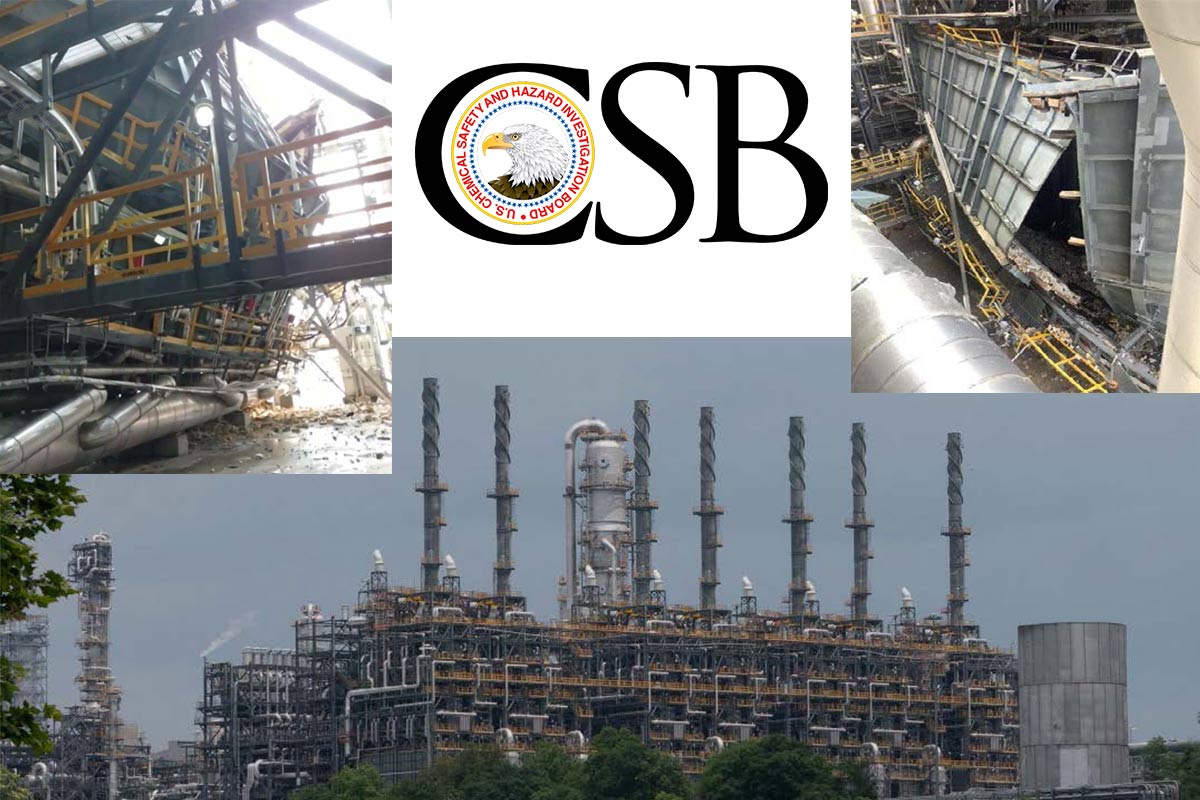
The CSB today released its final report on its investigation into the major June 4, 2025, explosion and fire at the Shell Polymers Monaca facility in Monaca, Pennsylvania.
The incident occurred when flammable cracked gas backflowed into the firebox of an ethane cracking furnace, known as Furnace 5, and ignited.
The explosion severely damaged Furnace 5 and was followed by a fire that resulted in the evacuation of 15 employees. Shell estimated approximately $95 million in property damage.
The incident also resulted in the release of an estimated 5,100 pounds of ethylene and combustion products. Furnace 5 was repaired and returned to service approximately seven months after the incident.
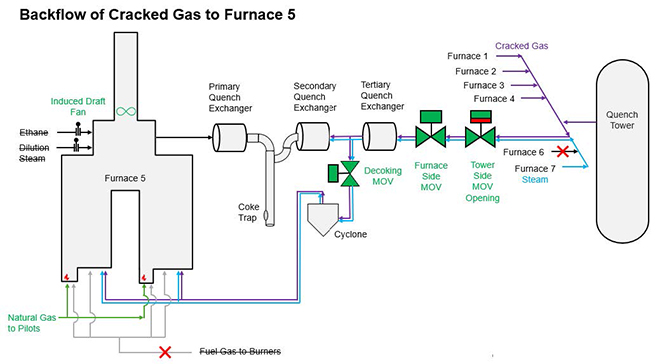
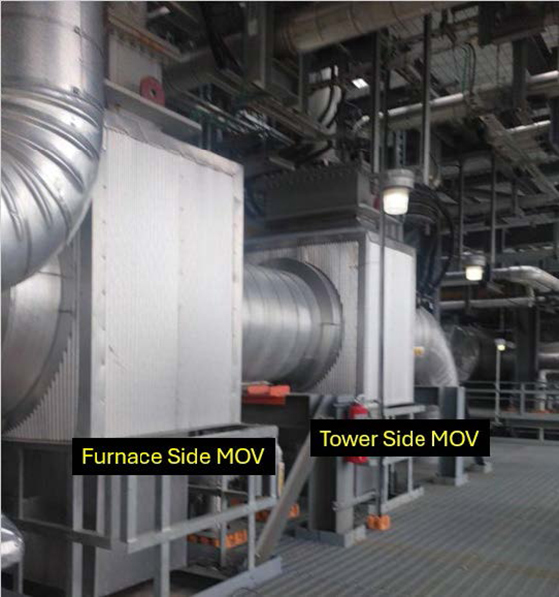
The CSB determined the cause of the incident was the inadvertent simultaneous opening of two motor-operated valves (MOVs) that had been used to isolate Furnace 5. Opening both valves created an unintended flow path that allowed flammable cracked gas to backflow from the downstream quench tower into the furnace firebox, where the gas contacted lit pilots and ignited.
The final report found several factors that contributed to the incident, including:
“This serious incident highlights the importance of ensuring that the personnel who are assigned to critical tasks actually have the experience to do them, as well the need to have a process control system that is easy to understand and clearly communicates essential information to the people operating it. Fortunately no one was killed or seriously injured in this incident, but it could have been even worse under different circumstances.”
— Steve Owens, CSB Chairman
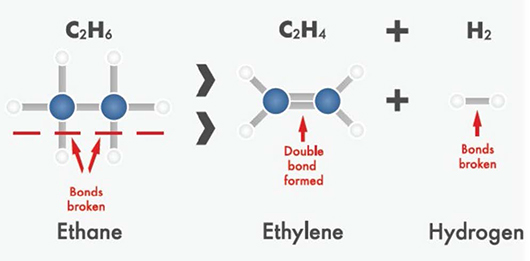
The Shell facility converts ethane to ethylene through a high-temperature process in an ethane cracking unit containing seven furnaces. During the process, a solid carbon residue known as coke is produced and collects in coke traps designed to prevent the material from moving downstream through the process.
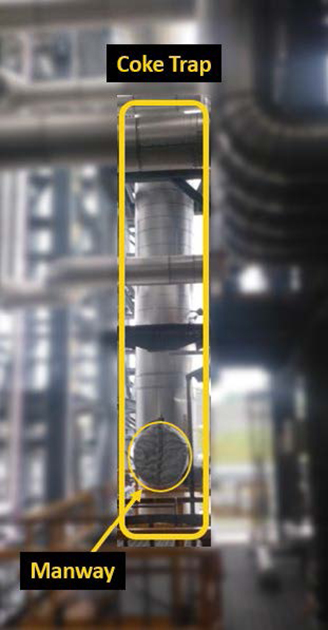
In late March 2025, Shell inspected the coke trap of Furnace 1 during an ethane cracking unit outage and decided in early April 2025 that the coke traps of all seven furnaces needed to be cleaned during the outage. None of the coke traps in any of the furnaces had ever been cleaned prior to this time.
The coke traps in Furnaces 1, 2, 4, and 7 were successfully cleaned for the first time during the ethane cracking unit outage. Furnace 5 was the next coke trap to be cleaned. However, by the time that the Furnace 5 coke trap cleaning was completed on June 3, Furnaces 1, 2, 3, and 4 were in ethane cracking mode.
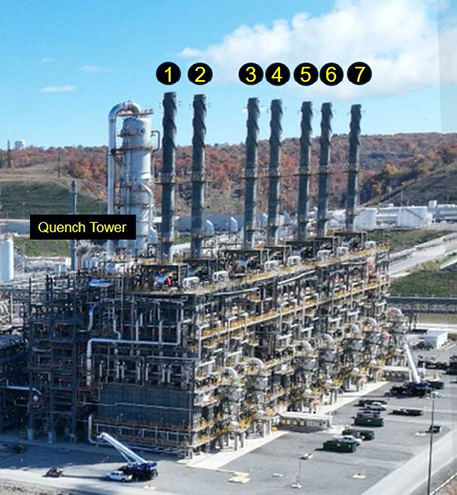
As Furnace 5 was being returned to service after its coke trap was cleaned, a process control engineer inadvertently opened both of the valves that isolated the furnace from the downstream equipment. The process control engineer had never performed this task before.
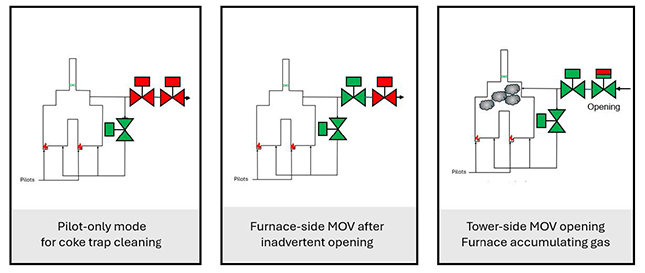
When both valves were opened, the resulting flow path allowed flammable cracked gas to backflow into the furnace, where it contacted lit pilots and ignited approximately six minutes later, causing an explosion that ruptured the firebox wall and a subsequent fire.
Although many factors contributed to the incident, the CSB’s final report addresses the two primary safety issues that contributed to the incident:
Shell relied on 11 administrative controls to prevent cracked-gas backflow and a potential explosion, but these controls all depended on workers and managers following procedures.
Although Shell’s process hazard analyses had identified backflow as a potentially fatal hazard, the facility did not implement engineered safeguards to prevent it when the furnace was in its double-isolation state.
The CSB found that the furnace technology licensor had provided engineered controls capable of preventing backflow, but Shell had not configured them for use during the removal of double isolation.
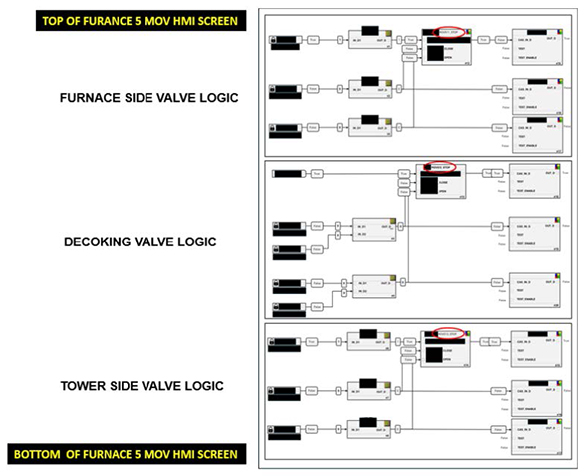
The CSB further found that Shell’s HMI, displayed three nearly identical valves on a single logic screen, with identification tags that differed primarily by their final digit. The HMI design contributed to the process control engineer inadvertently manipulating the wrong valve, creating a hazardous flow path into a furnace containing lit pilots.
“This incident demonstrates the importance of using engineered safeguards to control serious process hazards in all modes of operation, rather than relying solely on procedures and worker actions. The CSB’s investigation found that available engineering controls could have been used to prevent the backflow of flammable gas into the furnace.”
— Owen Trippany, CSB Investigator
As a result of its investigation, the CSB has issued two recommendations to Shell aimed at strengthening process safety at the Monaca facility and preventing a recurrence.


The U.S. Chemical Safety Board (CSB) is an independent, nonregulatory federal agency that investigates the root causes of major chemical incidents. The Board does not issue citations or fines, but makes safety recommendations to companies,…
Join our Safety Briefing newsletter and get safety news across logistics, warehousing, manufacturing, construction, and other high-risk environments. Get the latest regulatory updates, alerts, safety products, equipment and training, and analysis.
Don't miss a single news story, product review or safety resource. Subscribe to our newsletter for the latest safety news, updates, and exclusive offers.