Dedicated to helping businesses and individuals prioritize safety, health, and compliance in the workplace. From small startups to large corporations, safety is essential, and we're here to make it easier.


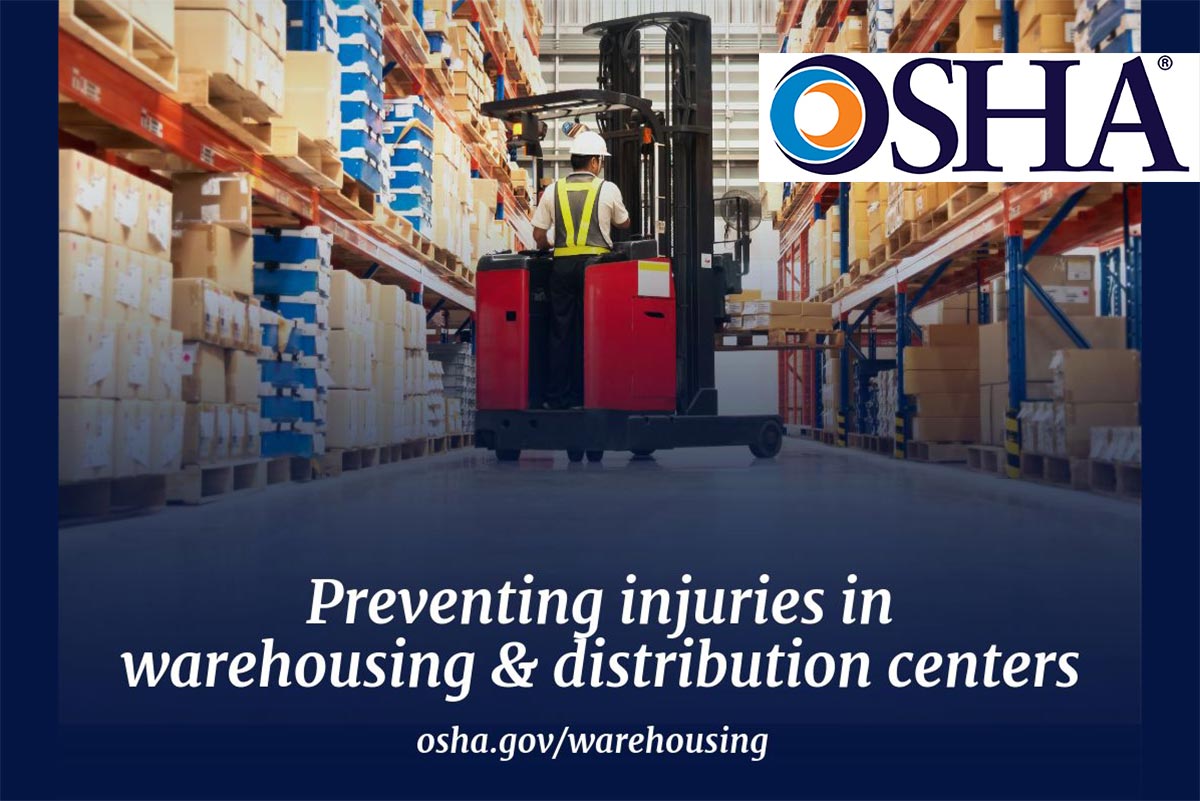
OSHA renewed its National Emphasis Program (NEP) for Warehousing and Distribution Center Operations, extending and revising the original 2023 NEP that expired July 13.
Within the first 18 months of the NEP’s inception, OSHA said it identified more than 1,700 violations and removed approximately 37,410 workers from hazards.
The new program provides comprehensive safety inspection policies and procedures for warehouses, distribution centers, mail and postal facilities, as well as parcel logistics and courier services.
OSHA noted days away, restricted, or transferred (DART) rates show injury and illness rates for these industries continue to be significantly higher than the overall industry average.
Inspections will focus on common warehouse hazard sources, including:
The new version became effective July 31, 2026, and will remain in effect until July 31, 2031. Significant changes from the 2023 version include:
In the original NEP, unprogrammed fatalities/catastrophes, complaints, or referrals inspected within covered industries were expanded to address the workplace hazards targeted by the NEP.
In the 2026 NEP, OSHA gave its Area Offices (AOs) discretion to expand unprogrammed inspections to include the Warehouse NEP where there is evidence that violative conditions may be found in the establishment.
Additionally, OSHA Information System (OIS) coding for the NEP was changed from “WAREHOUSE23” to “WAREHOUSE.”

Effective April 10, 2026, the revised Outdoor and Indoor Heat-Related Hazards NEP uses OSHA & BLS data to direct inspection priorities to 55 high-risk indoor and outdoor industries.
In the 2023 NEP, inspectors were required to document both heat exposure and ergonomic hazards during each inspection.
If those hazards were found, inspectors were required to open a health inspection.
Because some industries targeted by OSHA’s Warehouse NEP overlapped with its OSHA’s Outdoor and Indoor Heat-Related Hazards NEP, both safety and health inspections could be conducted concurrently.
If a Heat NEP inspection was not already scheduled and heat hazards were found, health inspection scope was expanded in accordance with the Heat NEP.
In the 2026 update, heat safety and ergonomics remain within the NEP’s focus, but mandatory documentation is no longer required.
OSHA’s original NEP included partial inspections of loading docks and storage areas at some retail establishments, including home centers, hardware stores, building materials dealers, grocery stores, and warehouse clubs.
When the Office of Statistical Analysis (OSA) generated new lists each calendar year, only establishments with NAICS codes showing the highest DART rates were included.
Inspectors could also expand the scope of the inspection to other areas if they found evidence of violations in OSHA 300 logs, employee statements, or their own “plain view” observations.
OSHA removed these retail establishments entirely from the updated NEP.


Donald Halsing is the Founding Editorial Director of Work Safety 24/7. He was formerly the Associate Editor of Robotics 24/7.
Don's experience spans the supply chain, logistics, and construction industries, having worked in both warehouse operations and land surveying. He is also a professional wedding photographer with his fiancée Ashley.
Join our Safety Briefing newsletter and get safety news across logistics, warehousing, manufacturing, construction, and other high-risk environments. Get the latest regulatory updates, alerts, safety products, equipment and training, and analysis.
Don't miss a single news story, product review or safety resource. Subscribe to our newsletter for the latest safety news, updates, and exclusive offers.