Dedicated to helping businesses and individuals prioritize safety, health, and compliance in the workplace. From small startups to large corporations, safety is essential, and we're here to make it easier.


Sponsored
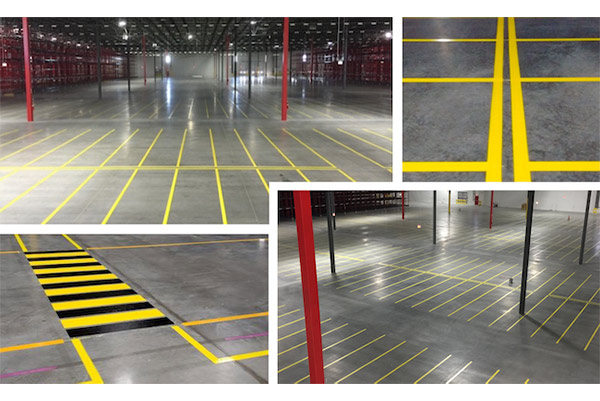
Warehouse floor marking, also known as warehouse floor striping, is the process of using floor marking epoxy paint or tape and floor safety signs to create visual cues for your team. Warehouse floor markings divide spaces, highlight hazards, outline workstations and bulk storage locations, direct traffic, and convey important safety information. Ultimately, these visual cues make it easier for employees to navigate the warehouse while helping to improve warehouse efficiency.
Here are some key reasons why many warehouses use industrial floor markings:
Effective floor marking, as required by the Occupational Safety and Health Association (OSHA), creates a visible, standardized system that is easy for employees to understand at a glance.
A floor marking system that also incorporates floor marking color standards can improve both safety and efficiency. For example, a standard yellow floor marking can be used to designate aisle ways, traffic lanes and work cells. Yellow and black striped floor markings can indicate areas that may expose employees to physical or health hazards.
Whether following OSHA guidance on color usage or adopting an alternate set of standards, warehouse floor marking colors need to be consistent and employees need to be trained on their meanings as it relates to your warehouse.
Floor marking is often part of a larger visual communication system that includes overhead warehouse signs. These signs are highly recommended for identifying and managing bulk storage inventory. They typically contain a barcode image and human-readable numbers or letters and work in conjunction with long-range mobile scanning devices.
In addition to overhead warehouse signs, floor safety signs can also help communicate specific messages on warehouse floors with text and images to relay important safety or logistics information.
ID Label offers complete installation and floor striping services to properly and professionally designate your bulk storage areas, as well as forklift and pedestrian traffic areas.
There are several striping options ID Label will review with you to achieve a long-lasting bright appearance. These include:
To discuss your requirements for an upcoming project, contact ID Label.

Join our Safety Briefing newsletter and get safety news across logistics, warehousing, manufacturing, construction, and other high-risk environments. Get the latest regulatory updates, alerts, safety products, equipment and training, and analysis.
Don't miss a single news story, product review or safety resource. Subscribe to our newsletter for the latest safety news, updates, and exclusive offers.