Dedicated to helping businesses and individuals prioritize safety, health, and compliance in the workplace. From small startups to large corporations, safety is essential, and we're here to make it easier.


Creating a culture of safety requires every employee in the workplace to be knowledgeable in identifying hazardous situations from chemicals to faulty equipment that could pose safety risks or OSHA penalties.
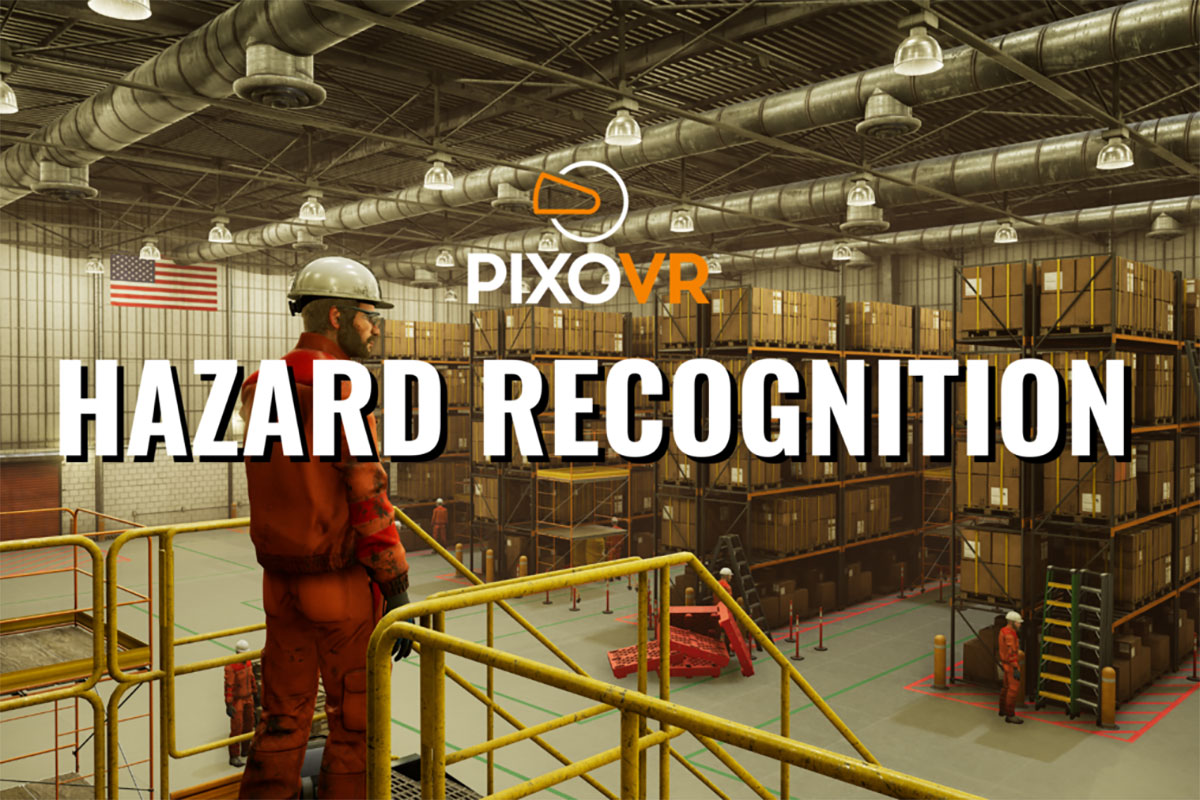
PIXO virtual reality (VR) Hazard Recognition training challenges employees to use and apply their knowledge of OSHA general industry standards to locate dangerous health and safety risks and make corrections where appropriate. This hazard safety training puts employees in control to reduce workplace hazards and meet safety requirements.
This hazard recognition training will test the following hazard knowledge:
Workers will be able to review their hazard safety training score and refer back to OSHA documentation on the hazards that they incorrectly classified or failed to appropriately control or correct.
Participants in this VR training scenario will have access to two different hazardous warehouse environments: a traditional storage warehouse and one storing chemicals.
Once the warehouse environment is chosen, the user is taken to a preparation room with PPE. The trainee must inspect and properly apply the safety equipment. They can then enter the warehouse and begin their hazard identification.
Users face unique hazards randomized from millions of possible workplace configurations. Each item selected by the user must be identified according to their training. Safety Data Sheets (SDS) are available for employees to review. Once the employee has finished their assessment, they leave the warehouse.
The worker can then reenter the warehouse where items are colored red, yellow, or green to indicate which hazards they identified correctly and can access the information to review errors. Depending upon employer requirements for the hazard assessment, it may be possible to retry the VR simulation as needed.
Headset Availability:
Interested parties can contact Pixo's sales team to learn more information.

Join our Safety Briefing newsletter and get safety news across logistics, warehousing, manufacturing, construction, and other high-risk environments. Get the latest regulatory updates, alerts, safety products, equipment and training, and analysis.
Don't miss a single news story, product review or safety resource. Subscribe to our newsletter for the latest safety news, updates, and exclusive offers.