Work Safety 24/7

Dedicated to helping businesses and individuals prioritize safety, health, and compliance in the workplace. From small startups to large corporations, safety is essential, and we're here to make it easier.

OSHA cites Carlton’s Tree Service after woodchipper fatality

$16,550 fine after contract employee pulled into chipper, decapitated

By Donald Halsing 
September 23, 2025

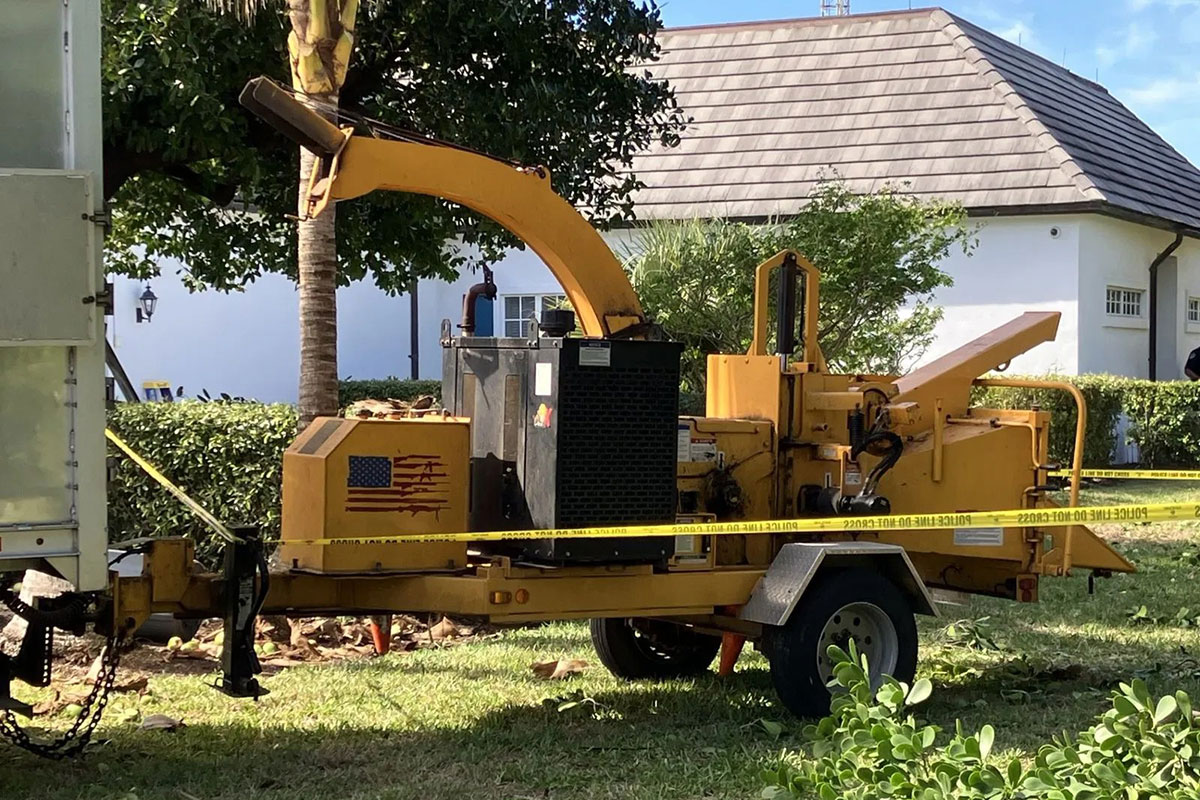
The U.S. Department of Labor recently cited a Florida tree service contractor for allegedly exposing workers to crush hazards after an employee was killed while operating a woodchipper at a Boynton Beach worksite on January 28.

Investigators with OSHA cited Port Saint Lucie, Florida-based Carlton’s Tree Service Inc. with a serious violation. To address the violation, the employer will need to pay $16,550 in penalties and take actions to amend the hazard.

Accident occurred on first day of project at town hall

According to OSHA’s incident report, the 32-year old laborer became caught in the chipper while working near the infeed chute and was fatally injured.

Local news station WPEC reported the accident occurred at around 9:30 a.m. while the contracted tree trimming vendor from Mexico was trimming trees on the first day of a project at the Ocean Ridge Town Hall and Police Department property.

Lynne Ladner, Ocean Ridge town manager, said the victim was pulled into the wood chipper up to his shoulders and was decapitated. Seven co-workers and one supervisor were at the scene and either witnessed the accident or heard it happening and ran over to assist the victim.

Ladner said the wood chipper was equipped with an emergency shut-off switch, but by the time the co-workers reached the machine it was too late. Boynton Beach Fire Rescue provided grief counseling to town employees and vendor staff affected by the tragedy.

Previous OSHA citations for lacking fall & head protection

OSHA previously issued four citations against Carlton’s Tree Service: two in 2012, and two in 2014, one of which was a repeat offense.

In 2012, OSHA fined the company $4,500 - later reduced to $1,800 - after an planned inspection without advanced notice for fall hazards and a lack of fall protection.

Hazardous working environment

  • Standard: OSH ACT of 1970 Section (5)(a)(1)
  • $2,800 penalty, reduced to $1,120
  • Description: The employer did not furnish employment and a place of employment which was free from recognized hazards that were causing or likely to cause death or serious physical harm to employees in that employees were exposed to fall hazard.
  • Observed violation: On or about Nov. 6, 2012, an employee was working on the branch of a tree limb without any type of fall protection means.

Fall protection

  • Standard: 29 CFR §1910.67(c)(2)(v)
  • $1,700 penalty, reduced to $680
  • Description: A body belt was not worn and a lanyard attached to the boom or basket when working from an aerial lift.
  • Observed violation: On or about Nov. 6, 2012, an employee was working from a bucket truck lift without being attached to the basket. The employee was exposed to a fall hazard of approximately 20 feet.

In 2014, OSHA again fined the company $5,600 after another planned inspection without advanced notice for a lack of head protection and a second time for lack of fall protection.

Head protection

  • Standard: 29 CFR §1910.135(a)(1)
  • $1,600 penalty
  • Description: The employer did not ensure that each affected employee wore a protective helmet when working in areas where there is a potential for injury to the head from falling objects.
  • Observed violation: On or about April 16, 2014, an employee was exposed to potential head injuries when cutting fronds of a palm tree directly above his head while not wearing a protective helmet.

Fall protection

  • Standard: 29 CFR §1910.67(c)(2)(v)
  • $4,000 penalty
  • Description: A body belt was not worn and a lanyard attached to the boom or basket when working from an aerial lift.
  • Observed violation: On or about April 16, 2014, an employee was exposed to a fall hazard while trimming fronds from the bucket of a truck mounted aerial lift approximately 20 feet above a lower level and not being protected from falling to that lower level.

OSHA’s reports note all four serious safety issues found during the two inspections were corrected during each inspection.

Resources to minimize chipper dangers

Between 2015 and 2024, OSHA published over 130 investigations into chipper-related accidents, about half of which were fatal. The agency has published over 300 investigations of the same type since 2002.

OSHA offers resources to help businesses develop an adequate workplace safety and health program. Employers can also contact the agency for information about OSHA's compliance assistance resources and for free help on complying with OSHA standards.

OSHA’s quick card for chipper machine safety says operational hazards include getting too close and making contact with chipper operating components - blades, discs, or knives - or being pulled into the chipper, which may result in amputation or death.

Operators may also be injured by material thrown from the machine, which can also cause face, eye, head, and hand injuries, along with hearing loss.

To minimize these hazards, OSHA advises landscaping employers use appropriate engineering and work practice controls, including operator training.

Safe work practices around chippers include:

  • Never reach into a chipper while it is operating.
  • Do not wear loose-fitting clothing around a chipper.
  • Always follow the manufacturer’s guidelines and safety instructions.
  • Wear ear plugs, safety glasses, hard hats, and gloves.
  • Workers should be trained on the safe operation of chipper machines.
  • Always supervise new workers using a chipper to ensure that they work safely and never endanger themselves or others.
  • Protect yourself from contacting operating chipper components by guarding the infeed and discharge ports, and preventing the opening of the access covers or doors until the drum or disc completely stops.
  • Prevent detached trailer chippers from rolling or sliding on slopes by chocking the trailer wheels.
  • Maintain a safe distance - at least two tree or log lengths - between chipper operations and other tree work or workers.
  • When servicing,  maintaining, and unjamming chipping equipment, use a lockout system to ensure that the equipment is de-energized.
 

More about OSHA

Latest in OSHA

About Donald Halsing

Donald Halsing

Donald Halsing is the Founding Editorial Director of Work Safety 24/7. He was formerly the Associate Editor of Robotics 24/7.

Don's experience spans the supply chain, logistics, and construction industries, having worked in both warehouse operations and land surveying. He is also a professional wedding photographer with his fiancée Ashley.

Follow Work Safety 24/7
on Facebook
on Linkedin

Related Topics

Regulatory   Government Regulations   Software & Technology   Control Systems   News   Investigations   Press Release   Carlton’s Tree Service   Citations   Energy Control   Fatalities   OSHA   All topics
 

Subscribe

Subscribe to our FREE magazine, FREE email newsletters or both!

Join our Safety Matters newsletter and get safety news across logistics, warehousing, manufacturing, con­struc­tion, and other high-risk environments. Get the latest regulatory updates, alerts, safety products, equipment and training, and analysis.

Subscribe today


Editors’ Picks

U.S. Appeals Court denies claim against OSHA citation of affiliated entity
The U.S. Court of Appeals denied UHS of Delaware’s petition against the OSHRC because it shared a common worksite and integrated safety operations under the same…
NHTSA recalls over 5,000 new USPS trucks for missing brake pin
After a USPS Next Generation Delivery Vehicle lost brake function, NHTSA and Oshkosh recalled all NGDVs produced because the brake pedal mounting pin and retaining…
MSHA issues alerts for ammonia & autotransformers
The Mine Safety and Health Administration encourages operators to examine all equipment with autotransformers currently in service and review safe handling of and…
Dangerous wildfires, sub-zero windchill, and winter weather across U.S. and…
The U.S. National Weather Service (NWS) and Environment Canada have issued warnings for high winds, wildfires, dust storms, heavy snowfall, freezing rain, and…