Dedicated to helping businesses and individuals prioritize safety, health, and compliance in the workplace. From small startups to large corporations, safety is essential, and we're here to make it easier.


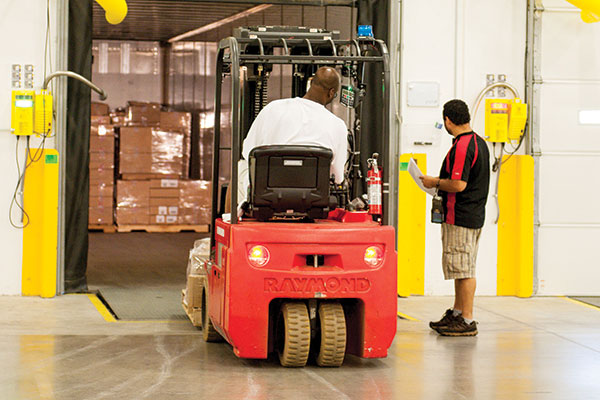
June 14, 2022 marks the ninth-annual National Forklift Safety Day organized by the Industrial Truck Association (ITA), as well a return to a live, in-person safety day event, after two years of virtual activities. This year’s event will have both aspects—in-person, live activities and an online element.
The over-arching goal of the day is to raise awareness of the importance of lift truck safety, and specifically, the importance of proper operator training practices, says Brian Feehan, president of ITA, whose members are lift truck manufacturers and component suppliers who do business in North America.
“The fundamental goal of National Forklift Safety Day is to raise the awareness level around the importance of operator training,” says Feehan. “We’re enthusiastic about the lift truck technology that’s entering the market that can help enhance safety, but the day itself is really focused on the importance and benefits of operator training. There’s really no substitute for a strong training program.”
In addition to the National Forklift Safety Day (NFSD) event in Washington, D.C., on June 14, local events will be held by various lift truck industry dealers and organizations. Visit Modern’s website in June for the latest roster of NFSD events. Additionally, says Feehan, there will be an online component to the June 14 event in Washington, since last year, more than 600 people attended the virtual activities. Go to ITA’s website (indtrk.org) for more information.
Last year was hectic for most companies with lift truck fleets, as companies with fulfillment centers scrambled to keep up with e-commerce demand, and manufacturers of many goods looked to increase output, all during a time of extreme difficulty in finding enough workers. That made 2021 a strong year for lift truck sales, but also a time when many new employees were entering positions in warehousing, manufacturing or other facilities that use lift trucks. Because of this influx of new workers, operators, or workers interested in becoming operators, it’s more important than ever to stress the importance of safe lift truck operation and operator training, says Feehan.
The chairperson for this year’s NFSD event—Jonathan Dawley, president & CEO of KION North America—seconds the idea that busy times in materials handling only elevates the importance of lift truck operator training. Because operations are so busy, it takes a strong safety culture to reinforce best practices amid all the scrambling, he explains.
“Coming out of Covid, operational conditions are evolving, but remain highly challenging, with increased or unusual inventory levels, supply chain delays, increased employee turnover, and just an extreme level of difficulty in finding enough labor,” says Dawley. “As organizations deal with these dynamics, the best way to stay on top of lift truck safety is to build a strong safety culture and systematic approach to training, so the importance of safety is always being reinforced.”
According to ITA, sales of new lift truck units in North America across Classes 1 through 5 reached 347,677 units in 2021, a hefty increase from the 230,134 units sold across those classes in North America during 2020. “We know there were many new units entering the market last year, so that also tends to increase the need to emphasize training,” says Feehan.
While some of these newer units sold last year include models with the latest technologies that can do things like sense pedestrians and automatically slow or stop a lift truck, there is no substitute for a rigorous operator training program and management emphasis on safety.
“We’re advancing as an industry by introducing more automation and bringing to bear systems like collision avoidance. While new technology will help reinforce safety in the workplace, you first have to establish a core safety culture. The center of safety culture is consistent training, as the foundation for safe operations,” says Dawley. “Organizations have to establish the core culture first.”
Companies with lift truck fleets have ample resources to tap into for operator training, safety programs, or assessments, adds Dawley. Not only do OEMs have resources, so do their dealers, and additionally, many respected third parties can assist.
“The industry is ready and able to support the customer base in establishing the needed operator training and core safety best practices in their operations,” says Dawley. “That’s one of the messages I want to get out there—that we, as an industry, stand ready to help.”


Roberto Michel, senior editor for Modern, has covered manufacturing and supply chain management trends since 1996, mainly as a former staff editor and former contributor at Manufacturing Business Technology. He has been a contributor to Modern since 2004. He has worked on numerous show dailies, including at ProMat, the North American Material Handling Logistics show, and National Manufacturing Week. You can reach him at [email protected].
Join our Safety Briefing newsletter and get safety news across logistics, warehousing, manufacturing, construction, and other high-risk environments. Get the latest regulatory updates, alerts, safety products, equipment and training, and analysis.
Don't miss a single news story, product review or safety resource. Subscribe to our newsletter for the latest safety news, updates, and exclusive offers.