Dedicated to helping businesses and individuals prioritize safety, health, and compliance in the workplace. From small startups to large corporations, safety is essential, and we're here to make it easier.


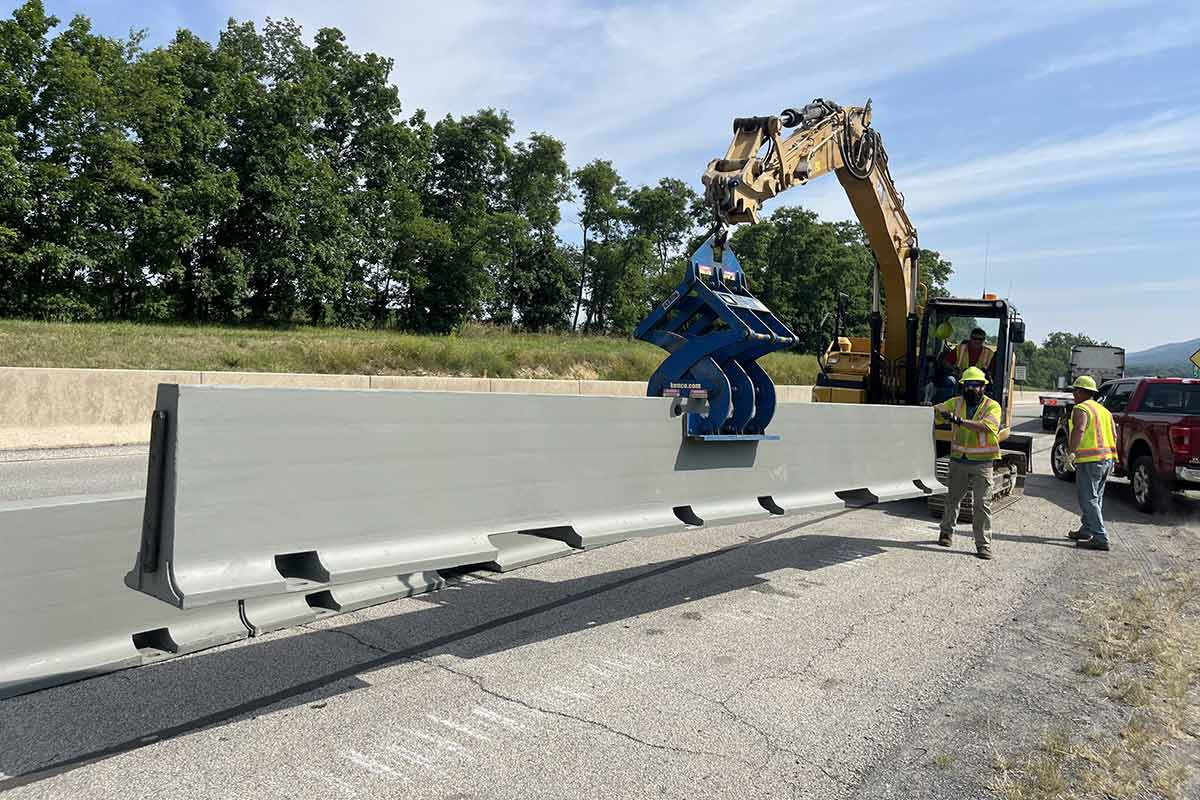
Asynt Solutions recently announced it is expanding production and deployment of its fiberglass composite Ape Barrier to meet growing roadway worker safety demand.
As transportation agencies modernize America's highways and contractors transition to MASH-compliant roadside safety systems, demand is accelerating for lighter, more efficient work zone technologies.
According to the American Road & Transportation Builders Association (ARTBA), state DOT budget authority remains more than 35% above pre-2021 levels, supporting continued investment in highway infrastructure and work zone technologies.
As contractors increasingly adopt composite barriers across larger infrastructure projects, Asynt has expanded its manufacturing capacity and deployment capabilities. Recent milestones include:
Customers are expanding deployments after experiencing measurable gains in transportation, installation, and project efficiency.
For example, crews recently installed 2,592 feet of Ape Barrier in just 8.5 hours using only a mini excavator and skid steer. The project required four truckloads instead of an estimated 24 for comparable concrete barriers, reducing freight coordination while accelerating installation.
"A few years ago, most conversations centered on whether a composite barrier could perform in the field," said Archie Scott III, founder and CEO of Asynt Solutions. "Today, customers aren't asking whether it works. They're asking how quickly they can deploy it, how many truckloads it eliminates, and how much time it saves on the jobsite."
Larger deployments are also changing how contractors acquire work zone equipment. Alongside traditional purchases, Asynt has expanded rentals as customers seek flexible access to Manual for Assessing Safety Hardware (MASH) TL-3-compliant barrier systems. Combined with lower transportation requirements and faster installation, the model is helping contractors improve project economics while accelerating adoption of composite barrier technology.
"The industry isn't just looking for safer barriers anymore. It's looking for smarter ways to deliver projects," Scott said. "Once contractors experience the advantages of composite barriers firsthand, they come back with bigger projects because they've seen the impact reducing freight, installation time and jobsite complexity can have on overall project economics."
In March, Asynt announced the Maryland Department of Transportation approved Ape Barrier for use on roadway and bridge projects under applicable MASH TL-3 safety criteria.
The approval reflects continued industry adoption of composite barrier systems as transportation agencies advance MASH-compliant infrastructure upgrades.
"Maryland's approval is an important signal for the industry as agencies evaluate safer, more modern approaches to work zone protection in increasingly constrained roadway and bridge environments," Scott said. "As infrastructure projects expand across high-traffic corridors, there is a growing demand for barrier systems that improve safety without adding complexity or congestion."
A critical foundation of Maryland's approval is Asynt's alignment with federal safety requirements. As transportation agencies accelerate investments in aging infrastructure - particularly bridges and high-traffic corridors - demand continues to grow for durable, crash-tested safety systems that can be deployed rapidly without compromising performance.
The Ape Barrier is covered under Safety Eligibility Letter B-390, issued by the DOT’s Federal Highway Administration (FHWA) following evaluation under the MASH criteria.
The approval of the Ape Barrier provides Maryland agencies and contractors with a federally-eligible safety system that meets recognized federal and state standards while supporting efficient project delivery across roadway and bridge projects.

Join our Safety Briefing newsletter and get safety news across logistics, warehousing, manufacturing, construction, and other high-risk environments. Get the latest regulatory updates, alerts, safety products, equipment and training, and analysis.
Don't miss a single news story, product review or safety resource. Subscribe to our newsletter for the latest safety news, updates, and exclusive offers.