Dedicated to helping businesses and individuals prioritize safety, health, and compliance in the workplace. From small startups to large corporations, safety is essential, and we're here to make it easier.


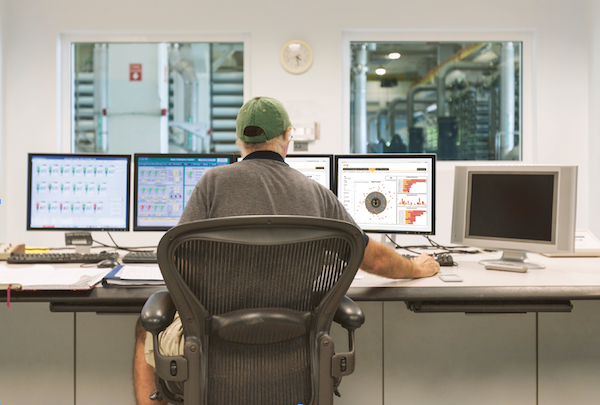
Lift trucks are at the center of productivity when it comes to moving product throughout a warehouse, distribution center or factory floor. Investing in the management of your fleet can help you increase that productivity while lowering costs, increasing safety and optimizing the use of your trucks and your workforce.
Advances in technology are making that process easier by transforming fleet management through software, telematics and GPS tracking. These programs offer insights into operator and truck data that help companies make more strategic decisions when it comes to truck usage, battery life, fuel consumption, driver behavior and maintenance needs.
“Technology has allowed us to really gain insights into that fleet and the operators that are managing and using that fleet,” says Darrell Hinnant, commercial director, emerging technology at Yale Lift Truck Technologies. “It’s allowed us to track key performance indicators and support best practices. You have the ability to monitor what’s going on with that fleet with different types of reports or usage information that we can look at and figure out how to maximize that fleet to the best of our ability. And then last, it’s allowed us to be able to manage things like operator access so that only operators with proper training can access certain equipment and digitize things like pre-shift checklists to avoid paper-based processes and help reduce time lost incidents along the way.”
Telematics, specifically, has become an invaluable tool for better fleet management. Companies typically are tracking four major areas with each playing a key role in running an efficient operation. They include:
1. Utilization proficiency—Companies want to know how their fleet is being used, what trucks are being used the most, and which operators are using them.
2. Equipment diagnosis—Allows managers to address preventative maintenance needs and provide insights into battery life or battery information.
3. Location services—This allows managers to see where trucks are being used and the locations of certain incidents like impacts.
4. Safety—Prioritizing productivity and safety is a big part of fleet management. Telematics can help companies best protect their people and their assets.
Improving one of these areas is often a trickle effect that leads to improved efficiency across the board. For example, a large warehouse Yale works with originally implemented telematic solutions to better understand impact incidents. They were struggling with impacts and operators running into things and wanted to be able to analyze each incident.
“Being able to track that and analyze which operators are doing that, or who might need more training, has really improved the proficiency of their operation,” says Hinnant. “It’s allowed them to reduce the number of impacts over time, and it’s also made them really confident in that they’re protecting their people as well as their assets”
While the upfront costs and overall education around telematic solutions are still barriers, adoption is growing as the challenges warehouses and manufacturers face also increase. Managing a dwindling workforce continues to top the list, making any advantage critical.
“No matter what industry you’re talking about, no matter what size of the organization that you’re talking about, having enough people is the biggest challenge,” says Hinnant. “If you can understand how people are using forklifts and how to maximize them, the return of your asset and total cost of ownership really improves, and that’s what the data insights from telemetry can provide.”


Amy Wunderlin is a freelance supply chain and technology writer. She has written for several weekly and daily newspapers, in addition to trade publications such as Supply & Demand Chain Executive, Food Logistics and Building Operating Management, among others. She is a 2013 graduate of the University of Wisconsin-Whitewater, where she earned her B.A. in journalism.
Join our Safety Briefing newsletter and get safety news across logistics, warehousing, manufacturing, construction, and other high-risk environments. Get the latest regulatory updates, alerts, safety products, equipment and training, and analysis.
Don't miss a single news story, product review or safety resource. Subscribe to our newsletter for the latest safety news, updates, and exclusive offers.