Dedicated to helping businesses and individuals prioritize safety, health, and compliance in the workplace. From small startups to large corporations, safety is essential, and we're here to make it easier.


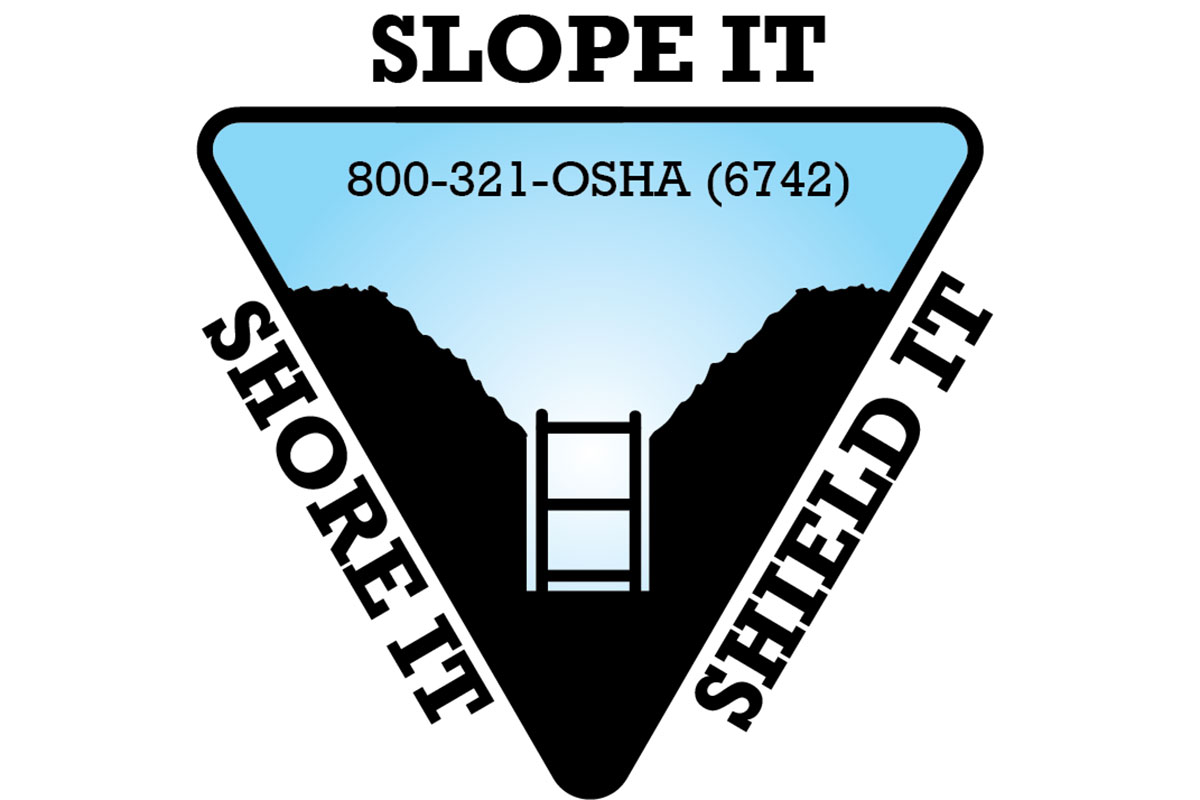
Trench collapses and cave-ins pose a risk to workers’ lives. When done safely, trenching operations can reduce worker exposure to other potential hazards including falls and falling loads, hazardous atmospheres, and incidents involving mobile equipment.
OSHA standards require employers provide workplaces free of recognized hazards. The employer must comply with trenching and excavation requirements of Specific Excavation Requirements (29 CFR §1926.651) and Requirements for protective systems (29 CFR §1926.652) or comparable OSHA-approved state plan requirements.
Trenches 5 feet deep or greater require a protective system unless the excavation is made entirely in stable rock. If less than 5 feet deep, a competent person may determine that a protective system is not required.
Trenches 20 feet deep or greater require that the protective system be designed by a registered professional engineer or be based on tabulated data prepared and/or approved by a registered professional engineer in accordance with §1926.652(b) and (c).
OSHA standards require, before any worker entry, that employers have a competent person inspect trenches daily and as conditions change to ensure elimination of excavation hazards.
A competent person is an individual who is capable of identifying existing and predictable hazards or working conditions that are hazardous, unsanitary, or dangerous to workers, soil types and protective systems required, and who is authorized to take prompt corrective measures to eliminate these hazards and conditions.
There are different types of protective systems:
Shielding protects workers by using trench boxes or other types of supports to prevent soil cave-ins. Designing a protective system can be complex because you must consider many factors: soil classification, depth of cut, water content of soil, changes caused by weather or climate, surcharge loads (e.g., spoil, other materials to be used in the trench) and other operations in the vicinity.



Join our Safety Briefing newsletter and get safety news across logistics, warehousing, manufacturing, construction, and other high-risk environments. Get the latest regulatory updates, alerts, safety products, equipment and training, and analysis.

Don't miss a single news story, product review or safety resource. Subscribe to our newsletter for the latest safety news, updates, and exclusive offers.