Dedicated to helping businesses and individuals prioritize safety, health, and compliance in the workplace. From small startups to large corporations, safety is essential, and we're here to make it easier.


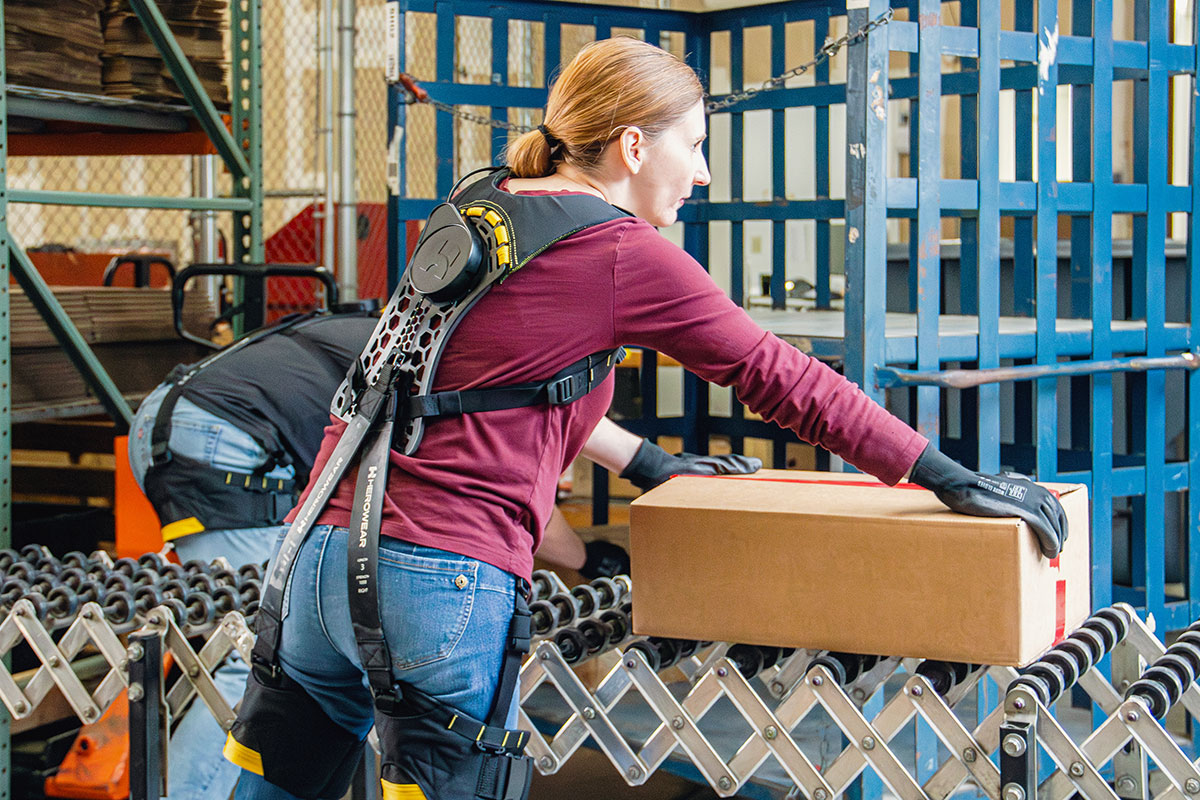
Occupational exoskeleton provider HeroWear recently announced a longitudinal safety data study of its Apex 2 exosuit.
The Apex 2 is a flexible, back-assist exosuit that functions like an extra set of back muscles to limit strain, fatigue, and discomfort.
The research spanned five distribution centers over 8 to 23 months and a combined 311,000 work hours - the equivalent of 155 full-time workers working over one year. At each distribution center, the lightweight exosuit helped workers lift and carry thousands of pounds of goods during case-picking shifts.
HeroWear found a 62% reduction in total strain and sprain injuries among workers who wore its Apex 2 exosuit.
HeroWear said fears about potential unintended consequences - like shifting injury risk from the back to other joints or muscle groups - have long been a barrier to exoskeleton adoption.
While previous longitudinal data on occupational exoskeletons heavily focused on back strains, the company’s latest multi-site industry data suggest that worker injury risk was not transferred to other body parts with its elastic back exosuit.
Data from five companies with long-term, sustained exosuit use instead showed meaningful reductions in back injuries, with no corresponding rise in injuries elsewhere when comparing rates before and after deployment.
“Emerging technologies demand continuous learning, and the only way we advance is through converging, real-world evidence,” said Karl Zelik, HeroWear co-founder and chief scientific officer. “I’m deeply grateful to the companies willing to share this longitudinal data. They’re accelerating progress for all of us and helping make every workplace safer.”
Injury outcomes were tracked among logistics workers in food and beverage, retail, manufacturing, and general warehousing sectors.
Workers in these industries experience high rates of serious injury from overexertion, costing U.S. transportation and warehousing businesses $1.45 billion in losses in 2025.
The long-term, aggregated data from the five companies revealed:
Plymouth Inc., a West Coast protein distributor, was one of the companies that shared injury data from before and after the exosuit deployment.
“A night shift employee will pick up an average of 60,000 pounds a night,” said Travis Erickson, Plymouth’s director of operations. “Our main goal at Plymouth is to make sure we are supporting every worker to have a happy, healthy life outside of work. Some of our workers who have had back issues started wearing the Apex 2 exosuit and don't have back issues any longer.”
Alongside benefits to individual workers, improvements in worker well-being and reductions in injuries have significant operational and financial impacts.
This data builds upon over a dozen existing longitudinal case studies on occupational exoskeletons and a large body of biomechanics and ergonomics research, furthering what is known about the impact of exosuits on worker health and safety, specifically in logistics and supply chain roles.

Working men and women lift every day. They do it in warehouses and on production lines. In offices and combat zones. Every day, they lift the economy worldwide. Whether it’s the day-to-day grind or responding to a crisis, their strength supports…
Join our Safety Briefing newsletter and get safety news across logistics, warehousing, manufacturing, construction, and other high-risk environments. Get the latest regulatory updates, alerts, safety products, equipment and training, and analysis.
Don't miss a single news story, product review or safety resource. Subscribe to our newsletter for the latest safety news, updates, and exclusive offers.