Dedicated to helping businesses and individuals prioritize safety, health, and compliance in the workplace. From small startups to large corporations, safety is essential, and we're here to make it easier.


Wildfires are burning in multiple states across the High Plains. In the Oklahoma panhandle, a massive blaze has grown to 145,000 acres - which is about the same size as the city of Chicago. Meanwhile in Colorado, another wildfire has burned at least 5,000 acres.
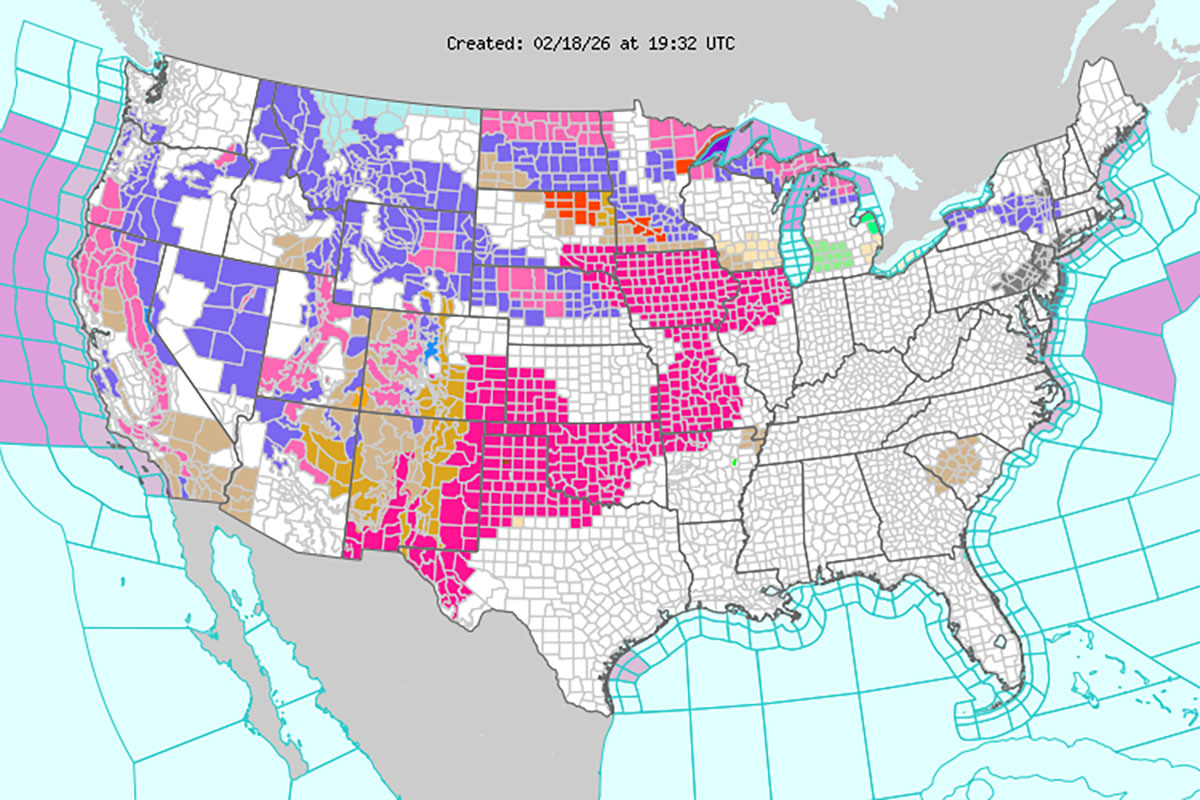
The U.S. National Weather Service (NWS) and Environment Canada have issued warnings for high winds, wildfires, heavy snowfall, freezing rain, and dangerous cold.
These conditions pose a threat across Alaska, the Pacific Coast, Rocky Mountains, Great Plains, Midwest, Great Lakes, New England, and Maritime Provinces, especially to outdoor workers.
According to the current NWS and national synopsis, Environment Canada weather summary, and national alert maps:
Visit the National Weather Service website to see active alerts: https://www.weather.gov/
Visit the Environment Canada website to see active alerts: https://weather.gc.ca/index_e.html
In the High Plains, a Red Flag Warning is in effect across portions of Colorado, New Mexico, Texas, Oklahoma, and Kansas.
Several High Wind Warnings are also in effect in Colorado, New Mexico, Arizona, and South Dakota.
In the Midwest, a Red Flag Warning is in effect across portions of South Dakota, Nebraska, Iowa, Missouri, Arkansas, and Illinois.
A Fire Weather Watch also extends into eastern Oklahoma, and an elevated fire weather risk is present across southern Wisconsin.
Wind Advisories are also in effect in California, Nevada, Arizona, Idaho, Utah, Colorado, New Mexico, and Hawaii.
A Blowing Dust Advisory is also in effect along the New Mexico/Texas border
A Red Flag Warning means that critical fire weather conditions are either occurring now or will shortly. A combination of strong winds, low relative humidity, and warm temperatures will create favorable weather for rapid fire growth and spread and contribute to extreme fire behavior.
NWS advises to avoid activities that promote open flames and sparks - such as hot work - including obeying all burn restrictions and instructions issued by authorities.
USA Today provides a map to track current and past wildfires across the U.S. and Canada.
An Extreme Cold Warning in effect along the Hi-Line in northwest Montana, and a Cold Weather Advisory is in effect across northern Montana.
A Cold Warning is in effect across northern and central Alberta.
Dangerously cold wind chills as low as -40 degrees Fahrenheit/Celsius across the affected area could cause frostbite on exposed skin in as little as 10 minutes and can also cause hypothermia. Risks are greater for people working outdoors.
Windchills as low as -55 Celsius (-67 Fahrenheit) are forecast across the Yukon, Nunavut, and Northwest Territories.
An Arctic Outflow Warning is in effect across portions of British Columbia, with windchills as low as -20 Celsius (-4 Fahrenheit)
NWS advises to dress in layers including a hat, face mask, and gloves if you must work outside.
Environment Canada advises to watch for cold-related symptoms, including shortness of breath, chest pain, muscle pain and weakness, numbness, and color change in fingers and toes.
Winter Storm Warnings and Winter Weather Advisories are in effect across the West, including Alaska, Washington, Oregon, California, Idaho, Nevada, Arizona, Utah, Montana, Wyoming, Colorado, New Mexico, North and South Dakota, Nebraska, Wisconsin, Michigan, Alaska, and Newfoundland.
An additional Winter Weather Advisory is in effect across central New York and Massachusetts.
Snowfall warnings are also in effect across southern Saskatchewan, Manitoba, Ontario, and Quebec.
Winter storms can bring heavy snow accumulation, high sustained winds and wind gusts, along with blowing and drifting snow which can reduce visibility.
Blizzard Warnings are in effect in portions of Montana, South Dakota, Minnesota, Wisconsin, and Quebec.
NWS advises to travel for emergencies only. If you must travel, have a winter survival kit with you. If you get stranded, stay with your vehicle.
A Freezing Rain Warning is in effect for the greater Toronto, Ontario area. Freezing rain can create slippery conditions, and ice accumulation can cause trees, power lines, and other structures to collapse.
Wildfires are burning in multiple states across the High Plains. In the Oklahoma panhandle, a massive blaze has grown to 145,000 acres - which is about the same size as the city of Chicago. Meanwhile in Colorado, another wildfire has burned at least 5,000 acres.


Donald Halsing is the Founding Editorial Director of Work Safety 24/7. He was formerly the Associate Editor of Robotics 24/7.
Don's experience spans the supply chain, logistics, and construction industries, having worked in both warehouse operations and land surveying. He is also a professional wedding photographer with his fiancée Ashley.
Join our Safety Briefing newsletter and get safety news across logistics, warehousing, manufacturing, construction, and other high-risk environments. Get the latest regulatory updates, alerts, safety products, equipment and training, and analysis.

Don't miss a single news story, product review or safety resource. Subscribe to our newsletter for the latest safety news, updates, and exclusive offers.