Dedicated to helping businesses and individuals prioritize safety, health, and compliance in the workplace. From small startups to large corporations, safety is essential, and we're here to make it easier.


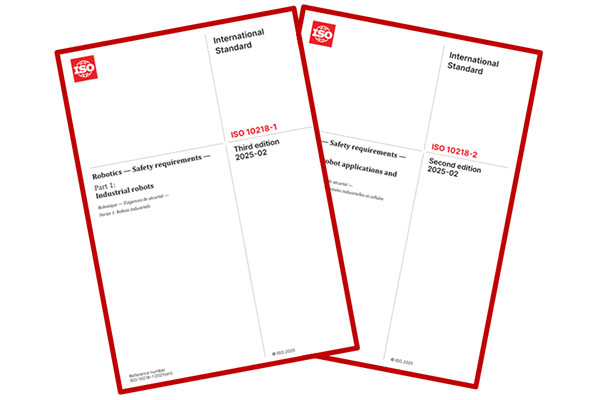
After nearly eight years of work, the Association for Advancing Automation (A3) recently announced the publication of the revised International Organization for Standardization (ISO) 10218, a global standard for industrial robot safety.
In its first major revision since 2011, A3 said the new documents offer a significant leap forward in ensuring the safety of robots in industrial environments.
“Working alongside hundreds of global experts, A3 played a pivotal role in shepherding this update to publication, to refine safety requirements in response to evolving automation technologies and workplace demands,” said Jeff Burnstein, A3 president. “This effort reflects A3’s ongoing commitment to enhancing robotic safety and supporting the widespread adoption of automation.”
The new ISO 10218 Parts 1 and 2 feature updates that focus on making functional safety requirements more explicit rather than implied. A3 said this shift enhances clarity and usability, making compliance more straightforward for robot manufacturers and integrators alike.
ISO 10218 was one of the major topics discussed at A3’s International Robot Safety Conference (IRSC) held Oct. 2024.
In North America, ISO 10218 had been previously adopted as American National Standards Institute (ANSI) R15.06 in the United States and Canadian Standards Association (CSA) Z434 in Canada. Work is underway to adopt the new 10218 in both jurisdictions with new versions of R15.06 and Z434 expected to be released later this year.
ISO 10218 consists of two parts:
"This set of safety standards has immense global acceptance, but updates were needed" said Roberta Nelson Shea, Universal Robots global technical compliance officer and convenor of ISO TC 299 Working Group 3. "This is a pivotal moment for industrial robotics. With automation advancing at lightning speed, we need safety standards that keep pace.”
A3 said both parts have undergone revisions to address the latest safety challenges and technological advancements, including:
"With automation evolving at an unprecedented pace, it is essential that safety standards keep up with the latest advancements. This is a critical step in ensuring that as automation grows, worker safety remains a top priority,” said Carole Franklin, A3 Robotics director of standards. “These revisions provide clearer guidelines and new classifications that will help manufacturers and system integrators implement the latest technology for safer robotic solutions."

Join our Safety Briefing newsletter and get safety news across logistics, warehousing, manufacturing, construction, and other high-risk environments. Get the latest regulatory updates, alerts, safety products, equipment and training, and analysis.
Don't miss a single news story, product review or safety resource. Subscribe to our newsletter for the latest safety news, updates, and exclusive offers.