Dedicated to helping businesses and individuals prioritize safety, health, and compliance in the workplace. From small startups to large corporations, safety is essential, and we're here to make it easier.


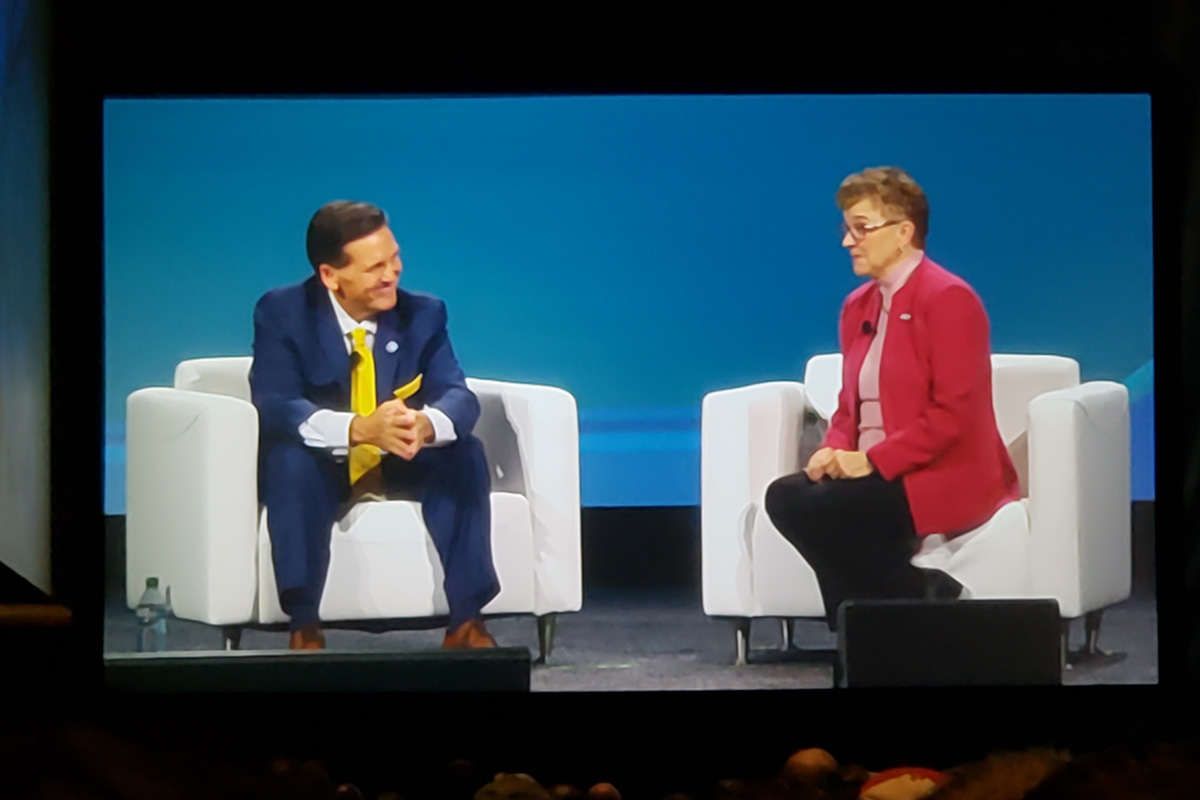
Rick LaGore, CEO and co-founder of InTek Freight & Logistics, recently shared his insights about the ways AI and automation could affect the supply chain and how leaders can prepare.

LaGore has over 35 years of experience in the logistics industry, specializing in finance, strategy, operations, sales, and marketing. In addition to running InTek’s daily operations, LaGore is a contributor to industry publications and the financial community, where he provides insight and analysis on the state of the domestic intermodal and trucking market.
LaGore said AI and automation are rapidly changing the way the supply chain industry operates, allowing for improved efficiencies and financial outcomes - such as improved return on investment (ROI) - across supply chain-related operations.
With robot shipments expected to increase by 50% each year until 2030, and warehouse automation increasing by over 10% each year, LaGore said decision makers should explore the variety of available technological advancements to stay afloat.
Labor shortages are a major concern in the industry, with warehouse and transportation job openings in the U.S. forecasted to hit 1.7 million this year. LaGore said automating tedious and repetitive tasks - such as with cobots - has the potential to improve labor productivity.
“Resources can be reallocated to boost productivity and efficiency, therefore speeding up processes in supply chains,” LaGore said. “While it is natural to feel concerns about the impact AI and automation may have on people’s jobs, we must focus on how these new technologies are helping us to perform jobs better, aiding our work rather than replacing human-filled roles.”
“As Bart De Muynck recently explained on our podcast, younger generations entering the workforce have grown up surrounded by technology, so are familiar with the use of and reliance on different modern technologies in different aspects of their lives.”
Navigating disasters and complex obstacles is not a simple operation. LaGore said the recent Red Sea attacks significantly impacted the shipping industry, with route times and shipping costs driven up rapidly, as a route regularly used by 15% of global shipping traffic before the crisis was severely disrupted in the long term.
However, LaGore predicted that AI will help leaders tackle unpredictable disruptions. “As peak shipping season approaches where shipping charges increase to meet higher freight capacity demands, we are actively reviewing the role AI holds in supporting disruption management and support, to create a more efficient and safer environment for businesses around the globe.
“Currently, AI demand predictions allow businesses to adjust shipment volume until situations such as the Red Sea attack improve,” he added. “AI can analyze the market, identifying opportunities to shift modes, and offer solutions based upon how markets have reacted to similar issues previously.”
Other predictions from LaGore include an increase in autonomous trucking and transportation management systems (TMS) to optimize route planning. He said vehicles with sensors, actuators, algorithms, and machine learning systems could improve shipping time by removing necessary human breaks.
LaGore added that he also believes It is likely we will soon see further advancements in intermodal rail yards beyond automated truck gates, which increase terminal productivity and personnel safety.
“However, many regulatory hurdles must be overcome. Assembly bill 316, passed in California [in] 2023, states humans must be trained and present while autonomous semi-trucks and big rigs are operated” he said.
As electric and autonomous trucks undergo necessary development, LaGore said intermodal transportation services, like those offered by InTek, can provide many similar benefits, including efficiency and sustainability.

Join our Safety Briefing newsletter and get safety news across logistics, warehousing, manufacturing, construction, and other high-risk environments. Get the latest regulatory updates, alerts, safety products, equipment and training, and analysis.
Don't miss a single news story, product review or safety resource. Subscribe to our newsletter for the latest safety news, updates, and exclusive offers.