Dedicated to helping businesses and individuals prioritize safety, health, and compliance in the workplace. From small startups to large corporations, safety is essential, and we're here to make it easier.


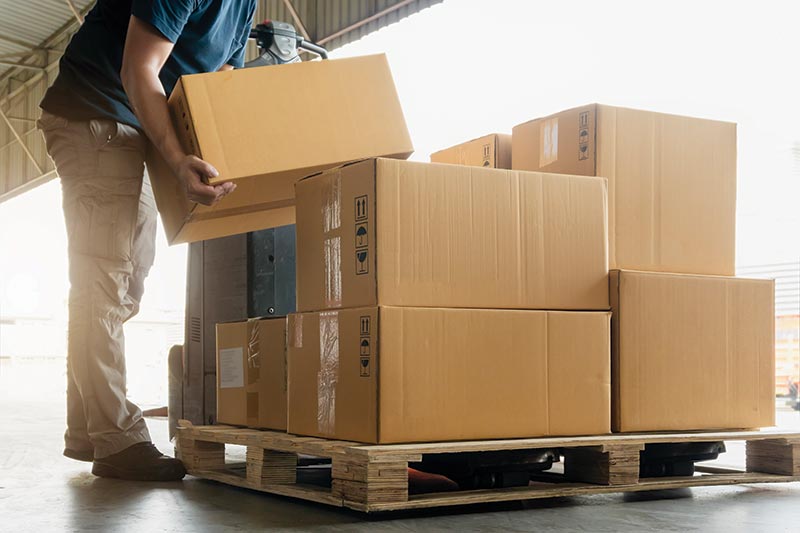
On one hand, you have the ergonomics of operating the truck itself, aided by lift truck design features. On the other, you have the proper form when case picking and handling workflows off the truck, which is something that, in the past, was limited mainly to training methods.
The ergonomics of operating a lift truck is something lift truck OEMs pay close attention to, from how they design masts, to suspension and other comfort features. Good visibility is the goal.
For example, with the type of load-load handling that Combilift focuses its trucks on, a design principle is to keep the load-bearing platform as low to the ground as possible during travel, with a forward-facing cab that gives the operator, with a turn of the head, full view of the aisle in either direction the truck needs to go, while the load stays low and travels sideways through the aisle, says Paul Short, president of Combilift USA. The sideways movement also permits narrower aisles than with standard trucks.
“When handling a load with a conventional truck, either the load is in the way of your view, or the operator has to elevate it high, and so the operator needs to look up in the air to monitor the load, and when reversing, needs to look back over the shoulder,” Short says. “With our trucks, the load stays low and in easy view. All they’re doing is looking left or right in the direction of travel with a clear view of both the load and the aisle.”
Short adds that a new large electric truck for long loads the company debuted at Modex, the CB 155, will also rotate 15 degrees in the direction of travel, to point the operator’s field of view more squarely in the direction of travel.
Generally, OEMs can be counted on to keep working on visibility and comfort features, but what about all those duties off the truck that involve bending and lifting goods onto a pallet or order picking platform?
Health and safety training is the traditional approach to improved ergonomics for such tasks, but what if you could point some technology at an associate and quickly gain feedback on how ergonomic that task is being performed?
It turns out that such technology exists, and the device that captures the imagery can be any modern mobile device with a decent video camera, according to Diwaker Ganesan, co-founder at TuMeke, which offers a vision platform that assesses injury risk in manufacturing facilities. Rather than using fixed machine vision, an environmental health and safety (EHS) professional would use the solution to capture video of a worker conducting a task.
That clip is uploaded to TuMeke’s cloud software, which is where its AI-based ergonomics risk assessment software that reflects industry-accepted best practices for ergonomic handling of heavy items, takes over, providing an assessment and visual comparison of the recorded movements against best practices.
The TuMeke solution can be applied to various industries and processes, Ganesan explains, but case handling tasks in warehousing is definitely one of them, including pick to pallet workflows.
The company offers a phone app to capture the video data and present results back to front-line workers as part of feedback and coaching, and the cloud software does the risk assessment and generates the comparison.
Some companies starting to use Tumeke’s solution include third-party logistics (3PL) warehouse services providers, says Ganesan. Typically, he adds, it’s an EHS professional who captures the video and uses the cloud software, rather than an operations manager.
“Our customers in the 3PL space will use our system to do the assessment to show the operator where they’re making mistakes,” Ganesan says. “What they will have done is loaded up videos of experienced operators doing the task with the correct form. And then when a novice who just started sees that form in comparison to their own assessment, we found that really drives behavior change.”


Roberto Michel, senior editor for Modern, has covered manufacturing and supply chain management trends since 1996, mainly as a former staff editor and former contributor at Manufacturing Business Technology. He has been a contributor to Modern since 2004. He has worked on numerous show dailies, including at ProMat, the North American Material Handling Logistics show, and National Manufacturing Week. You can reach him at [email protected].
Join our Safety Briefing newsletter and get safety news across logistics, warehousing, manufacturing, construction, and other high-risk environments. Get the latest regulatory updates, alerts, safety products, equipment and training, and analysis.
Don't miss a single news story, product review or safety resource. Subscribe to our newsletter for the latest safety news, updates, and exclusive offers.