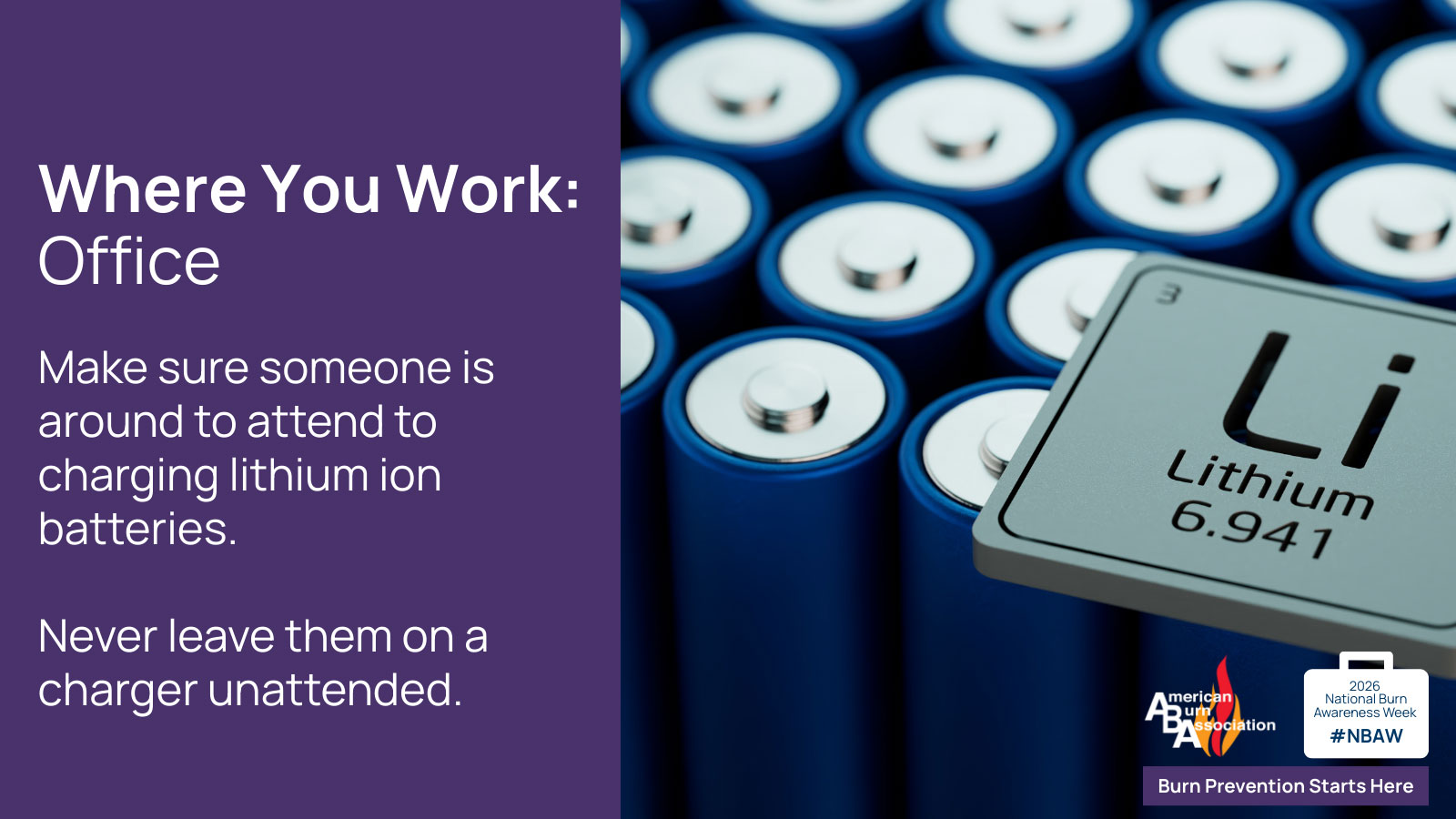
National Burn Awareness Week (NBAW) is an initiative of the American Burn Association (ABA) dedicated to raising awareness about burn injury prevention and safety. Observed during the first full week of February, the campaign unites healthcare professionals, burn centers, fire and life safety educators, employers, and community partners nationwide to promote practical, evidence-based burn prevention strategies. This year’s theme, “Burn Prevention Where You Live, Work, and Play - Preventing Burns in the Workplace,” focuses on reducing risks across occupational environments, including healthcare facilities, commercial kitchens, laboratories, and manufacturing settings. Click through the slideshow to review ABA’s burn prevention tips for specific workplaces, including construction, transportation, agriculture, maintenance, firefighting, military, restaurants, and offices. Please note some occupations feature multiple slides. Burn injuries are often preventable According to the 2021 Centers for Disease Control and Prevention (CDC) National Hospital Ambulatory Medical Care Survey, an estimated 398,000 people received medical care for burn-related injuries annually in the United States. An additional 252,000 received care for contact burns from hot objects or substances. Many of these injuries involve contact with hot objects, scalds, exposure to flame, and workplace hazards. While survival rates continue to improve, the ABA said burn survivors often face long-term physical and emotional challenges, reinforcing the importance of prevention education. “Burn injuries are often preventable,” said Clifford Sheckter, ABA burn prevention committee chair. “National Burn Awareness Week provides an opportunity to elevate workplace safety education, highlight proven prevention strategies, and engage communities in protecting workers and families alike.” Workplace burn prevention tips Simple actions can significantly reduce burn risk on the job: Heat and Equipment Safety: Use protective equipment and wear PPE when working with hot surfaces, machinery, or open flames.  Chemical Handling: Follow proper storage, labeling, and handling protocols for hazardous chemicals and materials.  Electrical Awareness: Inspect electrical cords and equipment regularly and avoid overloading outlets.  Training and Preparedness: Participate in workplace safety training and ensure emergency response plans are visible and accessible. The ABA encourages organizations and individuals to participate throughout the week by sharing burn prevention resources and educational content using #NBAW and #ameriburn on social media. Posts tagged #ameriburn may be featured on the American Burn Association homepage's social feed, expanding the reach of prevention messages nationwide. The ABA Burn Prevention Committee has developed free, downloadable materials to support outreach, including fact sheets, social media graphics, and co-branded educational tools. These resources are available to burn centers, healthcare organizations, employers, educators, and community groups.